Trump's 'Total Control' Claim Collides With Reality of a US-Iran Deal
The gap between Washington's bravado and what the emerging agreement actually signals about the Strait of Hormuz tells a different story than the White House wants told.
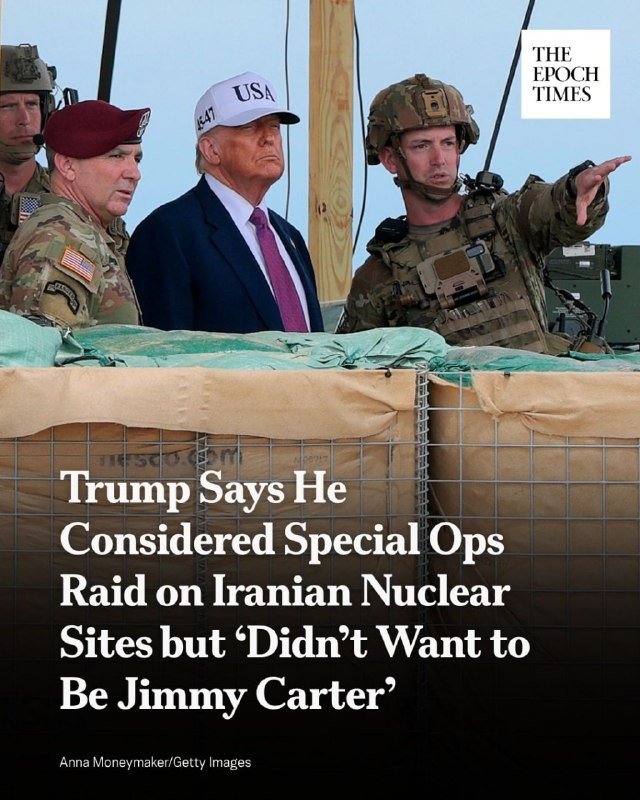
On 21 May 2026, Donald Trump posted a video claiming the United States had "total control of the Strait of Hormuz." Hours earlier, open-source intelligence reports surfaced suggesting the two sides had already reached a final draft agreement that would guarantee freedom of navigation through that same waterway — on terms that look considerably less like capitulation and considerably more like Tehran getting exactly what it wanted.
The juxtaposition is revealing. Freedom of navigation for all vessels, sanctions relief staged over time, an immediate ceasefire: if those elements constitute a final draft as reported, then the Strait of Hormuz has just been handed back to the regime Trump spent weeks threatening to "get" by force.
This is not merely a diplomatic inconsistency. It is a structural contradiction at the heart of maximum-pressure 2.0 — the gap between what the White House narrative demands and what the regional balance of leverage actually permits.
The Gap Between the Claim and the Deal
Trump's statement that the US would achieve control of the Strait of Hormuz "one way or another" — the implied other way being military — tracks with the administration's consistent pattern of framing every negotiation as a hostage deal: acquiesce or face consequences. The problem is that this framing has never reflected the actual geometry of the Persian Gulf.
Iran does not control the Strait of Hormuz in the sense that a navy controls a chokepoint it can open or close at will. But it controls enough of the threat calculus — anti-ship missiles along the northern shore, a fleet of small fast-attack craft, naval mines, and the capability to lay them quickly — that any serious attempt to keep the waterway permanently open by force would involve costs no American administration has been willing to pay. The Strait is 34 miles wide at its narrowest. It is not a place where carrier groups operate comfortably in contested waters without accepting significant risk.
The emerging agreement, if the draft is as described, essentially codifies the existing reality: Iran will not interfere with commercial shipping in exchange for sanctions relief and formal recognition that its Gulf security role is legitimate. That is not a concession extracted by American pressure. It is a recognition that was always coming.
Why Maximum Pressure Keeps Hitting the Same Ceiling
The underlying dynamic here is not new. Every American administration since 1979 has cycled through some variant of containment, engagement, and maximum pressure. The results have been structurally consistent: Iran emerges with its regional posture intact, its nuclear programme advanced in proportion to external pressure, and its control over the Hormuz chokepoint effectively unchallenged in any durable way.
The pattern repeats because the fundamental geography does not change. The Strait of Hormuz is窄 — 34 miles at the Bab-el-Mandeb equivalent point — and Iran's ability to threaten it is land-based, dispersed, and difficult to neutralise without a sustained and politically costly military campaign. Sanctions can degrade Iranian economic capacity; they cannot eliminate the missiles.
Trump's negotiating posture treats this as a bluff that can be called through sufficient rhetoric. The deal draft, if authentic, suggests Tehran called back.
What Tehran Actually Secured
Look at the reported terms: immediate ceasefire, freedom of navigation guaranteed, gradual sanctions relief. Each element is precisely calibrated to what Iran needs from this moment forward.
Freedom of navigation is the floor — it guarantees that whatever else happens, the Islamic Republic cannot be blamed for disrupting global oil markets. Sanctions relief is the economic oxygen Iran has been rationing since 2018. The ceasefire — presumably covering the nuclear programme and regional proxy activity — buys time and legitimises Tehran's status as a negotiating partner rather than a pariah.
That is not the outcome of a maximum-pressure campaign. That is the outcome of a stalemate that was always going to resolve into something like this. The maximum-pressure campaign's achievement, if the deal holds, is acceleration — and a White House press release claiming credit for a result that required Iran's acquiescence more than American coercion.
The Stakes Beyond the Rhetoric
For global energy markets, the immediate question is whether this agreement holds. The Strait of Hormuz moves roughly a fifth of the world's oil shipments. Any real or perceived breakdown in the ceasefire — any incident at sea, any strike in the Gulf — re-prices that risk premium immediately. Markets have been pricing in Hormuz disruption risk for months; a durable deal brings that premium down. That matters for European energy costs, for Asian refinery economics, for the global inflation picture.
For the Gulf states — Saudi Arabia, the UAE, Qatar — the deal reshuffles a regional order they have been watching anxiously. An Iran with normalised commercial relations and sanctions relief is a different regional competitor than an Iran under maximum pressure. The Saudi-Iranian rapprochement brokered by China in 2023 already pointed in this direction; this deal, if it holds, accelerates it.
For Washington, the structural lesson is uncomfortable: the Strait of Hormuz is not an American asset to control. It is an international waterway whose stability depends on a balance of interests that no amount of presidential rhetoric can simply reassign.
The agreement reportedly on the table does not give the United States total control. It gives everyone — including Iran — enough of what they came for to stop shooting. That is a more modest outcome than the White House is selling. It may also be the only one the Strait of Hormuz was ever going to permit.
This piece has been updated to reflect the structural dynamics of the reported US-Iran draft agreement as of 21 May 2026.
Wire provenance
This editorial synthesis draws on the following public wire/social posts:
- https://t.me/osintlive/12453
- https://t.me/osintlive/12452
- https://t.me/osintlive/12451
- https://t.me/presstv/84732