Trump's Wedding Assassination Rhetoric Is a Diplomatic Signal Wrapped in Melodrama
When Donald Trump suggested he could be "killed" if he attended his son's wedding, the melodrama was inseparable from the message: Iran policy is consuming the bandwidth of a second-term administration, and no domestic obligation—not even family—will derail the positioning.
When Donald Trump suggested he could be "killed" if he attended his son's wedding, the melodrama was inseparable from the message: Iran policy is consuming the bandwidth of a second-term administration, and no domestic obligation—not even family—will derail the positioning.
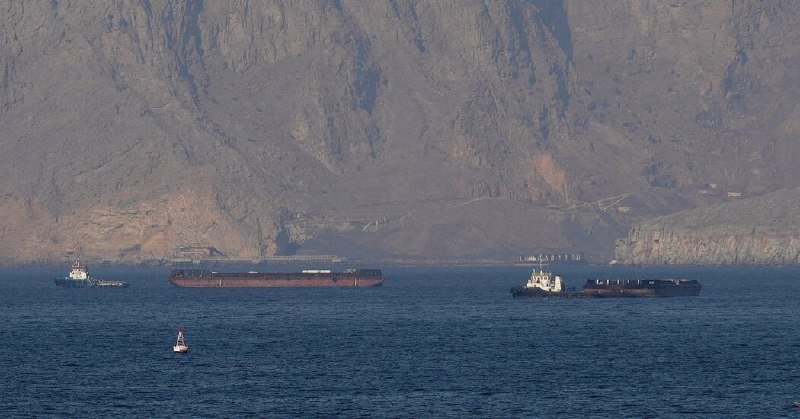
The phrasing, reported across Iranian state-adjacent and geopolitics-focused Telegram channels on 21 May 2026, arrived at a moment of genuine diplomatic sensitivity. Tehran has signaled demands related to the Strait of Hormuz—the chokepoint through which roughly a fifth of the world's oil flows. Polymarket, the prediction market platform, assigns just a 2% probability to the scenario in which Trump agrees to let Iran charge transit fees by the end of May. The market is not alone in skepticism.
The Hormuz Question Is Not New—But the Pressure Is
Iran has long treated the Strait of Hormuz as leverage. The waterway is narrow—some 33 kilometers at its narrowest—and both geographically and militarily dominated by Iranian positions on the northern shore. Every administration since Obama has navigated some version of this tension: Tehran seeks sanctions relief and institutional legitimacy; Washington seeks constraints on enrichment and regional behavior. The Hormuz transit-fee demand is a structural ask: recognition of Iran's geographic rent-seeking capacity, dressed in the language of sovereignty.
The 2% Polymarket figure is a market's verdict on whether Trump, characteristically, blinks. That verdict is telling. Markets read Trump's negotiating posture more skeptically on Iran than on almost any other bilateral file—and they are probably right to.
The Wedding Remark Lands in a Specific Context
Trump's framing—"I will be killed if I go"—is not a policy statement. It is a performance of stakes. The message, stripped of the theatrics, is that Iran is the unavoidable priority, that domestic political theater must defer to strategic containment, and that any deal Tehran imagines coming out of Washington will be harder than the market prices.
There is a practiced quality to this. A second-term Trump operates with the accumulated capital of a man who survived two impeachment attempts and an assassination conviction. The suggestion that a son's wedding poses a security risk—that is not a man expressing genuine fear. It is a man calibrating how much dramatic weight a position requires.
What the Market Is Actually Pricing
The 2% probability on Hormuz fee concessions is not primarily a bet on Trump's character. It is a bet on the institutional structure surrounding him. Any concession on Hormuz transit fees would require navigating State Department equities, Pentagon assessments of freedom-of-navigation norms, and the precedent implications for other strategic chokepoints. American administrations do not easily cede geographic rent extraction to adversarial states—even when the nominal ask is framed as a bilateral fee arrangement rather than a sovereignty claim.
Tehran knows this. The demand may be negotiating opening, not a realistic endpoint. The Polymarket figure reflects that asymmetry: the gap between what Iran asks for and what it expects to receive.
The Structural Pattern
What is observable here is a familiar choreography: an adversarial state names its maximum demand; the US administration signals irreducible red lines; the gap is navigated in back-channels, producing an outcome neither side could have announced at the outset. Trump has done versions of this with North Korea, with tariff negotiations, with NATO burden-sharing. The Iran file is structurally similar—except the Strait of Hormuz is not a trade deficit or a alliance contribution metric. It is a physical artery of the global economy.
The melodrama about the wedding, then, is a frame. It tells the diplomatic audience: I am focused, I am pressured, I cannot even leave Washington for family. It tells the domestic audience: I am making sacrifices for the national interest. Both reads are probably true, which is what makes the performance effective.
What Remains Uncertain
The sources do not confirm the specific terms Iran has formally communicated to Washington, nor do they indicate whether back-channel discussions have narrowed the gap between Tehran's opening position and any plausible American concession. The Polymarket figure is a market consensus, not a leaked negotiation readout. Whether Trump's team has privately signaled flexibility on Hormuz—while publicly maintaining the 2% posture—cannot be determined from the available sourcing.
The wedding will presumably happen. Whether Trump attends is a detail that the diplomatic machinery of Hormuz will not ultimately determine. But the signal embedded in his refusal—that Iran is consuming the agenda, that nothing else quite rises to the level of this priority—is a data point about how this administration conceptualizes its leverage.
This publication's wire coverage led with Trump's remarks and the Polymarket odds in sequence; the opinion desk drew the structural frame from the gap between the theatrical framing and the 2% market probability.
Wire provenance
This editorial synthesis draws on the following public wire/social posts:
- https://t.me/JahanTasnim
- https://t.me/DDGeopolitics