The Hormuz Illusion: Two Powers, One Waterway, Zero Agreement
Within the span of an hour on 21 May 2026, Washington and Tehran both staked claim to the same maritime chokepoint — and neither side acknowledged the other existed. That silence is the story.
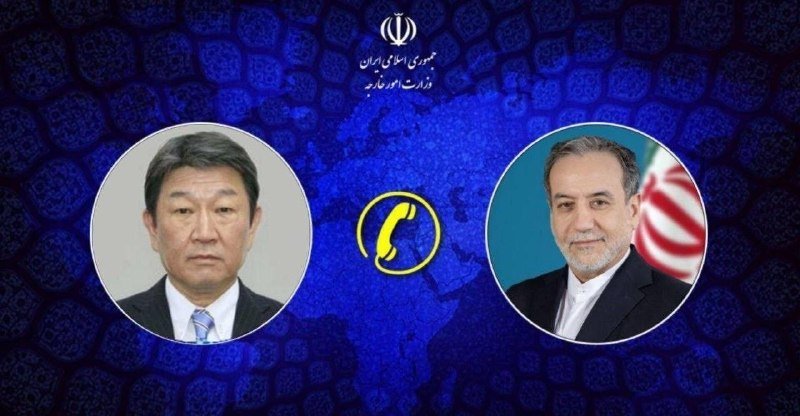
On 21 May 2026, a new maritime authority emerged — or was announced — from Tehran. Its mandate: any vessel seeking passage through the Strait of Hormuz must first clear Iranian permission. The geographic claim did not stop at Iran's shoreline. It extended into waters the United Arab Emirates considers its own.
Hours earlier, across the Persian Gulf and across several oceans, the United States made a parallel announcement of a different kind. President Trump declared that American naval approval was the only permission that mattered — that no ship could enter or exit the Strait without the say-so of the United States Navy.
Neither statement acknowledged the other. That is the significance.
The Strait of Hormuz is among the most consequential geography on earth. Roughly 20 to 25 percent of the world's oil flows through its narrowest point — a channel no wider at its pinched point than 34 nautical miles — along with a substantial share of global liquefied natural gas. It is a chokepoint that successive administrations in Washington have treated as a de facto American asset, backed by the Fifth Fleet based in Bahrain and a long-standing posture of freedom-of-navigation operations. Iran, for its part, has spent decades framing the strait as an Iranian strategic asset — a card it holds, not a corridor it merely neighbours. The phrase "closing the Strait of Hormuz" has been a staple of Iranian official rhetoric since at least the 1980s, when it briefly attempted to make it true.
What happened on 21 May 2026 is not new in kind. It is new in the simultaneous brazenness of two powers claiming exclusive gatekeeper authority over the same waterway, on the same day, to the same international audience. The previous norms — imperfect as they were — assumed that the United States provided the umbrella of maritime security and that Iran reserving the right to raise friction kept everyone appropriately anxious. The dual announcement collapses that tacit division. Either the strait is under American naval sovereignty, or it is under Iranian maritime sovereignty. Both cannot be simultaneously true in any operational sense. The contradiction will surface the first time a commercial vessel seeks to comply with both mandates simultaneously and finds it cannot.
The immediate effect on tanker traffic is likely limited. Ship operators have weathered decades of geopolitical noise around the strait and have developed a robust capacity to wait things out. The United States Navy has not, to date, enforced a literal permission-based regime — its "approval" framing is a statement of hard-power fact dressed in administrative language. Iran, for its part, lacks the naval assets to interdict commercial traffic at scale but has demonstrated willingness to harass, seize, and occasionally strike vessels it deems non-compliant. The zone of overlapping claimed authority creates ambiguity that experienced maritime operators can exploit for a time — and that escalation-hungry actors on both sides can exploit faster.
The structural picture is more disquieting. The Strait of Hormuz has operated for decades under a rough equilibrium: American hard-power dominance held the waterway open; Iranian rhetorical dominance preserved a sense of regional agency. That equilibrium rested on the assumption that the United States, as the unipolar power, could de facto own the strait's security without needing to announce it as a legal claim. Iran's new authority — and whatever bureaucratic apparatus stands behind it — suggests Tehran is testing whether the formalisation of maritime sovereignty claims can shift that equilibrium in its favour while American attention is fractured by other theaters.
The United Arab Emirates, whose territorial waters Iran is now asserting jurisdiction over, faces the most immediate practical pressure. Abu Dhabi has carefully navigated between Washington and Tehran for years, maintaining a functioning port economy and avoiding entanglement in either power's maximalist positions. An Iranian maritime authority extending into UAE waters is not an abstract legal dispute — it is a direct challenge to the sovereignty assumptions that underpin Emirati commercial infrastructure. Whether the UAE escalates that challenge through diplomatic channels, seeks American naval reassurance, or attempts quiet bilateral back-channeling will be a revealing indicator of Gulf state agency in a moment when the two external guarantors of the maritime order are openly contradicting each other.
There is a broader pattern visible here, one that extends beyond the Gulf. The post-Cold War assumption that the United States would maintain open-maritime norms at acceptable cost has been eroding — not because American naval power has collapsed, but because the political will to underwrite those norms without explicit acknowledgment of what is being sacrificed has become politically unstable. Declarations of total control over a waterway that sits in someone else's neighbourhood, made within hours of a rival power making an equally total claim over the same geography, suggest that the international norms governing the global commons are now contested terrain rather than settled infrastructure. The Hormuz moment is a legible instance of a larger contest: who has the authority to permit passage through the world's arteries, and on what basis.
What remains genuinely uncertain is whether either power intends to enforce its declared authority in a way that makes the contradiction live rather than merely rhetorical. American officials have made expansive sovereignty claims before. Iranian officials have announced maritime control zones that proved more durable on paper than in practice. The next 72 hours of naval movements, diplomatic cables, and shipping-company advisory updates will tell whether 21 May 2026 was a pressure point or a breaking point. The silence between those two announcements — each power speaking past the other, as though the rival claim did not exist — is not reassuring. It suggests both sides are posturing for leverage, not preparing to back down. And in a waterway carrying a fifth of the world's oil, posturing that goes wrong has consequences measured in global economic terms, not merely regional political ones.
Wire provenance
This editorial synthesis draws on the following public wire/social posts:
- https://t.me/OSINTdefender_pro/2438
- https://t.me/OSINTdefender_pro/2437
- https://t.me/OSINTdefender_pro/2436
- https://t.me/OSINTdefender_pro/2435