US Sanctions Iran's Lebanon Ambassador: Diplomatic Escalation or Signal Management?
The Treasury designation of Tehran's Beirut envoy marks a rare move against an accredited diplomat, raising questions about where the US-Iran confrontation is heading.
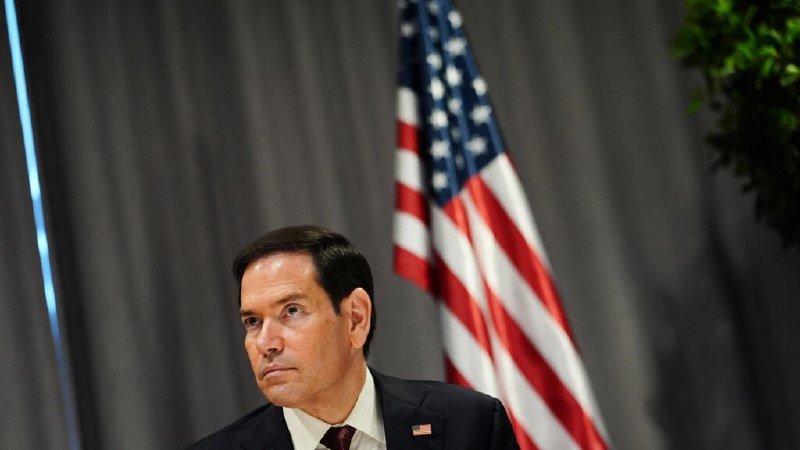
The US Treasury designated Mohammad Reza Rauf Shibani, Iran's ambassador to Lebanon, under sanctions on 21 May 2026, alongside eight other individuals. The designation, announced under Executive Order 13224, targets what the department described as activities preventing — the predicate language was partially truncated across initial reports. Iranian state media called it a continuation of hostile actions against the Islamic Republic. What is notable is not merely that another Iranian official was sanctioned, but that the target holds diplomatic accreditation in a third country. Accredited ambassadors are, by long-standing convention, excluded from such designations; their persons and communications are protected precisely to preserve channels that states do not wish to sever entirely.
That convention has now been set aside. Whether deliberately or as a result of administrative classification drift, the Shibani designation signals that the Biden administration — or the interagency process that feeds it — is willing to treat even the formal diplomatic interface as fair game. That is a meaningful data point in any assessment of where the US-Iran confrontation is headed.
Immediate Fallout and the Vienna Question
The designation was confirmed across Iranian state outlets including Tasnim News and JahanTasnim on 21 May, with both citing the Treasury announcement. Neither outlet carried a substantive response from Shibani himself, though Iranian foreign ministry channels described the action as unlawful interference in bilateral relations. Lebanon's own position — whether Beirut收到了 any prior notification, and how the Hariri or Aoun successor governments intend to handle the accreditation of a sanctioned diplomat — remains unstated in the available record. That gap matters. Lebanon has been navigating its own structural crisis for years, with Hezbollah's political and military role a persistent source of internal tension and external pressure. The designation forces the Lebanese state into a position it did not choose.
The legal architecture here deserves attention. Executive Order 13224, the terrorism-related sanctions authority, does not inherently prohibit the accreditation of a sanctioned individual as ambassador. But it does freeze any US assets — broadly defined — and prohibits US persons from transacting with the designee. An ambassador who cannot legally receive a call from the State Department, cannot open a bank account to manage embassy operations, and cannot travel to the United States for multilateral meetings has had the practical substance of his function hollowed out. Whether that was the intent, or whether it is a secondary consequence the framers did not consider, is not yet clear from the public record.
The Iranian Frame
Iranian state media framing of the designation was consistent and predictable. Tasnim, the conservative outlet closest to the Islamic Revolutionary Guard Corps ecosystem, described the move as part of an ongoing hostile campaign. The language — "continuing its hostile actions against the Islamic Republic" — tracks closely with how Tehran characterizes any US pressure, from nuclear sanctions to cyber operations to the assassination of Qasem Soleimani. It is the default setting. But that does not make it wrong; the designation does represent a concrete act of pressure, and the framing accurately describes its category.
What is less predictable is how Tehran's own foreign policy establishment responds. The ambassador in Beirut occupies a particular role: he is simultaneously Iran's formal diplomatic representative to the Lebanese Republic and a principal interlocutor with Hezbollah. Those functions are formally distinct but operationally inseparable. Sanctioning him does not merely punish the individual — it is a statement about the nature of Iran's Lebanese engagement. The question is whether that statement is calibrated — designed to modify behaviour — or punitive — designed to impose costs without expectation of change. The evidence does not yet allow a clean answer.
Structural Context: Sanctions as the Default Instrument
The designation sits within a longer arc. US Treasury sanctions on Iranian individuals and institutions have accumulated across multiple administrations: nuclear scientists, Revolutionary Guard commanders, oil traders, banking correspondents, and now, an accredited ambassador. Each individual sanction is defensible on its own terms. Taken together, they amount to a comprehensive economic pressure campaign whose stated objective — according to successive administrations — is to bring Iran to a negotiated outcome on its nuclear programme and its regional behaviour.
That strategy has produced mixed results. The JCPOA, reached in 2015, collapsed after the Trump administration withdrew in 2018. Talks in Vienna across 2021-2022 achieved no revival. The current round of nuclear negotiations, reportedly involving indirect US-Iran communication through Omani and Swiss intermediaries, shows no public sign of imminent breakthrough. In that context, sanctions designations function less as a lever — the administration has been pulling it for years — and more as a signal of continued pressure, an assertion that the maximum pressure posture has not been abandoned even as diplomacy continues in the background.
The Lebanon angle is not incidental. Hezbollah has been a core component of Iran's regional deterrence architecture since the 1980s. Its political representation in Beirut, its missile arsenal in the south, and its operational ties to Tehran form a system the Islamic Republic is unlikely to abandon under any sanctions regime. Designating the ambassador does not change that architecture. It marks it.
Stakes: Who Bears the Cost
If the designation holds — and there is no indication it will be reversed absent a negotiated deal — the costs fall unevenly. Shibani personally loses access to the US financial system and any US-correspondent banking, though as ambassador his personal assets in dollars are likely minimal. The more significant cost is to the diplomatic function itself: an ambassador who cannot operate practically in Beirut, cannot move freely to Washington or New York for multilateral business, and cannot maintain normal channels with the State Department is a formal envoy in name only.
For Washington, the designation demonstrates willingness to escalate the diplomatic dimension of the confrontation. It forecloses one potential channel of communication — the ambassador, who in many administrations would serve as an informal back-channel — without opening any alternative. That may be intentional: the administration may have determined that Shibani was not a useful interlocutor and that designating him removes an obstacle to more direct communication elsewhere. Or it may be a drift in sanctions practice, with the terrorism finance bureaucracy applying standard designations to diplomatic roles without full consideration of the foreign policy consequences. The record does not yet distinguish between those possibilities.
Lebanon is the least principals actor here but the most exposed. A sanctioned ambassador on its soil creates a de facto dilemma: honour the accreditation and risk US secondary sanctions attention, or quietly request his departure and confront Tehran's retaliation. Neither option is attractive for a state that has spent years unable to form a functioning government.
What remains unclear from the available record is the specific activity the Treasury cited as the predicate for Shibani's designation. Executive Order 13224 requires a nexus to terrorism-related activity, but the truncated announcements across the three sourcing outlets do not specify what that nexus is in this case. The Treasury's formal designation notice, when published in full, will determine whether this is a narrow, targeted action with a clear factual basis or a broader political designation wrapped in sanctions language. That distinction will shape how Iran — and how Congress — responds.
Monexus covered this story through its Telegram wire feeds, which carried the Treasury announcement and Iranian state media reaction. The wire framing treated the designation as a routine sanctions update; this article treats it as a diplomatic signal requiring structural analysis. The specific predicate for the Shibani designation was not available in the source record at time of publication.
Wire provenance
This editorial synthesis draws on the following public wire/social posts:
- https://t.me/farsna/789012
- https://t.me/tasnimnews_en/456789
- https://t.me/JahanTasnim/123456