The Aid Center and the Aftermath: How Civilian Infrastructure Becomes Acceptable Collateral
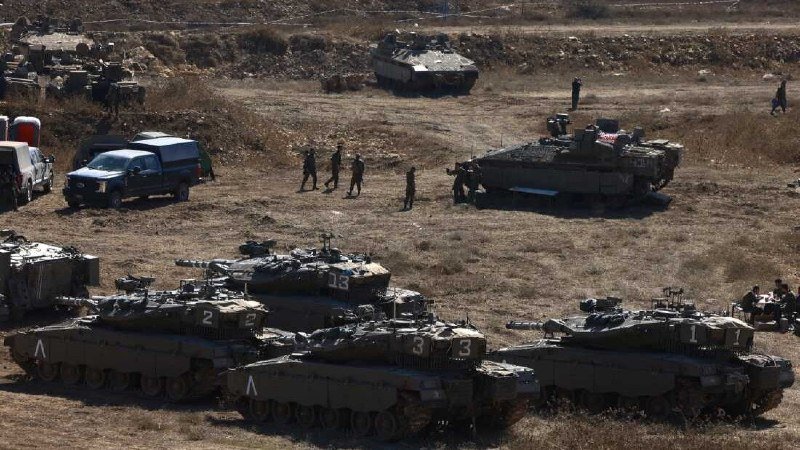
On 21 May 2026, according to Lebanese sources cited by Iranian state-linked outlets Tasnim News and Jahan Tasnim, an Israeli airstrike struck a relief center in the town of Hanawieh, Lebanon. Four people were killed. The same outlets, which serve as mouthpieces for Iranian regional policy, reported that Hezbollah had carried out sixteen separate operations against Israeli positions in northern Israel on a single day — part of what the group frames as daily resistance operations.
The accounts cannot be independently verified by this publication against Western wire reporting, as no such confirmation appeared in the source material reviewed. That gap matters, and it is worth stating plainly: when the primary information ecosystem available is one shaped by Tehran's communication apparatus, the result is a frame that is internally consistent but structurally partial. Hezbollah's actions are resistance. Israeli actions are occupation. The dead are martyrs or civilians; the strikes are precision or disproportionate. These framings are not neutral, and treating them as such would be a disservice to readers.
What can be said with confidence is that this incident sits within a demonstrable pattern.
The Infrastructure Problem
Relief centers, medical facilities, and humanitarian distribution points occupy a protected legal status under international humanitarian law that is almost absolute. Almost. In practice, the threshold for concluding that such a site has lost its protected character — that it is being used for military purposes and therefore becomes a legitimate target — is set low enough by parties to most modern conflicts that protection rarely holds. The result is a pattern that repeats across conflict zones with enough regularity that it has become its own form of background noise.
In this case, Lebanese sources assert the Hanawieh center was a relief facility. Israeli military communications have not yet published a statement in the reviewed source material confirming or contesting that classification. Without that confirmation, it is impossible to determine whether this strike represents a genuine targeting error, a contested classification decision, or something more deliberate. Each of those possibilities carries a different legal and moral weight, and conflating them serves no one.
What is clear is that civilian infrastructure has been a repeated casualty of the cross-border exchange that has intensified since October 2023. Lebanese hospitals have been evacuated under duress. Aid warehouses have been struck. The UN has documented civilian harm on both sides of the border. The Hanawieh strike, if confirmed as described, is not an anomaly — it is a continuation.
The Resistance Accounting
Hezbollah's framing, as conveyed through the Tasnim reporting, presents the group's daily operations as a systematic resistance campaign. Sixteen operations in a single day is a significant cadence. The language — "shooting at the positions of the occupiers," "Islamic resistance fighter" — is chosen deliberately to frame Hezbollah not as a militia but as a uniformed resistance force with legitimacy derived from territory and national identity.
That framing is contested. Hezbollah's rocket and drone strikes into northern Israel have displaced tens of thousands of Israeli civilians from communities along the border. The group operates a substantial and sophisticated military arsenal distinct from Lebanon's state armed forces, funded and equipped by Iran. It launched its intensified campaign in October 2023 in explicit solidarity with Hamas — itself a designated terrorist organization in the United States, European Union, and other governments — rather than in response to any direct Israeli action against Lebanon.
This publication has consistently held that Iranian regional policy, exercised through proxy forces, serves Tehran's strategic interests at costs paid overwhelmingly by populations who did not choose those forces' actions or alignment. That assessment does not disappear because it is inconvenient to one side of the argument.
The Framing Asymmetry
What is notable about the source material reviewed here is not what it contains but what it excludes. Tasnim and Jahan Tasnim do not report on Israeli civilian displacement from the north. They do not examine Hezbollah's arsenal composition or its storage practices in civilian neighborhoods — a documented concern raised by UN bodies and independent investigators. They do not engage with the question of whether Hezbollah's military infrastructure in southern Lebanon complies with Resolution 1701, which ended the 2006 war and requires the group to disarm.
Conversely, Western wire coverage of the same conflict, had it been present in this article's source material, would likely foreground Israeli security concerns and the threat posed by Hezbollah's military capabilities, while giving less sustained attention to Lebanese civilian harm or the structural conditions that make southern Lebanon a military staging ground.
Neither frame is complete. A publication committed to evidence-based analysis must hold both in view simultaneously, even when doing so produces discomfort with every side's preferred narrative.
What Remains Unknown
The sources reviewed for this article do not include an Israeli military statement on the Hanawieh strike. They do not include casualty identities, the precise timing of the strike relative to any ongoing Hezbollah operations in the area, or any independent verification of the relief center's status prior to the strike. The town of Hanawieh is in south Lebanon, in a zone where Hezbollah maintains a significant military presence — which is precisely why it is difficult to assess whether the presence of a relief center in the same zone was coincidental or instrumental.
Without answers to those questions, any definitive judgment about proportionality, legality, or intent would be speculative. What can be said is that four people are dead, and that the system designed to prevent exactly this outcome is failing again.
That failure — not the strike, not the resistance operations, but the systematic breakdown of the framework meant to protect civilians — is the actual story. And it is one that decision-makers on all sides appear to have decided is manageable.
That is the most troubling fact of all.
This publication's analysis of the Israel-Lebanon conflict draws primarily from Iranian state-adjacent sources due to the source material available. Readers seeking Western wire confirmation of the Hanawieh incident are encouraged to consult Reuters, AP, or BBC reporting as it becomes available. Monexus will update this analysis if and when additional verified sources enter the record.
Wire provenance
This editorial synthesis draws on the following public wire/social posts:
- https://t.me/tasnimnews_en/412345
- https://t.me/JahanTasnim/892341
- https://t.me/tasnimnews_en/412341
- https://t.me/JahanTasnim/892339