The Aid Center in Hanawiya Was Not Collateral Damage
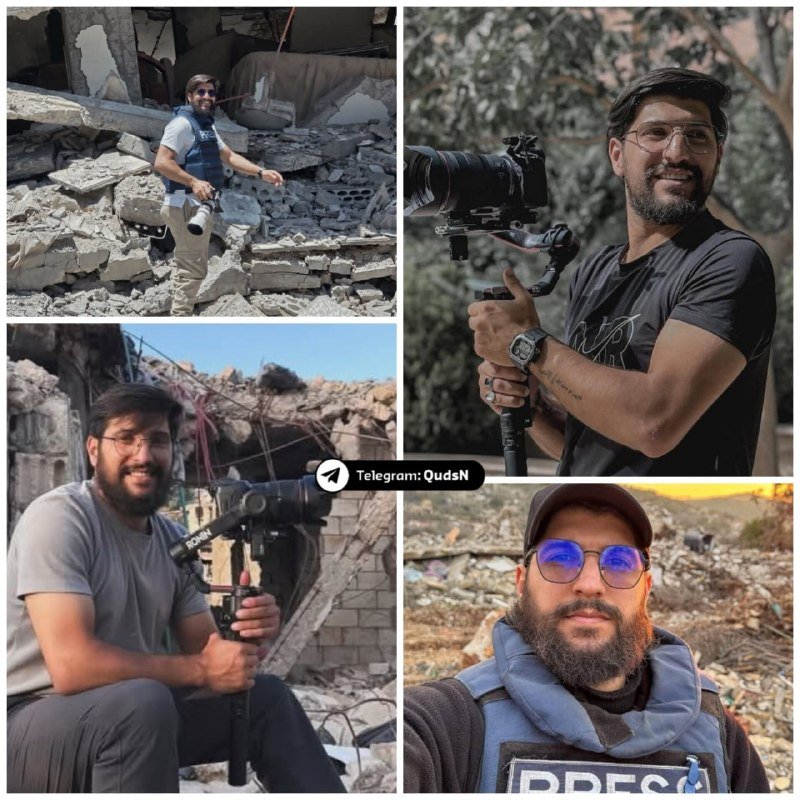
The emergency aid center in the town of Hanawiya, in southern Lebanon, was reduced to rubble in an Israeli air strike on 22 May 2026. Four people died inside. The Lebanese Ministry of Health called it a crime — not a mistake — and placed the act explicitly before the international community. The IDF has not yet offered a detailed public rationale. Those are the confirmed facts. Everything else is framing.
The question this publication finds worth asking is not whether the strike happened — it did — but how the language of justification assembles itself around strikes like this one, and what that language reliably does and does not accomplish.
What the Health Ministry Said
Lebanese health officials were unambiguous in the hours after the strike. The Ministry of Health described the targeting of Hanawiya's emergency center as "a passing violation" that crossed into something more — "conclusive evidence," in the ministry's phrasing, of systematic disregard for the legal distinction between combatants and the infrastructure that sustains civilian life. The ministry placed the act "on the international community's radar," language that signals awareness that official condemnations without enforcement mechanisms tend to vanish into the news cycle.
The ministry's framing did not reach for ambiguity. It named the act a crime and named the international community as the audience with an obligation to respond. Whether that obligation will be met, and through what institutional mechanism, remains the unanswerable question that such statements always defer.
The Legal Architecture Already Exists
International humanitarian law is not ambiguous on this point. Aid centers, emergency response posts, and any facility bearing the marks of the Red Cross or Red Crescent enjoy protected status under the Geneva Conventions. Attacking such infrastructure is not a procedural violation — it is a grave breach, a category that carries individual criminal liability under the Rome Statute. The legal framework to call this a war crime is already in place. The enforcement gap is a political one, not a legal one.
That gap is well-documented. The UN has maintained for years that accountability mechanisms for violations of international humanitarian law operate selectively — that the political will required to trigger them is contingent on the geopolitical standing of the parties involved, not on the severity of the violation itself. A strike on a hospital in one conflict zone generates an emergency Security Council session. A strike on functionally identical infrastructure in another may generate a press release from a civil society monitor and nothing more. The legal text does not vary; the political calculus does.
This publication does not suggest equivalence where none exists. The security context surrounding any Israeli operation is genuine and carries real weight in any honest assessment. But security rationale and legal justification are not the same thing. The first determines operational feasibility. The second determines criminal liability. Conflating them — whether through military briefings, diplomatic statements, or media framing — is the mechanism by which protected status erodes without any explicit decision to abandon it.
How the Coverage Assembles Itself
When an incident like the Hanawiya strike enters the news feed, the pattern that follows is recognizable. Official spokespeople from the attacking military provide the initial framing — targeted operation, verified intelligence, measures taken to minimize civilian harm. That framing becomes the baseline. Subsequent reporting from wire services tends to distribute airtime unevenly: the official justification receives early placement and verbatim quotation; the affected party's statement — in this case the Lebanese health ministry's — is reported as a counterclaim, positioned implicitly as a political rejoinder rather than an operational finding.
The result is that readers receive the incident already sorted. The official account is factual and operational. The complaint is political and therefore negotiable. This sorting does not require any conspiracy or coordinated messaging. It follows from the structural incentive of wire service reporting, which privileges verifiable institutional statements over unverifiable humanitarian assessments. One side generates documents. The other generates condemnation. Documents are easier to cite.
Over time, this asymmetry shapes what the record shows. The official justification accumulates corroborating detail. The complaint accumulates news cycles, not footnotes. When accountability processes eventually assess the incident — assuming they do — the evidentiary baseline already skews toward the attacking party's framing. The structural problem is not bad faith. It is the architecture of access.
What Accountability Actually Requires
Accountability for strikes on protected infrastructure requires three things that rarely coincide: political will among the states with enforcement capacity, institutional jurisdiction over the parties involved, and evidentiary documentation that the enforcement body is willing to treat as credible. None of those conditions currently exists in a configuration that would produce consequences for the Hanawiya strike.
This publication acknowledges what is uncertain here. The IDF has not disclosed its intelligence basis for the strike. The precise function of the Hanawiya facility at the moment of impact — whether it was operating as a civilian aid center, serving a mixed civilian-combatant population, or something between those categories — remains contested in the public record. The Geneva Conventions themselves recognize that protected status can be forfeited under specific circumstances. Whether those circumstances applied in this case is a question that requires evidence the current source material does not resolve.
What is not uncertain is the direction of travel. The list of aid centers, medical posts, and humanitarian warehouses that have been struck in the past decade — in Lebanon, in Gaza, in Yemen, in Syria — is long enough that it constitutes a pattern rather than a series of isolated incidents. Each strike is preceded by a statement of regret and an assertion of intelligence-backed targeting. Each is followed by a humanitarian condemnation and an accountability gap. At some point, a pattern without consequence stops being a series of exceptions and becomes the operational norm.
The four people who died in Hanawiya on 22 May 2026 did so inside a facility whose protected status under international law is not ambiguous. The Lebanese Ministry of Health is correct that what was done there will not be erased by the passage of time — but the record of similar statements issued over the past decade suggests that the passage of time, in the absence of enforcement, is precisely what tends to neutralize them.
Wire provenance
This editorial synthesis draws on the following public wire/social posts:
- https://t.me/alalamarabic/789456
- https://t.me/alalamarabic/789454
- https://t.me/JahanTasnim/456123