America's Transactional Turn
Three recent moves reveal a coherent strategy beneath the surface: Washington applying pressure where leverage works while retreating from institutional commitments that constrain unilateral action.
A diplomatic cable surfaced this week showing US officials threatening Palestinian delegates with visa restrictions unless they withdrew a candidacy for a UN General Assembly vice presidency seat. On the same day, the White House announced the deployment of 5,000 additional US troops to Poland. Twenty-four hours earlier, the administration had paused its own AI oversight executive order, saying it "didn't like certain aspects of it." Three separate moves, each documented in public record, each representing a distinct foreign policy instrument. Together, they describe something more coherent than their surface inconsistency suggests: an America increasingly willing to use hard leverage where it works and increasingly reluctant to sustain the institutional arrangements that constrain its freedom of action.
The UN Pressure
The cables, first reported by Middle East Eye on 22 May 2026, contain instructions to US diplomats directing them to threaten Palestinian officials with revocation of US-issued travel documents if they did not withdraw the candidacy. The target, a Palestinian UN ambassador, ultimately withdrew from the vice presidency bid. The mechanism is not new — Washington has used travel restrictions and funding levers against Palestinian representation for years — but the documentation is unusually explicit. The instructions are unambiguous in their intent: Washington wanted a specific outcome at an international institution and deployed a targeted coercive tool to achieve it.
The Troop Commitment
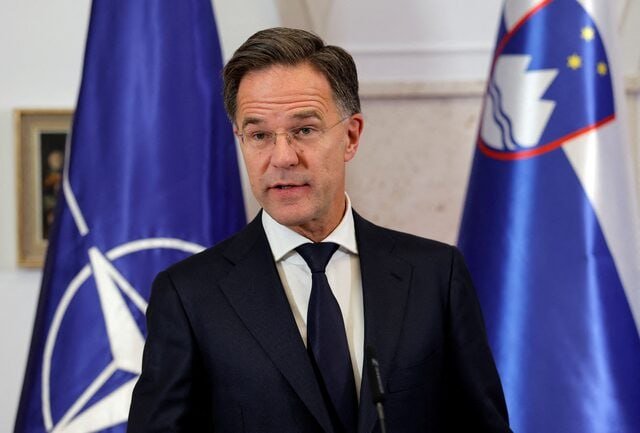
Trump, speaking on 21 May 2026, announced the United States would send an additional 5,000 troops to Poland. The announcement reinforces existing US presence on NATO's eastern flank and signals continued commitment to European deterrence — a priority that enjoys bipartisan support in Washington regardless of administration. Poland has been a consistent advocate for elevated US troop levels, and the announcement came as Warsaw ramped up its own defense spending. The deployment is transactional in its logic: a partner spending more gets more American presence, and both sides get a visible manifestation of alliance commitment.
The AI Pause
The executive order pause, announced on 21 May 2026, is the least consequential in immediate policy terms and the most revealing in what it signals about institutional appetite. The administration that issued an AI oversight framework weeks earlier reversed course because certain provisions proved unpalatable. Whether the paused provisions were too restrictive, too permissive, or simply politically inconvenient remains unspecified. What is clear is reduced appetite for American leadership in global AI governance. The reversal complicates the coherence picture — Washington's posture is not uniformly assertive. But the thread connecting all three developments is consistent: where multilateral coordination imposes constraints on unilateral action, the administration prefers the exit.
The Pattern and Its Costs
The administration is comfortable with transactional tools. Targeted pressure achieves specific outcomes; bilateral troop deployments are legible and negotiable; regulatory retreats avoid entanglement. This approach is not incoherent — it is a recognizable philosophy applied consistently across domains. The problem is what it sacrifices: the multilateral system the US built and maintained is premised on sustained engagement, precedent, and institutional credibility. Each targeted pressure move degrades that credibility incrementally. Each bilateral arrangement weakens the collective framework. The question is not whether the approach works — it does, in the short term, in specific cases — but whether the accumulated cost is worth the accumulated benefit. The multilateral system will not collapse from any single decision. It will become incrementally less effective as the power that built it appears to have less interest in sustaining it.
What We Don't Know
The cables document the mechanism but not the motivation; we know Washington applied pressure, not why it chose this particular moment or this particular target. The troop deployment figures are Trump's announced figures — the strategic rationale beyond deterrence and burden-sharing is not detailed in the source material. The AI executive order pause does not specify which provisions triggered the reversal. These gaps matter for assessing whether the pattern is deliberate strategy or accumulated impulse — a question the available sources do not yet resolve.
This publication covered the US diplomatic cable reporting alongside the troop deployment and AI executive order pause. The three stories, presented separately in most wire coverage, reveal a common thread: Washington applying leverage where leverage works while retreating from arrangements that constrain its freedom of action.
Wire provenance
This editorial synthesis draws on the following public wire/social posts:
- https://x.com/middleeasteye/status/1924163849269121424
- https://x.com/unusual_whales/status/1924007898742042763
- https://x.com/polymarket/status/1923875248150452340