Andy Cohen's NBA Finals Question Is the NBA's Own Fault
When Andy Cohen asks a room full of Bravo personalities who will win the NBA Finals, the league should take it as a compliment. The league spent thirty years engineering exactly this kind of crossover cultural moment—and now it has arrived, the response seems to be polite discomfort.
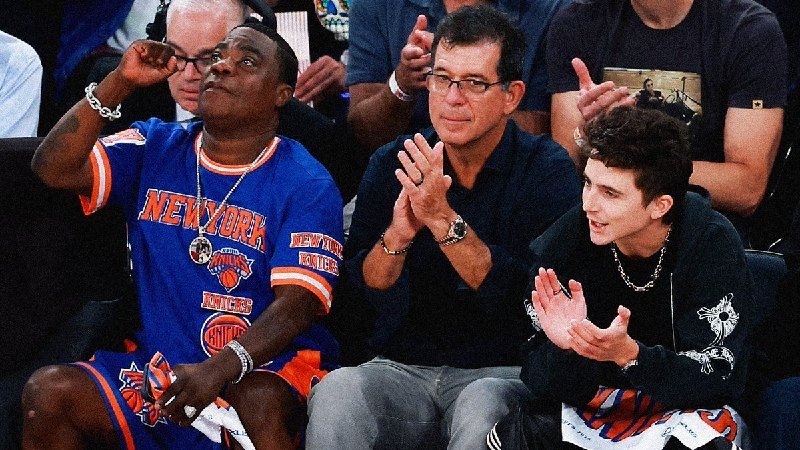
Andy Cohen has never pretended to be a basketball analyst. The host of Bravo's long-running celebrity gossip and reality-talk institution Watch What Happens Live! built his audience on candlelit confessionals with Real Housewives, not post-game press conferences. Which makes it telling—and a little uncomfortable for the NBA's more earnest defenders—that Cohen spent part of his May airtime this week asking a room full of celebrity guests who would hoist the Larry O'Brien Trophy come June.
The question landed on a Telegram account posting NBA content as something lighter: a pop-culture crossover moment, harmless celebrity engagement with a major sporting event. The framing implied the league should feel flattered. It should. But the real story is why it has to feel that way—and what that discomfort reveals about the NBA's complicated relationship with its own cultural ambition.
The League That Courted Hollywood
The NBA did not stumble into celebrity. It engineered the conditions for exactly this kind of crossover. From the Jordan era forward, the league understood that player personalities were a feature, not a liability. The Association actively cultivated relationships with Hollywood, invited celebrity courtside presence, and framed its stars as cultural icons first, athletes second. LeBron James did not become LeBron James despite the NBA's entertainment logic; he became LeBron James because of it.
This strategy worked so well that celebrity became structural. The 2020s saw NBA players become de facto media companies—podcast networks, production deals, social media empires that dwarfed the reach of the games themselves. When Nikola Jokic's post-game press conferences go viral, that is not an accident. It is a byproduct of a league that decided entertainment value was inseparable from competitive value. The NBA wanted to be the NFL's cooler, smarter sibling. It largely succeeded.
Andy Cohen asking his Bravo audience to pick a Finals winner is the logical endpoint of that project. The NBA spent three decades teaching America that basketball was not really about basketball—or not only about basketball. It was about personalities, drama, storylines, the soap opera that unfolds between October and June. Cohen's question was the entertainment industry's acknowledgment that the lesson landed.
The Uncomfortable Mirror
The problem is that the league seems unsure what to do now that the lesson has been received. There is a specific tone that accompanies NBA-adjacent social media when celebrity culture crosses over: a slight wince, a performative insistence that the 'real' basketball people are somehow above this. As if the last thirty years of celebrity marketing had not happened. As if courtside celebrities were a bug, not a feature.
This is intellectually dishonest, and it matters because it points to a deeper tension in how the NBA presents itself. The league's official communication—its broadcasts, its digital platforms, its player-media ecosystem—has leaned hard into personality-driven narrative for years. But when that narrative gets picked up by a venue as explicitly entertainment-coded as Bravo, there is a reflexive retreat to a kind of false seriousness. The subtext is that celebrity engagement is fine as long as it stays within approved NBA-adjacent channels. WWHL is not an approved channel.
That distinction is arbitrary. It also misunderstands what makes celebrity culture powerful. Cohen's audience—predominantly affluent, socially engaged women aged 25-54—represents a demographic the NBA has explicitly targeted for years. Airing Finals predictions on WWHL is not an intrusion into sacred basketball space. It is reaching an audience the league has been trying to reach since the days of Michael Jordan's Nike deal.
What the NBA Actually Won
The anxiety about celebrity crossover is really anxiety about respectability—a persistent fear, particularly acute in American sports culture, that entertaining the wrong people means you are not a 'real' sport. The NFL does not worry about this. The NFL projects mass-market inevitability; it does not particularly care whether the cultural establishment approves. The NBA, by contrast, has always wanted it both ways: mass-market success and cultural cachet, broad appeal and insider credibility.
This has been a winning formula. The NBA is, by most measures, the second-most-popular sports league in North America and by far the most globally recognized. Its players have more cultural reach than the leagues that employ them. When Joel Embiid or Stephen Curry says something, it circulates in spaces where sports coverage rarely penetrates. This is a remarkable achievement—and it happened because the NBA leaned into entertainment logic rather than fighting it.
Andy Cohen asking about Larry O'Brien is not a threat to that achievement. It is evidence that it worked. The question is whether the league's media ecosystem—which includes serious journalists, analytics-driven content creators, and old-school basketball fundamentalists—will accept the consequences of their own strategy. The strategy was to make the NBA essential cultural content. Essential cultural content gets asked about at Bravo parties. This is not a crisis. It is a completion.
The Road Ahead
The NBA Finals will conclude in June, as they always do. One team will win. Several narratives will crystallize. The league will spend the summer processing what it all means. Somewhere in that processing, executives and communicators will make choices about how to frame the season's cultural legacy.
The temptation will be to retreat—to emphasize the basketball, to push back against the celebrity noise, to reassert seriousness. That would be a mistake. The NBA's advantage over every other major sports league is not its three-point line or its cap structure. It is that its product generates genuine cultural conversation beyond the scoreboard. Cohen's WWHL question is evidence of that advantage in action.
The league should take the question seriously, take it as a compliment, and take note of where else that question might be asked. The crossover moment the NBA spent thirty years engineering has arrived. The only rational response is to lean in.
Monexus framed this story as a media-culture and institutional-identity piece; the wire sourced it as a celebrity-gossip crossover item. The gap between those framings is, in itself, the story.
Wire provenance
This editorial synthesis draws on the following public wire/social posts:
- https://t.me/NBALive/4821