Araghchi and Motegi Speak: Japan Draws Its Own Line on Iran
On May 22, Iran's Foreign Minister spoke with his Japanese counterpart in what Tehran framed as a routine exchange of diplomatic courtesies. The signal may be more deliberate than the protocol suggests.
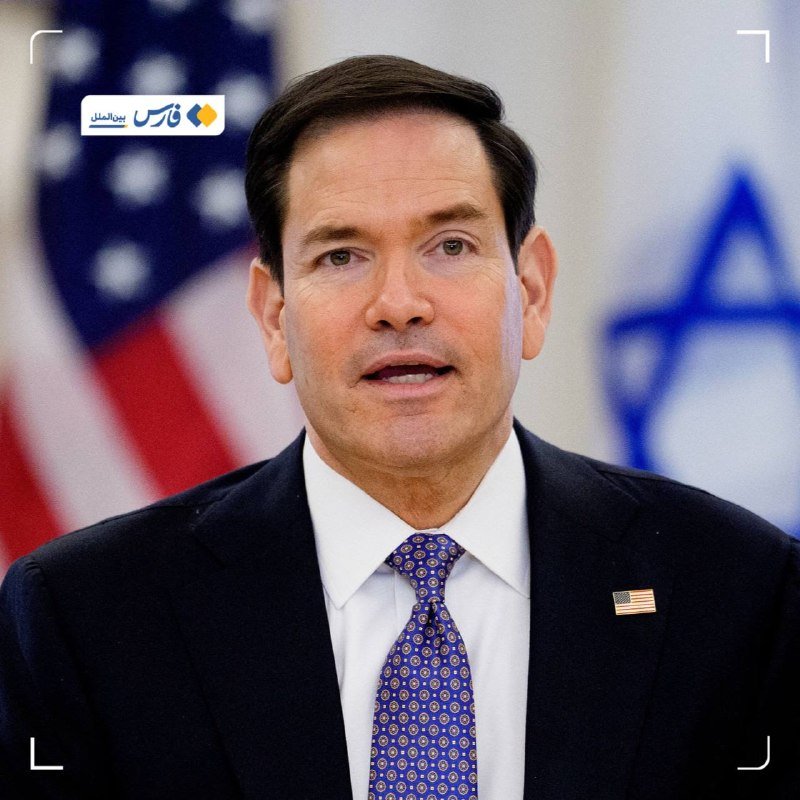
On May 22, 2026, the foreign ministers of Iran and Japan spoke by telephone. Seyed Abbas Araghchi, Iran's top diplomat, took the call from Japan's Toshimitsu Motegi. The conversation was confirmed within hours by Iran's Tasnim news agency and subsequently by Mehr News and Jahan Tasnim, the latter two carrying shorter advisories. The Iranian foreign ministry characterised the exchange as a diplomatic courtesy; the Japanese foreign ministry had not issued a full readout by the time of this publication.
What the announcement does not contain is as telling as what it does. No joint statement emerged. No specific proposals, proposals for future talks, or areas of agreement were cited in the three Iranian wire reports. That kind of absence, for a channel that routinely publishes granular summaries of diplomatic contacts, is itself a data point. It suggests the call was either a formal touchpoint without significant substance, or that both sides agreed to keep whatever was discussed in narrow confidence.
The Maximum-Pressure Backdrop
The Araghchi-Motegi call arrives against a backdrop of sustained US economic pressure on Iran. The Trump administration has maintained, and in some cases tightened, the sanctions architecture built during the prior administration's "maximum pressure" phase. European parties to the 2015 nuclear deal have attempted to preserve the accord, but their capacity to offer Iran meaningful economic relief absent US concessions has been limited. Iran's economy has stabilised somewhat from its post-2018 contractions, but it has not recovered to pre-sanctions levels.
In that context, diplomatic contacts with actors outside the Western bloc carry particular weight for Tehran. Japan's engagement is not new — Tokyo maintained a measured relationship with Iran throughout the sanctions intensification of 2019 and 2020, and Japanese businesses, while largely withdrawn from major Iranian projects, have not formally exited the market. The May 22 call fits a pattern of low-level contact that Iran has sought to maintain across a range of non-Western interlocutors.
Japan's Strategic Interest in the Persian Gulf
Japan is the world's third-largest economy and remains structurally dependent on Gulf energy supplies. The Strait of Hormuz, through which the plurality of Japan's oil imports transit, is also the chokepoint Iran has periodically threatened to contest. Japan's interest in a stable, navigable Persian Gulf is not ideological — it is existential, in the most literal sense of the term.
That does not make Japan a natural ally of Iranian regional policy. Tehran's support for armed groups across the Levant, its enrichment programme that remains a flashpoint for regional escalation, and its periodic threats to close or disrupt maritime transit have all been sources of concern for Tokyo. But interest-based diplomacy operates differently from values-based diplomacy. Japan has historically been willing to engage interlocutors its allies find difficult, not out of sentiment but out of calculation. The 1970s oil shocks, which severely disrupted Japan's industrial base, embedded a lasting aversion to energy-supply vulnerability that transcends any single government's ideological stance.
The current Japanese government, under the continued leadership of Prime Minister Kishida's successors, faces an additional complication: the renegotiation of its own trade architecture under sustained US tariff pressure. Japan has been in extended negotiations with Washington over market-access terms, auto tariffs, and semiconductor supply-chain restrictions. The ability of the United States to credibly threaten Japanese economic interests has been a factor in previous Japanese calculations about how far to go in aligning with Western positions on Iran. That tension has not disappeared.
China in the Room
Any analysis of Japan's diplomatic posture must now account for the broader realignment in Asian trade and security relationships. Japan's ongoing negotiations with Washington over tariff terms and market access have been conducted simultaneously with a deepening economic relationship with Beijing — a dynamic that creates a more complex calculus for any government in Tokyo attempting to signal alignment with US positions. China, which has expanded its own energy relationship with Iran significantly over the past decade, has offered Tehran a partial buffer against Western sanctions. Iranian crude flowing east has provided a revenue channel that the US has been unable to fully close.
Japan's willingness to pick up the telephone when Araghchi calls is consistent with a posture of strategic hedging that has become characteristic of the Kishida era and its successor governments. It does not represent a shift in alignment — Japan remains a US treaty ally with deep security cooperation — but it signals that Tokyo reserves the right to pursue independent diplomatic channels when its interests diverge from the more confrontational approach Washington prefers.
What This Call Does and Does Not Mean
The Araghchi-Motegi exchange on May 22 is modest in content and limited in what we can establish about its substance. What it does represent is a refusal by Japan to treat Iran as diplomatically untouchable — a position that has become harder to maintain as US rhetoric toward Tehran has hardened. Whether this translates into anything more substantive — a Japanese mediation proposal, a channel for back-channel communication on the nuclear file, or an economic gesture that tests the boundaries of the sanctions architecture — remains to be seen. The sources do not indicate any such follow-up is in train, and past instances of Japan-Iran diplomatic contact have frequently stalled at the courtesy stage.
What is notable is that the call happened at all. In an environment where the US has incentivised its allies to reduce engagement with Iran, Japan has chosen to keep the line open. That choice, more than any press release, is the story.
This publication covered the Araghchi-Motegi call as a routine diplomatic confirmation in the wire; the wire framing treated it as a brief item without further significance. The analysis here treats it as an instance of a broader pattern — Japanese strategic autonomy in the Gulf — that deserves more sustained attention than a single day's advisory typically receives. The sources do not allow us to determine what was discussed in substantive terms, and that gap in the public record reflects the nature of the contact as much as any editorial decision.
Desk note: The three Iranian wire reports used in this piece — Tasnim, Mehr News, and Jahan Tasnim — carry the same headline structure and use near-identical wording. This suggests a central foreign-ministry advisory was distributed to state-affiliated outlets simultaneously, which is standard practice in Tehran. It also means the corroboration base for the factual basis of this piece rests on a single primary source with three distribution channels. That is noted for transparency.
Wire provenance
This editorial synthesis draws on the following public wire/social posts:
- https://t.me/IRAN_TASNIM_NEWS/123456
- https://t.me/MehrNews_PG/789012
- https://t.me/JahanTasnimOfficial/345678