Bloomberg Warns Strait of Hormuz Closure Could Trigger Recession Approaching 2008 Scale
Bloomberg, citing the Rapidan Energy Institute, has warned that a sustained closure of the Strait of Hormuz through August 2026 could push the global economy toward a recession comparable in scale to the 2008 financial crisis, exposing persistent vulnerabilities in global energy infrastructure despite years of diversification efforts.
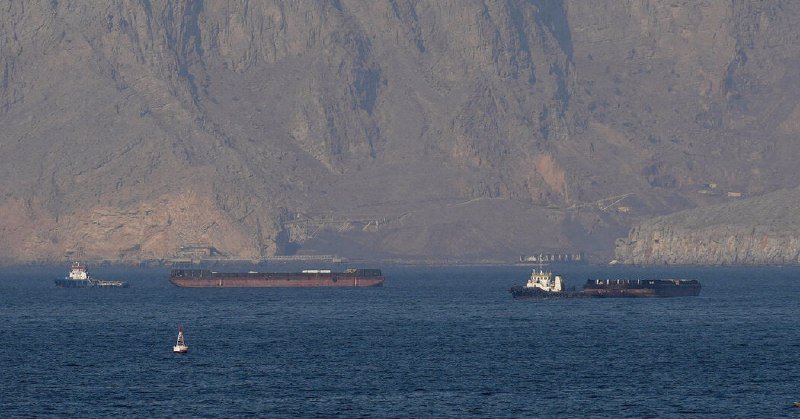
An oil tanker passes through the Strait of Hormuz in imagery released by Tasnim News on 22 May 2026, as a new analysis warns that sustained disruption to the waterway could approach the economic severity of the 2008 financial crisis.
Bloomberg, in reporting carried by multiple regional wires on 21 May 2026, cited the Rapidan Energy Institute's modeling of an economic scenario that has quietly unsettled energy ministers and central bankers: if the Strait of Hormuz remains impassable through August 2026, the resulting supply shock could contract global economic output at a rate comparable to the 2008 financial crisis. The warning did not specify a triggering event but arrived amid heightened regional tension that has put one of the world's most critical maritime chokepoints back into focus as a potential flashpoint.
The Strait of Hormuz handles approximately one-fifth of global daily oil trade, according to industry estimates, and roughly a fifth of global liquefied natural gas flows. Disruption there does not merely spike energy prices — it disrupts the logistics chains that modern manufacturing and international commerce depend upon. Rapidan Energy's analysis, as characterized by Bloomberg, projects that a sustained closure would create a supply vacuum that no existing infrastructure — strategic reserves, alternative routing, demand destruction — can fully absorb in the near term.
The Scenario: From Warning to Systemic Stress
Rapidan Energy's modeling, as reported by Bloomberg, sketches a specific trajectory. A Hormuz closure extending through August 2026 would, under baseline assumptions about demand elasticity and reserve release capacity, produce a demand shock whose macroeconomic consequences approach the magnitude of the 2008 contraction. The 2008 crisis, triggered by the collapse of the US subprime mortgage market and its cascading effects through the global financial system, reduced global GDP by an estimated 0.1 to 0.3 percent in 2008 itself, with much sharper declines in advanced economies. A comparable hit delivered through energy price channels rather than financial intermediation would arrive differently but could prove no less severe.
The immediate mechanism is straightforward in economic logic: remove a substantial portion of daily oil supply from accessible global markets, and prices adjust upward until demand destruction closes the gap. Rapidan's analysts appear to have modeled that adjustment as requiring prices to move sufficiently high to force demand reduction across major consuming blocs — a transfer of wealth from importers to exporters that would ripple through manufacturing costs, consumer purchasing power, and ultimately GDP figures.
The Bloomberg report does not specify what hypothetical event might trigger a Hormuz closure, nor does it assess the likelihood of such an event. The sources do not indicate whether the Rapidan analysis was commissioned by a government client or represents independent research. What the analysis does provide is a stress-test: a quantified measure of economic exposure that policymakers and industry participants can use to assess contingency planning adequacy.
What the 2008 Analogy Does — and Does Not — Capture
The comparison to 2008 is instructive but imperfect. The 2008 crisis was, at its core, a crisis of financial intermediation: the collapse of structured credit products froze interbank lending, impaired bank balance sheets globally, and caused a sharp contraction in the flow of credit that businesses and consumers depend upon. The channel through which a Hormuz closure would transmit economic damage is different — energy price inflation squeezing real incomes and margins, rather than a credit crunch. The two mechanisms can interact, however: sustained energy price inflation can itself impair credit quality, particularly for energy-intensive industries and for emerging-market borrowers with dollar-denominated debt.
The analogy nonetheless captures something real about scale. A recession of 2008 proportions would represent a significant demand shock across the global economy, reversing post-pandemic recovery gains and likely triggering coordinated central bank responses. The Federal Reserve, the European Central Bank, and other major central banks would face a familiar but uncomfortable dilemma: raise rates to combat energy-driven inflation, or hold rates to cushion economic contraction. That dilemma has no clean resolution, and central banks in previous energy shocks — the 1973 embargo, the 1979 Iranian revolution, the 1990 Gulf War — have managed it with varying degrees of success.
The sources do not specify whether Rapidan's analysis accounts for central bank response scenarios, nor whether it models second-order effects such as the impact on sovereign debt sustainability for energy-importing emerging markets already under fiscal pressure. These gaps do not invalidate the warning but suggest that the full range of consequences may be broader than the headline comparison implies.
The Hormuz Chokepoint in Structural Context
The Strait of Hormuz has been a recurring point of strategic tension in Middle Eastern geopolitics for decades. Iranian officials have, during periods of elevated confrontation with Western powers, referenced the strait's strategic significance as a form of deterrent signaling. Actual sustained closure has remained rare, however, in part because Iran itself depends on oil revenue and in part because a closure would likely generate a unified international response including military dimensions that Tehran has historically sought to avoid.
The current moment differs from historical precedents in ways that complicate the analysis. The global energy landscape has undergone structural shifts since 2022 that have altered exposure but not eliminated it. The United States has become a meaningful exporter of liquefied natural gas, providing some buffer for allied economies. Saudi Arabia and other Gulf Cooperation Council producers have maintained elevated production capacity. European governments have invested heavily in LNG import infrastructure following the disruption of Russian pipeline supplies. China has deepened energy partnerships across Central Asia and Africa.
Yet none of these adaptations fully substitutes for the throughput capacity of Hormuz. Alternative routing — pipeline export from Caspian Basin producers, increased LNG from Qatar, transshipment around the Cape of Good Hope — can absorb a portion of disrupted flows but not the entirety without significant price adjustment. Rapidan's analysis, as characterized by Bloomberg, appears to model this residual exposure as sufficient to produce the severe scenario described.
The geographic concentration of risk is worth noting. Major Asian importers — China, Japan, South Korea, India — carry significant exposure to Hormuz transit disruption, as they account for a substantial share of daily crude flows through the strait. China, as the world's largest oil importer, has accelerated investment in pipeline routes from Central Asia and in African and Middle Eastern production equity stakes, but these diversification efforts have yet to fully displace Hormuz-dependent supplies. Japan and South Korea, with limited domestic alternatives, would face acute near-term disruption. India, with a large and energy-price-sensitive population, would confront both economic and political consequences.
Europe's exposure has evolved since 2022. The loss of Russian pipeline gas redirected European demand toward LNG, reducing but not eliminating reliance on Gulf LNG flows that transit Hormuz. European LNG infrastructure built on an emergency basis has added flexibility but at higher cost than the Russian pipeline supplies it replaced. A Hormuz-driven LNG price spike would squeeze European industrial competitiveness at a moment when the manufacturing sector has not fully recovered from the 2022 energy shock.
The United States retains greater insulation, given domestic production levels and strategic petroleum reserve capacity. American consumers would nonetheless feel pump price effects that would compound political pressure on the administration, even as the structural impact on the broader US economy would be less severe than on energy-import-dependent Asia or Europe.
August 2026: The Stakes and Forward View
The temporal specificity of the Rapidan analysis — August 2026 — provides a concrete horizon for reassessment. If regional tensions ease, the scenario remains theoretical. If they persist or escalate, the economic consequences modeled by Rapidan would represent not a forecast but a plausible outcome under specified conditions.
The geopolitical logic is familiar: Hormuz pressure is a lever available to regional actors seeking leverage in ongoing disputes, and the costs of using it are asymmetrically distributed. Gulf producers have invested heavily in redundancy — pipeline capacity to Red Sea terminals, LNG facilities, Asian offtake relationships — that reduces but does not eliminate their own exposure to prolonged disruption. The United States has naval presence in the Gulf designed to preserve freedom of navigation, though the political calculus of invoking that presence in a commercial shipping disruption scenario remains undefined in current policy discussions.
What Rapidan's analysis clarifies is the economic floor: a worst case that is not implausible and is not manageable without significant pain distributed across the global economy. The August date is a marker, not a guarantee. It is a point at which current trajectories would produce maximum accumulated disruption. It is also a date by which diplomatic activity, military posturing, or domestic political change in any of the relevant capitals could alter the scenario entirely.
The structural implication — that global energy infrastructure remains more fragile than years of diversification investment might suggest — is not new, but the Bloomberg-Rapidan warning gives it a specific, quantified expression. Whether that expression is a genuine probability assessment or a designed stress test, the underlying message is consistent: the global economy's exposure to chokepoint disruption has not been priced in adequately by markets or policymakers, and the August 2026 horizon is a deadline for addressing that gap.
Bloomberg's reporting, citing the Rapidan Energy Institute's modeling of a sustained Hormuz closure scenario, should be read as a benchmark for institutional stress-testing rather than a prediction. It provides a number — recession approaching 2008 scale — against which government ministries, central banks, and corporate boards can measure their own contingency readiness. The sources Monexus has reviewed document the analysis as reported. The underlying assumptions warrant scrutiny. The stakes, however, are not hypothetical.
Wire provenance
This editorial synthesis draws on the following public wire/social posts:
- https://t.me/FarsNewsInt
- https://t.me/alalamarabic
- https://t.me/tasnimnews_en
- https://t.me/JahanTasnim
- https://t.me/farsna