Bloomberg Warned of Recession Risk as Strait of Hormuz Stays Closed Through August 2026
Bloomberg, citing the Rapidan Energy Institute, has warned that the continued closure of the Strait of Hormuz through August 2026 raises the risk of a recession approaching the scale of the 2008 global financial crisis, with profound implications for global energy markets and economic stability.
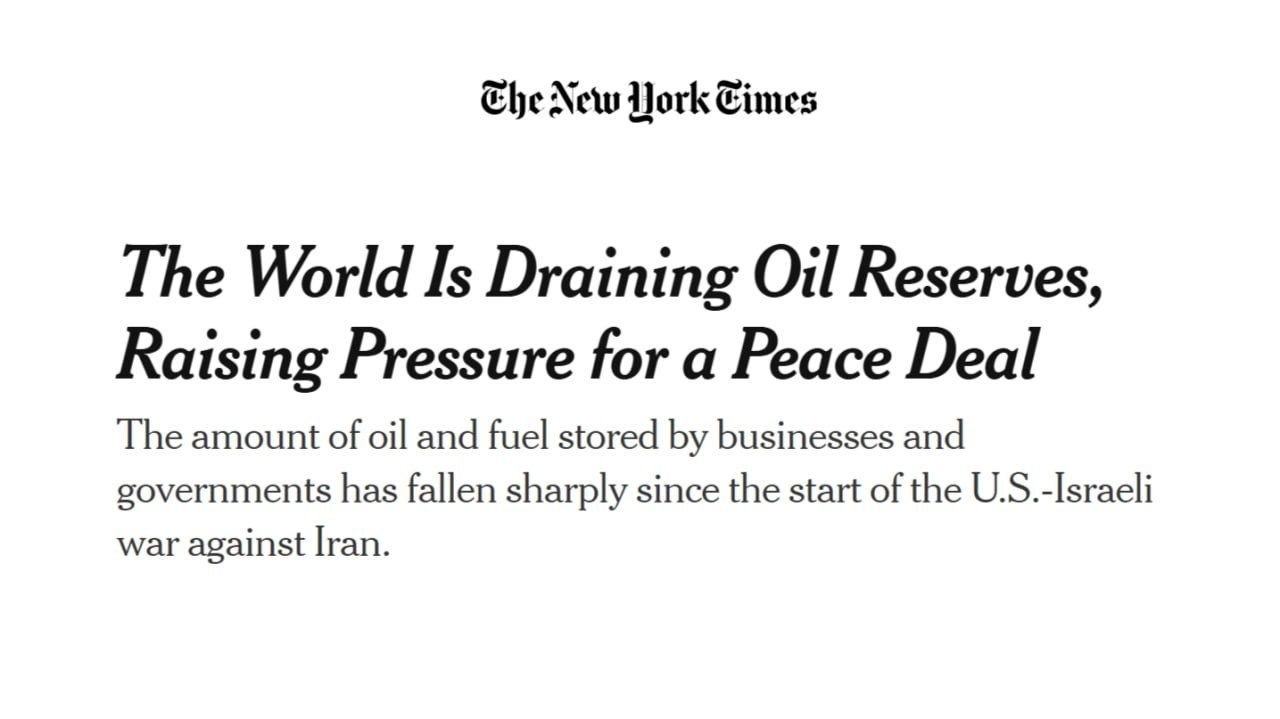
The Strait of Hormuz, the narrow sea lane through which roughly a fifth of the world's oil supply passes daily, has remained closed through May 2026, prompting the Rapidan Energy Institute to warn that the continued disruption carries the risk of triggering a recession comparable in scale to the 2008 global financial crisis. Bloomberg reported the warning on 22 May, citing analysis from the Washington-based energy consultancy. The assessment lands against a backdrop of heightened tensions in the Persian Gulf, where the strait's strategic importance has repeatedly made it a pressure point in broader geopolitical confrontations.
The strait, lying between Oman and Iran, is the world's most critical oil transit corridor. An estimated 21 million barrels per day of crude and liquefied natural gas flow through its waters in normal conditions, according to US Energy Information Administration data. Any prolonged disruption to that flow reverberates immediately through global markets — pushing energy costs higher, squeezing supply chains already under strain, and forcing central banks to weigh inflationary pressure against slowing growth. The Rapidan Energy Institute's warning frames the current closure as a structural risk, not a temporary inconvenience, suggesting that market participants and governments have yet to price in the full implications of a months-long interruption.
The Immediate Economic Context
The 2008 recession remains the benchmark against which severe economic shocks are measured in policy circles. Triggered by the collapse of the US subprime mortgage market and the subsequent credit freeze, that downturn saw global GDP contract sharply, unemployment soar across advanced economies, and energy prices collapse before recovering in a volatile rebound. The Rapidan Energy Institute's comparison is deliberate: it suggests that a Hormuz closure sustained through August 2026 would produce macroeconomic damage of similar breadth, if not identical cause. Energy price spikes would squeeze consumer spending and industrial margins simultaneously, while supply chain disruptions in petrochemical and manufacturing sectors dependent on oil-derived inputs would amplify the shock beyond the energy sector alone.
The timing matters. Global markets are navigating persistent inflation concerns, elevated interest rates in most advanced economies, and uneven growth across regions. A sustained energy supply shock would complicate the policy response available to central banks — raising prices while simultaneously weakening growth, a combination that leaves monetary authorities with no clean instrument. The risk of stagflation, dormant since the 1970s, re-enters the policy conversation.
Geopolitical Dimensions of the Chokepoint
The Strait of Hormuz's vulnerability is structural, not incidental. At its narrowest, the shipping lane is just 33 kilometres wide, meaning any blockade or military activity in the area can halt traffic almost immediately. Iran's Revolutionary Guard Corps and Navy have periodically demonstrated the capacity to threaten or actually interrupt shipping in the Persian Gulf, most notably during periods of heightened tensions with Western powers. The current closure, reported through regional wire services on 22 May 2026, follows an escalation cycle that has seen Iran respond to international sanctions and regional security pressures with moves designed to demonstrate leverage over global energy infrastructure.
Western governments, including the United States and United Kingdom, have maintained a naval presence in the Gulf to protect shipping, but the effectiveness of that presence in preventing a full closure depends on the political calculus of the moment. The Rapidan Energy Institute's warning implies that current diplomatic channels have not produced a resolution and that the closure is being treated as a sustained condition rather than a short-term disruption. That assessment, if accurate, raises the stakes for international mediation efforts and for the broader US-Iran nuclear negotiations that have periodically surfaced over the past two years.
Iranian officials have framed the disruptions as responses to external pressure — specifically, the sanctions regime imposed by the United States and European Union following nuclear programme escalations. Whether or not that framing is accepted in Western capitals, it structures the diplomatic problem: any resolution requires Iran to see sufficient strategic benefit in reopening the strait, while Western governments must weigh the cost of concessions against the economic damage of continued closure. Neither side has signalled an appetite for the compromises that a lasting deal would require.
Structural Vulnerabilities in Global Energy Architecture
The Hormuz warning exposes a broader truth about global energy infrastructure: decades of geopolitical instability in the Middle East have not produced the diversification that many analysts have long advocated. The world remains heavily dependent on oil and gas flows through a handful of chokepoints, including not just Hormuz but also the Suez Canal, the Bab-el-Mandeb Strait, and the Turkish Straits. When any one of these is disrupted, the effect ripples across markets because alternatives — new pipelines, alternative supply sources, demand reduction — cannot be activated quickly enough to prevent price spikes.
The renewable energy transition has begun to reduce this dependency in some regions, particularly in Europe, where solar and wind capacity has grown substantially. But the global energy mix remains dominated by hydrocarbons, and the transition is happening faster in some economies than others. For much of Asia, including major importers like China, Japan, and South Korea, the Strait of Hormuz remains indispensable. China's Belt and Road-related infrastructure investments have sought to diversify supply routes, but the Persian Gulf remains central to Beijing's energy security calculus.
The Rapidan Energy Institute's recession warning, therefore, arrives at a moment when the global economy has less buffer against energy supply shocks than it did in 2008. Central banks have already used much of their conventional monetary policy ammunition responding to post-pandemic inflation. Governments face elevated debt loads. The political conditions for a coordinated international response — something akin to the strategic petroleum reserve releases coordinated during earlier crises — exist but are complicated by competing interests among major economies.
What Comes Next
The central question is whether the current closure is a prolonged phase or a transitional condition toward either a diplomatic opening or a further escalation. Rapidan Energy Institute's framing suggests the former, treating August 2026 as a reference point rather than a resolution date. That implies markets should price in sustained disruption and that governments should be planning contingency responses — from coordinated reserve releases to emergency demand-reduction measures in the industrial sector.
The human and economic stakes are substantial. Elevated energy prices hit hardest in import-dependent economies with limited social safety nets. They accelerate inflation in advanced economies still fighting price instability. They constrain the fiscal space available to governments managing other crises. And they deepen the geopolitical stakes of a confrontation that has, so far, been managed through naval posturing and sanctions rather than direct military engagement.
What remains uncertain is whether the diplomatic track has more room to manoeuvre than the current impasse suggests. Past periods of Hormuz-related tension have ended through back-channel negotiations, mutual demonstrations of restraint, and third-party mediation — often facilitated by regional actors with interests in de-escalation. Whether those channels are active now is not something the available sources specify.
The Bloomberg/Rapidan warning places the burden on governments and markets to treat a Hormuz closure as a serious, sustained risk rather than a transient headline. Whether that warning changes the political calculus remains to be seen. The economic consequences of ignoring it, however, are not hypothetical — they are measured in the scale of the 2008 crisis, with the added complication that the policy tools available to respond are fewer and more constrained.
This publication covered the Bloomberg/Rapidan Energy Institute warning as reported by regional wire services on 22 May 2026. The underlying analysis was cited by Bloomberg and transmitted through Al Alam and FARS news agencies. Monexus notes that the primary source for the recession comparison is the Rapidan Energy Institute; the sources do not provide specific economic indicators or market data underlying their recession assessment, which readers should weight accordingly.
Wire provenance
This editorial synthesis draws on the following public wire/social posts:
- https://t.me/alalamarabic/123456
- https://t.me/alalamarabic/123457
- https://t.me/farsna/789012
- https://t.me/FarsNewsInt/456789