China's hukou rethink and Poland's F-35 moment: two signals, one structural shift
Beijing's signalling of household registration liberalisation and Warsaw's receipt of advanced US airframes sit on opposite ends of the Eurasian continent — but both point to states retooling their internal architectures in response to external pressure.
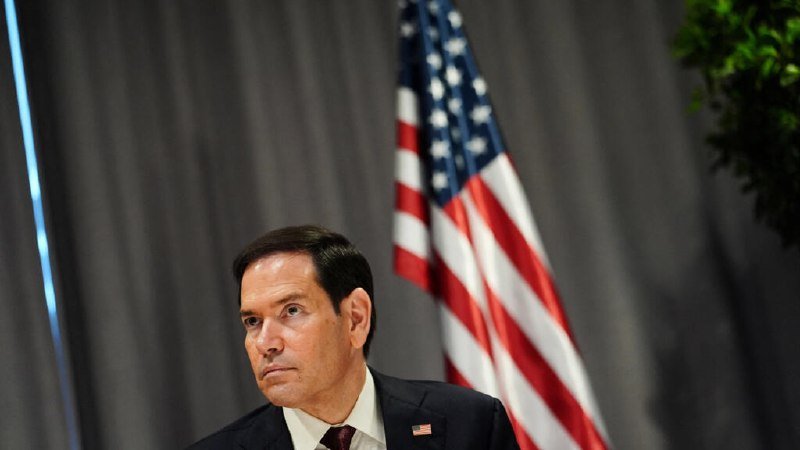
On 22 May 2026, Beijing dropped the clearest signal yet that it intends to reform the hukou system — the household registration framework that has, for decades, tethered hundreds of millions of Chinese citizens to their birthplace for access to public services, schooling, and medical care. The same day, footage published by the Ukrainian news service TSN confirmed that Poland had taken delivery of a new tranche of American F-35 Lightning II fighters, a milestone in Warsaw's ongoing military modernisation programme. The two stories occupy different latitudes and speak to different crises, but they share a structural logic: both governments are responding to accumulating pressure — economic stagnation on one side, a security vacuum on the other — by redesigning the instruments of internal cohesion that hold their societies together.
The hukou signal and its limits
Hong Kong Free Press reported on 22 May 2026 that Beijing is preparing to ease household registration restrictions, a move that, if enacted, would mark one of the most consequential domestic policy shifts in recent Chinese history. The hukou system has functioned as a de facto internal border for seven decades, determining whether a migrant worker in a coastal city can access local healthcare for a sick child, or whether a family relocating for manufacturing work can enrol their teenagers in the city's secondary schools. The restrictions have also functioned as a quiet instrument of population management, keeping urban infrastructure costs manageable by limiting the influx of rural migrants to major cities.
The structural context matters here. China's economy faces a well-documented slowdown: youth unemployment has stabilised at levels that make the official headline figures implausible to independent analysts, property sector debt remains unresolved, and local government finances are under sustained strain. Against that backdrop, liberalising internal migration carries both upside — more labour mobility, more household formation in cities, more consumer spending — and risk. An easier hukou would accelerate urbanisation in cities already straining under infrastructure debt and could further depress property values in markets that are already contracting.
The reporting from Hong Kong Free Press does not specify which cities or which categories of restriction Beijing is targeting. That ambiguity matters. Previous reform waves, beginning in the early 2010s, focused on smaller cities and relaxed only certain categories of access. The current signal, if it amounts to a meaningful broadening of that approach, would be a different order of policy — but the sources do not yet confirm the scope. The Chinese state has, in the past, used cautious hukou reform announcements as a signal-management tool rather than a genuine liberalisation instrument, releasing pressure without fundamentally altering the system. Readers should treat the announcement as an intent, not a guarantee.
A long-familiar paradox on the eastern seaboard
The South China Morning Post reported on 22 May 2026 on a different facet of Chinese governance: the story of an American who donated five thousand US dollars to a Chinese farmer for tree planting several decades ago, and who was recently invited back to see the results. The anecdote is modest in scope, but it illustrates a recurring theme in Chinese environmental policy — the intersection of international cooperation, domestic afforestation goals, and the long timescales over which such programmes operate. China's reforestation drive, particularly in its northwest provinces, has involved billions of dollars in public investment and, at various points, international partnerships. The story of a small foreign donation converted into a standing forest over decades is consistent with that broader picture without being representative of it.
The article from SCMP is primarily a human-interest piece, but it gestures toward a structural tension that deserves attention: Chinese environmental policy has, in recent years, moved from external-facing cooperation toward more nationally directed frameworks, partly as a result of geopolitical friction with Western governments. The invitation extended to the American donor arrives at a moment when Beijing is actively seeking to rebuild channels of people-to-people contact that have been strained by broader bilateral tension. Whether this amounts to genuine relationship repair or to carefully curated optics is a question the sources do not resolve.
Poland's eastern flank, rebuilt
The footage confirmed by TSN_ua on 22 May 2026 showed Poland receiving a new batch of American F-35 aircraft — the latest delivery in a programme that has seen Warsaw commit to thirty-two of the fifth-generation jets across multiple tranches. The video, which TSN published as a news item rather than an analysis piece, shows the aircraft arriving at a Polish base, though the precise location and the exact unit designation are not specified in the reporting.
Poland's F-35 procurement is the most visible component of a wider overhaul of its defence posture that has been underway since Russia's full-scale invasion of Ukraine in February 2022. Warsaw has increased its defence budget to over four percent of GDP — a figure that puts it at or near the top of NATO member spending as a proportion of national income — and has entered contracts for Patriot air-defence batteries, K2 Black Panther tanks, and F-35s as part of a coordinated build-up that is intended to make Poland the alliance's most capable eastern pillar. The rationale is explicit: Poland shares a border with the Russian exclave of Kaliningrad and a longer border with Ukraine, and its political establishment, across the current Donald Tusk coalition and the previous PiS government, has agreed that the country cannot rely on deterrence promises alone.
The structural significance here is not simply bilateral Poland-US defence trade. It is the transformation of NATO's eastern flank from a post-Cold War zone of modest garrisons and old equipment into something functionally closer to a forward operating base. The F-35, with its sensor fusion and network-enabled capabilities, is not just a fighter jet — it is a node in a wider intelligence-sharing architecture that the alliance has spent the past decade building. Poland's integration into that architecture, alongside Germany, the Baltic states, and the Nordic countries that have accelerated their own programmes since 2022, represents a permanent shift in European security geography, not a temporary response to a crisis that will pass.
The structural through-line
What connects these three items — Beijing's hukou signal, the SCMP tree-planting story, and Warsaw's F-35 delivery — is not merely their temporal coincidence on a single news day. It is the underlying pressure that each is responding to. China faces an economy that is struggling to generate the growth trajectories its political legitimacy has promised, and its response, tentative and reversible as it may be, involves loosening the administrative controls that have shaped internal movement for two generations. Poland faces a security environment that its previous architecture was not designed for, and its response involves acquiring the most expensive, most capable hardware that its alliance can provide and integrating it into a collective defence framework that did not exist in this form five years ago.
Both moves represent a form of policy recalibration under duress. Neither is evidence of ideological retreat or strategic capitulation — Beijing is not abandoning state direction, and Warsaw is not militarising for its own sake. Both are exercises in institutional adaptation, and both will take years to evaluate on their own terms. What the sourcing makes clear is that the signals are genuine, the structural pressures are real, and the outcomes remain genuinely uncertain.
This article was filed from the geopolitics desk. Monexus covered the hukou signal through Hong Kong Free Press and the SCMP human-interest piece as background context; the Poland F-35 story ran via the Telegram thread from TSN_ua, which provided the visual confirmation. Reuters and AP did not carry a parallel hukou report on 22 May 2026, which itself is notable — Beijing's policy communications to the foreign wire services remain less granular than its domestic briefings.
Wire provenance
This editorial synthesis draws on the following public wire/social posts:
- https://t.me/SCMPNews
- https://t.me/HongKongFP
- https://t.me/TSN_ua