Havana Rallies in Defense of Raúl Castro as U.S. Indictment Escalates Tensions
Tens of thousands gathered in Havana on 22 May 2026 to denounce a U.S. federal indictment against former leader Raúl Castro, with organizers framing the legal action as a pretext for military aggression — a characterization that reflects deep historical distrust on both sides of the Florida Strait.
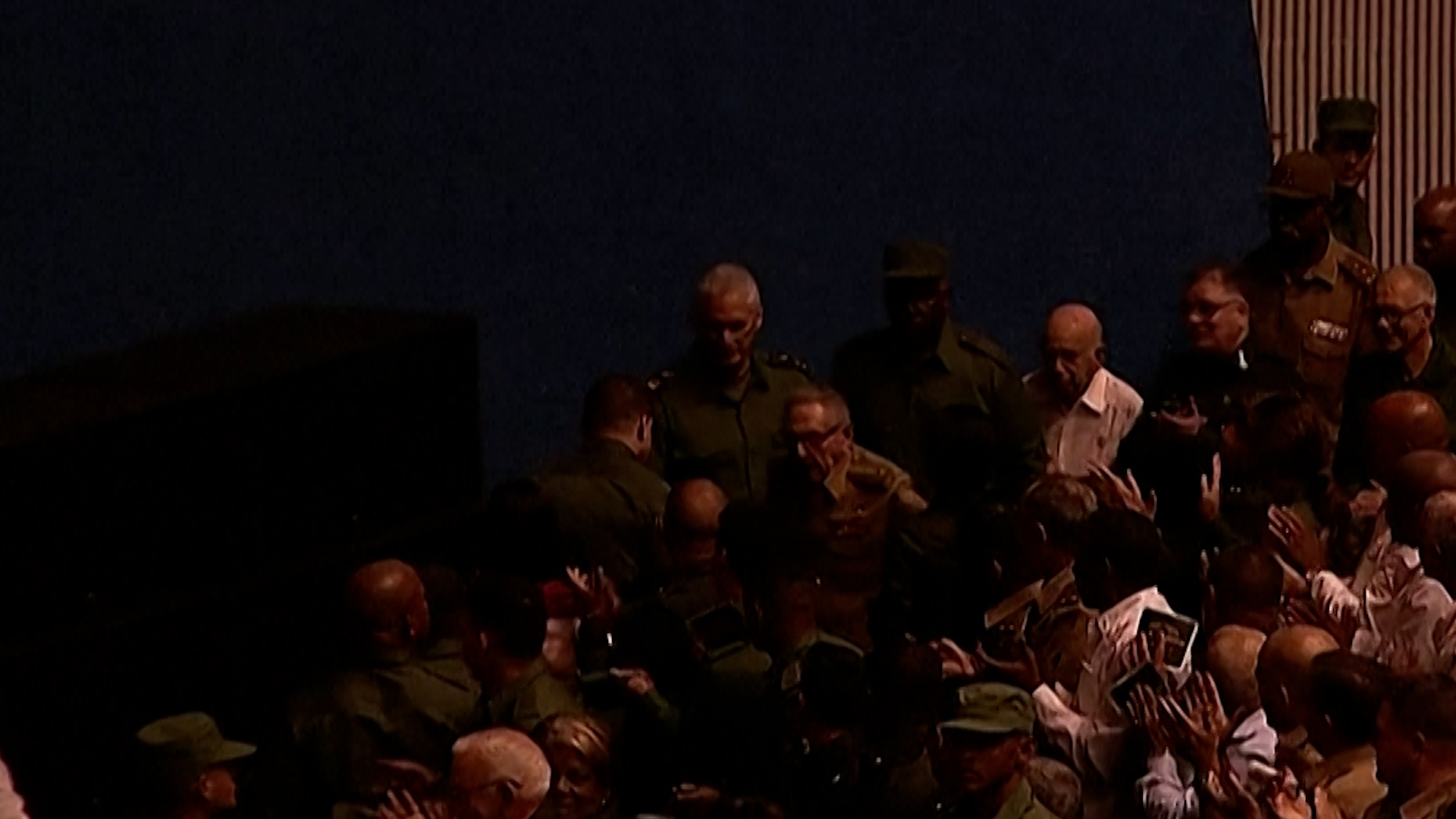
Tens of thousands of Cubans filled Havana's Plaza de la Revolución on 22 May 2026, waving flags and holding portraits of former president Raúl Castro in a mass rally that organizers said was called to repel what they described as a U.S. move toward military intervention. The demonstration followed the unsealing of a federal indictment in Miami that reportedly charges Castro — along with senior Cuban military and intelligence officials — with offenses including narcotics trafficking and support for armed groups. State media broadcast the rally live, and the images circulated rapidly across regional wire services.
The Havana gathering represents the most significant public mobilization in Cuba since the 2021 protests that challenged the government during the island's worst economic crisis in decades. It also signals that the Cuban leadership intends to frame the U.S. legal action not primarily as a criminal matter but as a geopolitical escalation — a characterization that, whatever its merits, sits within a well-established pattern of mutual suspicion between Havana and Washington.
A rally, a charge, and competing frames
The demonstration brought Cubans from across the island to the capital's central square, with smaller gatherings reported in Santiago de Cuba and Camagüey. Participants carried signs reading "Cuba will not kneel" and "Hands off our sovereignty," according to images broadcast by Cuban state television. No independent estimate of crowd size was immediately available; Cuban state media claimed "tens of thousands."
The indictment, first reported in U.S. media and confirmed through diplomatic channels, reportedly includes charges that senior Cuban officials facilitated drug shipments through Caribbean waters and provided material support to armed movements in Colombia and elsewhere. U.S. prosecutors are said to have built the case over several years using intelligence from intercepted communications and cooperating witnesses.
The Biden administration's public position, conveyed through a State Department spokesperson, characterized the indictment as "the result of a thorough law enforcement process" with no connection to broader U.S. policy toward Cuba. A senior official noted that the charges had been developed under procedures that insulated prosecutors from political pressure — a claim the Cuban government has rejected entirely.
Cuban authorities have been consistent in dismissing U.S. legal actions as extensions of a political campaign rather than legitimate criminal enforcement. The framing from Havana's Ministry of Foreign Affairs described the indictment as "a classic method of criminalizing a sovereign state" and accused Washington of using the courts to prepare the ground for "direct aggression." That language reflects a decades-old Cuban analysis of U.S. policy — one reinforced by the 1961 Bay of Pigs invasion, the ongoing economic embargo, and a State Department decision in January 2025 to reinstate Cuba on the list of state sponsors of terrorism.
The historical weight bearing on the moment
The current confrontation unfolds against a background of deepening strain in U.S.-Cuba relations. The Trump administration tightened the embargo significantly between 2017 and 2021, reversing modest openings made under Obama. The Biden administration maintained those restrictions even as Cuban civil society groups pressed for dialogue, and the January 2025 terrorism designation — reversing a Biden-era delisting — imposed a fresh layer of financial restrictions that complicated already-limited humanitarian transactions.
For the Cuban government, each of these steps is read not as a discrete policy decision but as part of an integrated campaign to destabilize and eventually remove the Communist Party from power. That interpretation is not without foundation in historical practice. The United States supported the 1961 invasion attempt, maintained covert programs through the Cold War, and has consistently insisted on political change as a precondition for normalizing relations — a position that successive Cuban governments have characterized as interference in internal affairs.
The indictment's timing — in the context of heightened U.S. pressure on Venezuela and Nicaragua — reinforces Havana's suspicions. Regional analysts note that the Biden administration has sought to isolate Caracas and Managua alongside Havana, pursuing what critics call a hemispheric containment strategy. Whether or not the legal case stands independently, its political effect is to deepen Cuba's international isolation at a moment when the island's economy is already under severe strain from embargo restrictions and post-pandemic recovery difficulties.
What the rally shows — and what it does not
The scale of the mobilization suggests genuine popular resonance for the anti-intervention message, at least in the form presented by state media. Cuba's population has experienced acute hardship — fuel shortages, rolling blackouts, and scarcity of basic goods — and expressions of public anger at the government have surfaced periodically. The willingness to fill the plaza for a nationalist message does not necessarily indicate broad support for the Communist Party's governance record; it may instead reflect a more elemental response to perceived foreign pressure.
That distinction matters for how the rally is interpreted. The Cuban government benefits from anti-U.S. sentiment as a unifying frame that can temporarily eclipse domestic grievances. Washington, for its part, benefits from characterizing any popular response as regime-directed theater rather than authentic public feeling. Both framings contain an element of truth and an element of reductionism.
The sources available do not permit independent verification of crowd claims or of the specific charges in the indictment beyond what has been reported through U.S. and Cuban official channels. What is clear is that the legal action has produced a political reaction that the Cuban leadership has actively channeled — and that Washington faces a familiar dilemma: actions taken in the name of rule-of-law enforcement may reinforce the very authoritarian consolidation they purport to oppose by providing the government with an external enemy narrative.
The forward view
The immediate trajectory depends on how the U.S. legal process unfolds and whether Washington attempts to pursue extradition of the named officials — a prospect that Cuba has historically rejected and that would require third-country cooperation in a region where U.S. leverage, while significant, is not absolute. Regional governments, including Mexico and the Caribbean Community (CARICOM) states, have historically been reluctant to support extradition requests they view as politically motivated.
The broader risk is a ratcheting dynamic in which each escalation on one side produces a counter-escalation on the other. Cuba has already signaled that it will seek international legal remedies through mechanisms including the UN General Assembly, where it retains residual support from the Non-Aligned Movement and Latin American partners. The outcome of those campaigns is uncertain, but they keep the dispute in a multilateral frame that complicates Washington's preferred narrative of a criminal matter isolated from geopolitics.
For a population already enduring acute economic pressure, the rally may prove to be a moment of nationalist intensity that fades without resolving anything. Alternatively, it may mark a turning point in how the island positions itself — deepening ties with Russia and China, accelerating engagement with regional leftist governments, or attempting some combination of both while waiting to see whether the political winds in Washington shift again. The United States, for its part, will have to decide whether an indictment serves its interests better than the diplomatic engagement that Cuban dissidents and some U.S. businesses have long advocated.
This publication's coverage of U.S.-Cuba relations foregrounds the historical asymmetry between the two states' positions while acknowledging that legal processes and political motivations are rarely cleanly separable on either side of the Florida Strait.*
Wire provenance
This editorial synthesis draws on the following public wire/social posts:
- https://t.me/DDGeopolitics/12730
- https://t.me/DDGeopolitics/12729