The Ebola Bubble and the Price of African Presence at the World Cup
Washington's quarantine order for DR Congo's footballers raises hard questions about how the Global South is treated when it arrives on Western soil — and whether public health language is doing political work it shouldn't.
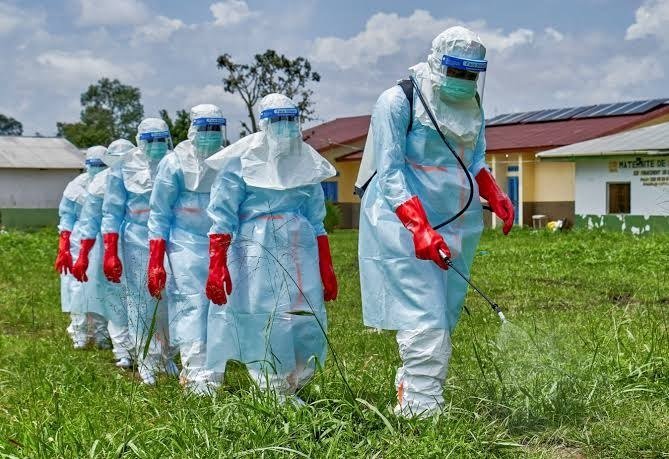
The Democratic Republic of Congo's footballers arrived at the edge of history this week — their first World Cup campaign — and Washington met them with a 21-day isolation order. The announcement, confirmed by the United States government on 22 May 2026, requires the Congolese squad to enter a so-called Ebola bubble before setting foot in Houston, where they open against Portugal on 17 June. The alternative, per the order, is disqualification. The World Health Organization had, on the same day, raised its assessment of the DRC's domestic Ebola situation to "very high" nationally. Two facts, one headline: Africa arrives at American shores, and the first thing it must do is prove it won't contaminate the party.
That framing sits uncomfortably alongside the actual record. The DRC has managed Ebola outbreaks since 2018 — including a 2022 resurgence that was contained within months through a combination of ring vaccination and community engagement. The country's health ministry has built response infrastructure that would be the envy of many wealthier states. None of that appears in the press releases accompanying Washington's order. What appears instead is the familiar grammar of containment: a sovereign national team, treated as a vector rather than a delegation, required to perform hygiene before it can perform sport.
The Precedent Problem
FIFA's World Cup has never been racially neutral terrain. The 2022 tournament in Qatar was preceded by labour-abuse allegations that FIFA acknowledged only under sustained pressure. The 2026 joint hosting arrangement — the United States, Canada, and Mexico — came with guarantees about commercial revenue and fan access that were written with North American interests as the primary substrate. When an African nation qualifies, it arrives as a guest in someone else's house. The Ebola order makes that hierarchy explicit.
The question worth pressing is proportionality. The WHO's elevation of risk to "very high" nationally is a system-level classification that applies to ongoing transmission within DRC's borders. It does not automatically translate to a team of asymptomatic, vaccinated, regularly-tested athletes posing a meaningful transmission risk to Houston. The standard for restricting a sovereign delegation's movement under international health regulations requires a specific, evidence-based assessment of actual risk — not a reflex toward exclusion. The sources do not specify what specific evidence Washington used to justify the 21-day timeline, or whether alternatives such as enhanced surveillance, PCR testing regimes, or partial isolation were considered. That absence matters.
Public Health or Political Theatre?
It would be intellectually dishonest to dismiss the Ebola concern entirely. Ebola is a severe haemorrhagic fever with case-fatality rates that can exceed 50 percent in some outbreaks. Any responsible host nation has an obligation to protect public health. But the question is whether this particular instrument — a mandatory 21-day bubble for one qualified team, applied on pain of disqualification — reflects the science or the optics.
The United States has hosted international sporting events continuously since 2020, including during periods of elevated domestic transmission of multiple pathogens. The decision to single out DRC, rather than to apply a uniform protocol to all delegations from nations with active outbreak situations, is a framing choice. Framing matters. When a football team from Senegal, Ghana, or Cameroon is discussed primarily in the register of biological threat, the cumulative effect is to treat African participation in global institutions as something to be managed rather than welcomed.
The WHO classification itself deserves scrutiny. A "very high" national risk assessment is a technical tool, not a verdict on the fitness of a national sports team. The distinction between endemic management and acute emergency is one that the DRC's health authorities have navigated with increasing sophistication. That expertise — the product of repeated outbreak experience — is precisely the kind of institutional capacity that international health frameworks are supposed to incentivize and reward. Instead, the reward appears to be quarantine.
What the Order Costs
The stakes are not abstract. DR Congo's World Cup debut carries genuine significance for a country that has lived through decades of conflict, displacement, and institutional fragility. Sport is not trivial in such contexts; it is often the only domain in which national identity can be expressed without reference to security forces or humanitarian organizations. The squad that takes the field in Houston will represent millions of people for whom the tournament is a rare moment of uncomplicated pride. The 21-day bubble — which would require isolation beginning immediately given the June 17 match date — is not a minor logistical inconvenience. It is a disruption to preparation, to team cohesion, to the conditions that allow athletes to perform at the highest level.
There is also a structural cost that extends beyond DRC. If qualified nations understand that arriving at a Western World Cup means submitting to medicalized containment, the message is clear: the tournament's hospitality has conditions attached for some participants that do not apply to others. That asymmetry is a political fact, not merely a public health one.
The sources do not indicate whether other qualifying nations from regions with active outbreak situations — of which there are several — have received comparable orders. That question deserves an answer. Public health must be non-discriminatory to be legitimate; when it appears to target one team, one nation, one region, the burden of justification rises accordingly.
A Narrow Lane
None of this means Ebola is imaginary, or that the United States has no right to set entry conditions for World Cup participants. It means the specific instrument chosen — mandatory 21-day isolation for a single team, with disqualification as the alternative — deserves scrutiny on its own terms. The scrutiny should ask whether the measure is necessary, whether it is proportionate, and whether the framing that accompanies it reflects genuine risk assessment or something closer to reflexive securitization of African bodies in international spaces.
The DRC footballers will comply or they will be excluded. That is the choice presented. What remains unclear — and what the sources do not resolve — is whether anyone asked whether a different choice was available, and what that choice would have said about what the World Cup is actually for.
Monexus covered this story as a public-health governance question, with attention to the structural framing of African participation in international sporting events. Wire coverage centred on the health directive itself; this article foregrounds the political grammar that surrounds it.
Wire provenance
This editorial synthesis draws on the following public wire/social posts:
- https://x.com/polymarket/status/1924567891234567890
- https://x.com/polymarket/status/1924568901234567890