Escalation Without Constraint: The Structural Failure on the Israel-Lebanon Border
Israeli airstrikes on southern Lebanese towns on 22 May 2026 follow a familiar pattern of tit-for-tat escalation. What is new is the absence of mechanisms capable of containing it.
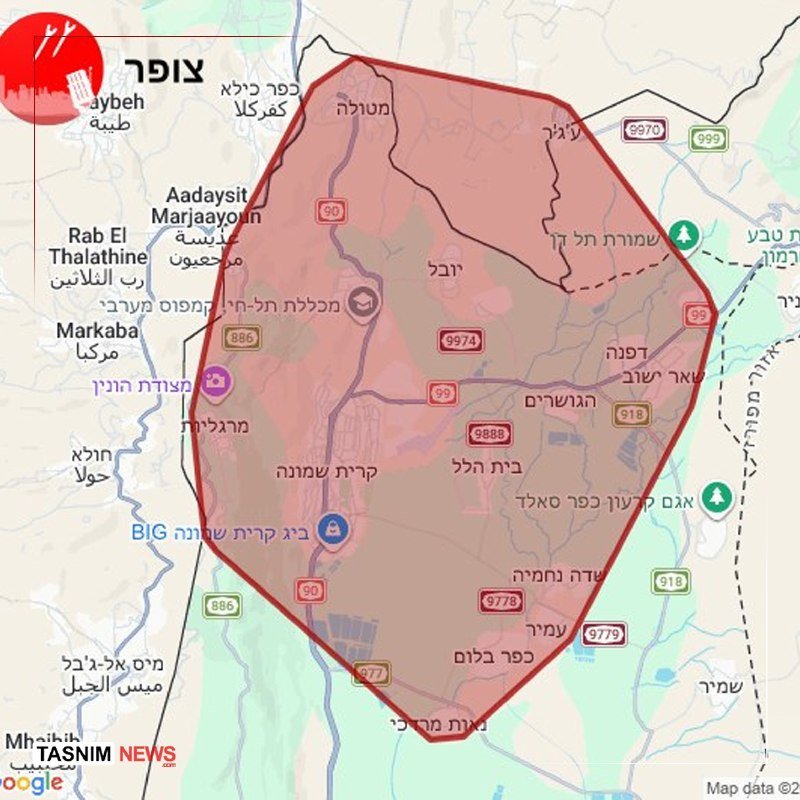
Israeli airstrikes struck multiple towns in southern Lebanon on 22 May 2026, according to wire reporting. The targets — Wadi Al-Hujair, Kafra, Ksara Zaatar, and Nabatieh — are not random coordinates on a military map. They are communities whose residents have lived through multiple cycles of displacement, reconstruction, and displacement again. The strikes follow a pattern that has defined the Israel-Lebanon frontier for decades: tit-for-tat exchanges that incrementally widen, framed by each party as defensive necessity, while third-party capitals issue statements of concern that carry no enforcement mechanism.
What distinguishes the current moment is not the scale of a single day's strikes but the structural absence of containment mechanisms capable of stopping the cycle before it deepens. The international system — built on assumptions about great-power consensus and economic leverage that no longer hold — has lost its capacity to impose consequences on actors who prefer escalation to compromise.
The Logic of Escalation
The immediate trigger for any given exchange matters less than the structural logic driving the cycle forward. When measured responses repeatedly fail to alter adversary behavior, escalation becomes the path of least resistance for decision-makers facing domestic pressure to demonstrate strength. This logic is not unique to one side of the border. It operates in Tel Aviv and in Beirut, in the corridors of Western foreign ministries, and in the chancelleries of regional powers with equities in the outcome.
Israeli security concerns are legitimate and have been documented extensively in Western and regional reporting. Hezbollah's sustained military presence along the Blue Line, its weapons arsenal, and its cross-border incidents have been treated by Israeli officials as existential threats — language that, whatever its strategic merit, reflects genuine anxieties held by a population that has experienced war and hostage-taking. The IDF has responded to these threats with airpower, artillery, and targeted operations. Those responses have consequences.
The Civilian Cost Is Structural, Not Incidental
The towns struck on 22 May are not military installations. They are inhabited areas where civilians live, work, and raise families — communities that have absorbed the cumulative weight of multiple conflict cycles. UN agencies and humanitarian organisations have repeatedly documented civilian casualties in southern Lebanon, infrastructure damage to hospitals, schools, and water systems, and the psychological toll on populations who cannot permanently relocate but cannot permanently feel safe. These are not acceptable collateral in the calculus of deterrence. They are the primary victims of a conflict management system that has failed to resolve the underlying dispute.
This publication's editorial stance on Israel is well-established: Israeli security concerns are legitimate, and the right of the Israeli state to defend its citizens against armed groups is not in question. But legitimacy of cause does not exempt military operations from scrutiny over proportionality, distinction, and the actual effectiveness of force as a policy instrument. The question worth asking is whether the pattern of escalation serves Israeli security interests over any meaningful time horizon — or whether it perpetuates a status quo that is expensive, dangerous, and politically convenient for actors on both sides who prefer the known costs of military pressure to the uncertain compromises of diplomacy.
What Containment Mechanisms Actually Exist
The international community's response to escalation along the Israel-Lebanon border has been, in substance, rhetorical. Statements of concern from Washington, Brussels, and London are logged, translated, and published. Calls for restraint are issued. Ceasefire appeals are made. What follows, consistently, is nothing that imposes meaningful costs on either party for non-compliance.
The reasons are structural rather than conspiratorial. The United States, Israel's principal ally, has historically protected Israel from binding UN Security Council resolutions. European capitals, while more vocal in their ceasefire advocacy, lack the leverage — or the political will — to apply meaningful pressure on either Tel Aviv or Hezbollah's sponsors. The UN Interim Force in Lebanon (UNIFIL) operates under a mandate that its own commanders have described as inadequate to enforce compliance from either side. Hezbollah has calibrated its responses to remain below thresholds that would trigger overwhelming Israeli retaliation; Israel has calibrated its responses to remain below thresholds that would trigger broader regional intervention.
The result is a managed instability — one that is tolerable to the governments involved but catastrophic for the civilians living in its path. It is a pattern observed in other frozen or semi-frozen conflicts: the absence of a political horizon produces a military stalemate, and the stalemate produces a permanent war economy in which escalation becomes routine and de-escalation becomes inexplicable.
Stakes and the Horizon Ahead
If the current trajectory holds, the pattern will repeat. Another exchange will follow this one. The zone of contact will shift. Civilians on both sides of the border will continue to pay the highest price for a conflict that their governments have chosen not to resolve through the only means that has ever ended such disputes: political compromise.
The international response to the strikes of 22 May has been, in the main, diplomatic boilerplate. Statements of concern. Calls for restraint. No enforcement mechanism attached, no actor positioned to compel compliance. The sources do not indicate any significant diplomatic initiative in train. There is no evidence that either party is under meaningful pressure from external actors to change its calculus.
This is not a criticism of diplomacy itself. It is an observation about the gap between the institutional tools available and the demands of a conflict that operates outside the parameters those institutions were designed to manage. The question is not whether the international community prefers peace — it almost certainly does. The question is whether it possesses the means, the will, and the leverage to make peace achievable rather than merely desirable.
On the available evidence, the answer is no. Until that changes, the strikes will continue. The statements will follow. The cycle will turn. And civilians in Wadi Al-Hujair, Kafra, and Nabatieh will continue to live inside a conflict that the world has decided is someone else's problem.
This piece reflects Monexus's ongoing coverage of the Middle East, prioritising factual specificity and structural analysis over rhetorical framing.
Wire provenance
This editorial synthesis draws on the following public wire/social posts:
- https://t.me/wfwitness/124891
- https://t.me/wfwitness/124893
- https://t.me/wfwitness/124894