The Fed's Independence Test: Warsh, War, and the Price of Political Loyalty
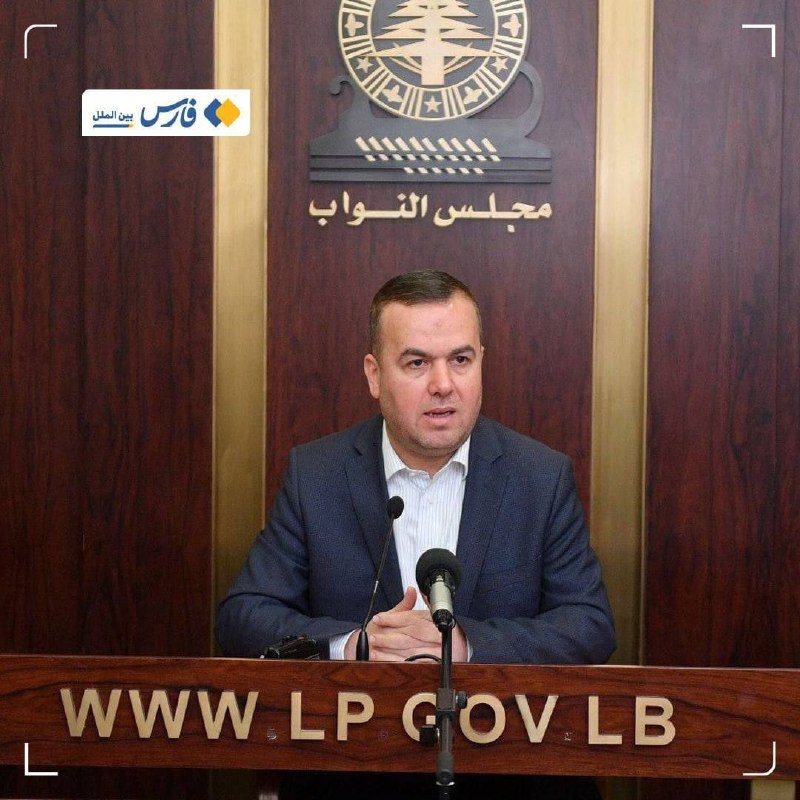
The swearing-in ceremony was routine. The context was not. Kevin Warsh was sworn in as Federal Reserve chair on 22 May 2026, the same day gasoline prices were climbing sharply across the United States — a direct consequence of the escalating conflict with Iran that had disrupted crude supply chains for weeks. The juxtaposition handed the new chair a problem set that his predecessors had spent years trying to insulate the institution from: a war abroad feeding inflation at home, and a president in Washington who had made clear, in repeated public remarks, exactly what he expected from the central bank.
The Federal Reserve's institutional credibility rests, in large part, on a carefully maintained fiction: that interest rate decisions are made by technocrats responding to data, not by appointees responding to political signals. That fiction has been under strain for years. What the Warsh appointment does is test whether the strain has become a structural failure.
The President's Brief
Donald Trump did not telegraph his expectations quietly. Speaking publicly in the days surrounding Warsh's appointment, the president was unambiguous about the outcome he wanted. "The stock market can do much better with Kevin Warsh," Trump said, per a post on the Unusual Whales platform citing his remarks. The comment landed as the S&P 500 was navigating elevated volatility, with energy sector momentum pushing against broader equity indices. It was not a neutral observation. It was a performance of the relationship, broadcast for markets to price.
That performance followed a pattern established throughout the transition. The president had previously piled pressure on Warsh's predecessor to cut interest rates, according to reporting by BBC News. That pressure was public, direct, and without the diplomatic camouflage that previous administrations had used. Trump's message, stripped of the usual diplomatic grays, was that rate cuts were overdue and that the Fed chair who refused them was making a political choice.
The tension between a president who treats the stock market as a scorecard and a central bank that officially measures success by maximum employment and price stability is not new. What is new is the lack of institutional friction being applied in response. Previous chairs — Paul Volcker, Alan Greenspan, Janet Yellen — operated in an environment where public disagreement with the White House was understood as a feature of the system, not a bug. Warsh enters an institution whose independence is being tested not in the abstract but in the specific: will he hold rates to fight inflation, or will he cut to please the White House?
Energy Shocks and Inflation Arithmetic
The Iran conflict supplies the most immediate answer to that question — and it is not one that gives Warsh much room for political accommodation. Surging gasoline prices driven by supply disruption from the Iran war are pushing up inflation and eroding consumer sentiment, Reuters reported on the day of Warsh's swearing-in. That is a problem that confronts the Fed with its most fundamental mandate conflict: fight inflation by holding or raising rates, or support growth by cutting them. The standard textbook response to an energy supply shock is to hold steady, absorbing the one-time price increase rather than tightening in response to it. But that calculus assumes a central bank whose credibility is not already contested.
The Iran dimension adds geopolitical weight that transcends the domestic inflation story. The conflict is not a background variable; it is an active disruption mechanism whose trajectory is uncertain. Energy traders are pricing in continued premium for crude from a region where military operations have repeatedly threatened transit lanes. The Federal Reserve, when it meets to set rates, must now factor in an inflation shock whose duration no one can confidently predict.
Consumer sentiment data, which had been recovering through early 2026, has reversed course. Retail spending indicators show households pulling back on discretionary purchases even as essential spending — on fuel, on utilities — rises as a share of the household budget. That reallocation is regressive in its effects: lower-income households spend a larger share of income on energy, so the inflation shock hits them harder than aggregate CPI figures suggest. The Federal Reserve's models, which rely heavily on core PCE rather than headline CPI, may be understating the distributional pressure building in the economy.
Warsh's public positioning during the confirmation process leaned hawkish on inflation. He is on record supporting the prior Fed framework of symmetric inflation targeting — meaning the Fed should be as willing to raise rates to combat inflation as it is to cut rates to combat recession. That positioning won him support from governors whose primary concern is price stability. But hawkish positioning in a confirmation hearing and hawkish decision-making under political pressure from the White House are different things.
The Independence Architecture and Its Fragility
Federal Reserve independence is not constitutionally guaranteed. It is a institutional convention, reinforced by statutory protections, by the length of gubernatorial terms, and by a century of accumulated legitimacy. The Fed chair serves a four-year term that does not perfectly overlap with presidential terms, giving some insulation. Governors serve fourteen-year terms. These structural features are designed to create distance between monetary policy and electoral cycles.
But structural features only constrain behavior if the people occupying the positions treat them as binding. The history of central banking contains examples, across multiple countries, of chairs who bucked political pressure when it mattered — Volcker's rate hikes in 1979-80, which cost him his job but ended stagflation; Greenspan's refusal to cut rates before the 1992 election, even as the White House made clear it wanted accommodation. These moments are remembered as defining because they were exceptions. The norm, in most central banking systems most of the time, is that chairs navigate political pressure rather than confront it directly.
The question Warsh faces is whether the current political environment is structurally different from those historical precedents. The pressure from the White House is not being applied through the usual back-channel mechanisms — unnamed officials leaking displeasure to sympathetic reporters — but through direct, public, on-the-record statements by the president himself. That changes the geometry. When Trump says the stock market can do much better with Warsh, he is not merely expressing a preference; he is signaling to markets that the president believes Warsh will deliver rate cuts, and that markets should price accordingly.
If Warsh then holds rates to fight inflation, he will be publicly contradicting the president on the president's own terms. If he cuts rates to satisfy the White House, he validates the political framing that monetary policy is just another lever in the executive toolkit. There is no clean exit from this dilemma. The independence convention was built for a less nakedly political environment.
What the History of Fed-Political Pressure Teaches
The relationship between the Federal Reserve and the White House has never been apolitical, despite the institution's self-image. The Fed was created in 1913 with a deliberate separation from the federal government — but that separation was always incomplete. The Treasury and the Fed have coordinated on financial crises, on dollar pegs, on the management of sovereign debt. The independence that matters is operational independence on day-to-day monetary policy decisions: the ability to raise rates when doing so is economically necessary even if it is politically inconvenient.
That operational independence has been most severely tested during periods of war. The Fed's wartime record is mixed. During the Second World War, the Fed pegged Treasury yields to facilitate war financing — a policy widely criticized afterward as having prolonged and deepened the postwar inflation of 1945-48. The lesson drawn from that experience informed the 1951 Treasury-Fed Accord, which restored the Fed's operational autonomy and became a founding document of the modern independence norm.
The Iran conflict is not a world war. But it shares the structural feature of a war driving energy price shocks that complicate the inflation picture. The Fed in 2026 is not pegging yields. But it faces a variant of the same problem: political pressure to prioritize financial market performance over the harder, slower work of price stabilization, set against an inflation shock whose source is outside the domestic monetary transmission mechanism.
The precedents suggest that the Fed's response to this environment will depend heavily on whether Warsh reads his mandate narrowly — as a commitment to price stability above all else — or more broadly, as a mandate that includes market stability as a legitimate policy goal. The former reading aligns with the institution's formal mandate and its historical self-conception. The latter reading aligns with the White House's preferences. The gap between those two readings is where the independence question will be decided.
The Stakes and What Comes Next
If the Federal Reserve cuts rates under political pressure before inflation is durably under control, the long-term cost is credibility — the specific, irreplaceable asset that allows a central bank to anchor expectations without having to act forcefully. Inflation expectations are self-fulfilling. If households and businesses believe that the Fed will tolerate inflation above its 2 percent target, they will price and bargain accordingly, baking higher inflation into the system. Restoring credibility after that happens requires a Volcker-style shock — a sustained, painful tightening cycle that inflicts far more economic damage than gradual, credible tightening would have.
If the Fed holds or raises rates, it buys credibility with a different short-term cost: slower growth, potentially a recession, and a president who will blame it on the Fed publicly and loudly. Warsh has publicly committed to the Fed being "totally independent," in language that tracks the president's own stated position. The tension between that commitment and the White House's performance expectations for the stock market is not accidental. It is the central drama of this chairmanship.
The Iran war's trajectory is the variable neither Warsh nor anyone else can control. A de-escalation would remove the energy supply shock and give the Fed room to cut rates without appearing to bow to political pressure. Continued escalation would deepen the inflation shock and force a harder choice. The Federal Reserve enters this period with balance sheet scars from the post-pandemic tightening cycle, with a banking system that has shown stress in commercial real estate and regional lending, and with an inflation picture that the war abroad is making more volatile by the week.
Warsh's first decision on rates — whenever it comes — will not be just an economic decision. It will be a statement about what kind of institution the Federal Reserve intends to be. The signals from Washington make the stakes of that statement as clear as they have been in decades.
This desk's coverage of the Warsh appointment foregrounds the structural tension between wartime inflation and political pressure on the Fed — a framing the wire services treated as a political narrative. The underlying economic data and the Iran conflict's energy market effects warrant the longer treatment.