Four paramedics killed in southern Lebanon: the slow erosion of medical neutrality
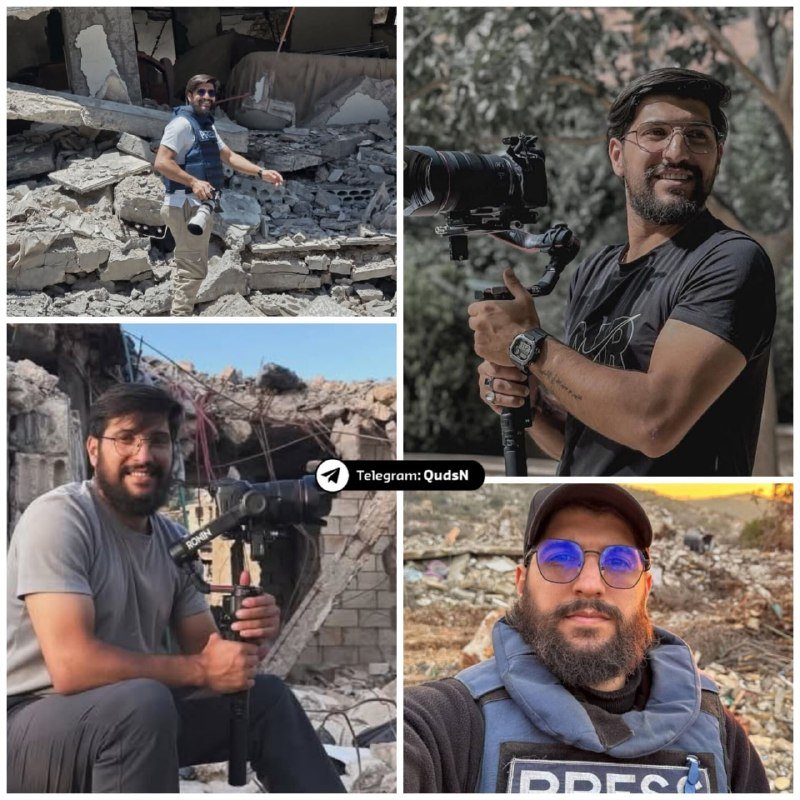
When paramedics don their uniforms, they step into a category of protected person under the laws of armed conflict. They carry the wounded, they triage the dying, they operate under a red cross or crescent that should guarantee their safety. On Thursday, that guarantee failed again.
According to the Lebanese Ministry of Health, an Israeli strike hit an ambulance centre in the town of Hanawiya in southern Lebanon, killing four paramedics and wounding others. The ministry described the targeting of medical workers as a crime before the international community and said it would not remain silent. Lebanese sources separately reported a separate Israeli raid on the town of Deir Qanun al-Nahr in the same region.
A pattern that is neither new nor accidental
The targeting of rescue workers in conflict zones is not an anomaly. It is a recurring feature of modern warfare documented across multiple theatres — from Gaza to Yemen to Syria to the current hostilities along the Israel-Lebanon border. In each case, the same sequence plays out: the strike, the casualties, the condemnation, the denial, and then the move on. The international response — measured, conditional, and often delayed — sends a signal that such casualties are politically tolerable, even when they are legally impermissible.
The legal framework is clear. Additional Protocol I to the Geneva Conventions, to which Israel is a party, prohibits attacks on medical units and personnel. The International Committee of the Red Cross defines the deliberate targeting of healthcare workers as a war crime. Israel's own military doctrine recognizes these protections. And yet the Ministry of Health in Beirut, speaking within hours of the Hanawiya strike, used the language of criminality — not accident, not error, not collateral consequence.
What the law requires and what actually happens
The law is not ambiguous. Under international humanitarian law, medical personnel operating impartially are entitled to protection regardless of which side of the conflict they serve. Attacks are permitted only under the narrowest conditions — when the medical unit is being used to commit acts outside its humanitarian mandate, and after a warning has been issued with a reasonable delay before any strike. A functioning ambulance centre treating wounded civilians does not meet those conditions. The Israeli military has not, as of this writing, published a statement specifying what activity at the Hanawiya centre triggered the strike.
That absence matters. When a hospital is struck in Gaza, the explanation tends to arrive quickly — intelligence about a command post, a weapons cache, an observation post embedded within the facility. Those explanations are frequently disputed by independent monitors. But when they arrive, they at least gesture toward the legal threshold. The silence from the Israeli side following the Hanawiya deaths is notable because it offers no counter-framing, no intelligence basis, no justification. That silence is itself a form of statement.
The structural problem with accountability
The international mechanisms for investigating alleged violations against medical personnel are chronically underfunded, politically selective, and often too slow to produce results before the next incident arrives. The International Criminal Court has jurisdiction over war crimes committed on Palestinian territory, but the investigation is ongoing, contested, and subject to political pressure from multiple directions. The UN Human Rights Council's mechanisms lack enforcement power. The result is a situation where the legal architecture exists, the violations are documented, and the accountability remains theoretical.
What changes behaviour is not the law in the abstract — it is the credible threat of consequences. The states with the most leverage over Israel's military conduct are the same states that have historically treated Israeli security concerns as a red line that constrains their own willingness to act. That balance, heavily weighted toward the security end of the spectrum, creates the conditions in which medical workers become acceptable losses.
Stakes and what comes next
Four paramedics are dead. Their families will receive the ministry's statement that this was a crime. The international community will issue calls for investigation. The Israeli military will eventually be asked to explain itself, and the explanation will be weighed against political imperatives that have nothing to do with the letter of the law.
What the Lebanese Ministry of Health recognised is that each incident chips away at the broader framework that protects all medical workers in all conflicts. When one party can strike an ambulance centre and face no consequences beyond a condemnation, the next strike becomes easier to imagine. The international system has shown, repeatedly, that it lacks the institutional will to reverse that trajectory. The pattern will continue until something — political pressure, judicial action, or the accumulation of enough documented violations — forces a reckoning.
This publication finds that the death of four rescue workers in Hanawiya is not a procedural failure. It is a structural one. The frameworks exist; the will to enforce them does not.
Wire provenance
This editorial synthesis draws on the following public wire/social posts:
- https://t.me/alalamarabic
- https://t.me/JahanTasnim
- https://t.me/alalamarabic