Gaza Flotilla Activists Allege Systematic Abuse in Israeli Detention
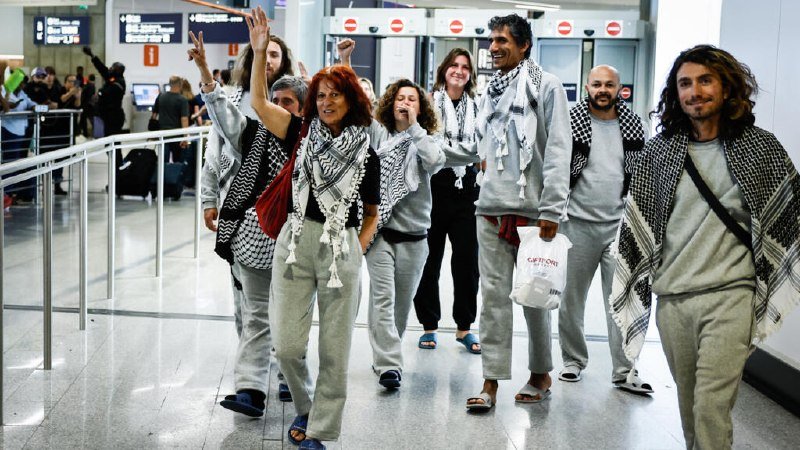
The first detailed accounts of what happened aboard the Global Sumud Flotilla are emerging, and they are severe. Organisers of the May 2026 maritime convoy said on 22 May 2026 that at least 15 cases of sexual assault, including rape, had been documented among participants detained by Israeli forces. The allegations emerged as Greek activists from the flotilla arrived back in Athens, completing a journey that began as a protest against the naval blockade strangling Gaza's 2.3 million residents.
The Global Sumud Flotilla set out with 57 civilian vessels and more than 400 passengers — unarmed activists, medics, and journalists — drawn from at least four countries. Its stated purpose was to break the blockade by sea and deliver humanitarian supplies. Israeli forces intercepted the convoy and took its passengers to Israeli ports. What happened next is now the subject of competing accounts and, if the documentation organisers have released is accurate, possible criminal investigation.
This was not the first attempt to force a humanitarian corridor by sea. It was, however, among the largest. And the allegations now in circulation mark a significant escalation from previous confrontations — in both scale and gravity.
A blockade under sustained challenge
Israel's naval blockade of Gaza has been in place since 2007, following the Hamas takeover of the territory. Israeli authorities have consistently defended the measure as a security necessity, designed to prevent weapons and materiel from reaching armed groups. The blockade applies to sea access as well as land crossings, effectively sealing Gaza's coastline.
International legal opinion on the blockade is not settled. The UN Human Rights Office has previously stated that the restrictions on Gaza raise concerns consistent with collective punishment of a civilian population — a characterization Israel rejects. The Global Sumud Flotilla positioned itself explicitly as a civilian humanitarian mission: medicine, food, and basic supplies that civilian infrastructure inside Gaza cannot generate on its own.
The May 2026 convoy was the latest in a series of attempts to breach the blockade by sea. The most infamous remains the 2010 Mavi Marmara incident, in which Israeli naval commandos boarded a Turkish-flagged vessel and killed nine passengers. That episode triggered a prolonged diplomatic rupture between Turkey and Israel. The Global Sumud Flotilla was considerably larger — in vessel count, participant numbers, and national diversity — than its predecessors, suggesting the tactic of maritime protest has not been abandoned.
What the activists allege
According to the accounts gathered by flotilla organisers and reported by Al Jazeera on 22 May 2026, passengers were subjected to physical violence during and after the boarding. Passengers described being beaten, held in stress positions, and kept blindfolded for extended periods without access to water or adequate rest. The most serious allegations concern sexual violence: organisers said they had documented at least 15 cases, including what they described as rape.
Israeli authorities had not issued a formal public response to the specific allegations at the time of reporting. The Israeli military has previously disputed accounts of its conduct during maritime interceptions, contesting characterizations made by passengers and by international monitoring groups. The gap between the two versions — detainees' documented accounts versus official denials — is itself a structural feature of such incidents: participants have limited independent access to legal representation, and forensic documentation often becomes available only after release.
International humanitarian law is unambiguous on one point: torture, cruel or inhuman treatment, and outrages upon personal dignity are prohibited regardless of the circumstances of detention. Whether those standards were met in this case is a question that, if the allegations are accurate, would engage both domestic Israeli investigation and potential scrutiny under international mechanisms.
The structural problem with blockades
There is a structural tension built into the enforcement of maritime blockades against civilian protest convoys. A blockade is a military measure; a humanitarian convoy is a civilian operation. The encounter between the two almost inevitably produces ambiguity about applicable law, rules of engagement, and the status of passengers.
When interception takes place in international waters — as Israeli naval operations against Gaza-bound vessels routinely do — the legal framework becomes more complicated still. Israel asserts jurisdiction over the blockade zone; critics argue that interceptions outside territorial waters are themselves of questionable legality under the law of naval warfare. The flotilla participants were not combatants. They were, by all available accounts, civilians exercising what they considered a legitimate form of protest and humanitarian action.
The pattern that follows is consistent: interception, detention, allegations of mistreatment, diplomatic friction, and a humanitarian objective that remains unmet. The convoy does not deliver its cargo. The blockade remains in place. The cycle repeats. Each iteration deepens the reputational cost for the blockading power and sustains the political mobilization of those who view the blockade itself as the problem.
Precedent and the stakes ahead
The 2010 Mavi Marmara incident offers a partial precedent. Nine deaths in a single boarding operation produced years of diplomatic damage. The current allegations, if documented to the extent organisers claim, involve sexual violence on a scale not previously associated with a Gaza-bound maritime interception — and they come at a moment when Gaza's civilian population is under acute humanitarian stress from shortages of food, medicine, and fuel.
The return of Greek activists to Athens introduces a national dimension. Greece is a European Union member state. The treatment of EU nationals during a lawful — if disputed — protest mission will generate questions in Brussels that go beyond the immediate incident. Human rights obligations under EU law apply to member states' conduct, but the chain of accountability when EU citizens are detained by a third country involves diplomatic and legal pathways that move slowly.
The immediate stakes are concrete. Israel's attorney general or military justice system faces a decision about whether a credible evidentiary basis exists to open a formal investigation. International human rights bodies, including those with mandate authority over occupied territories, will likely request access to detainees and documentation. Whether Israel permits that access — and whether any resulting findings carry consequences — will define whether this incident follows the pattern of previous ones, in which allegations circulate, official denials follow, and the underlying questions remain unresolved.
The longer trajectory is equally clear. As long as the blockade holds and humanitarian need inside Gaza remains acute, maritime protest missions will continue to be organised. Each future convoy will carry the shadow of these allegations. Israel's capacity to enforce its naval perimeter while managing the diplomatic fallout of enforcement operations is not unlimited. The blocking of a humanitarian convoy makes headlines; the documented abuse of those on board makes more.
Desk note: Wire coverage of the flotilla focused on the passage attempt and the activists' return. Monexus leads with the detention allegations and the structural accountability question — the gap between the stated security rationale for the blockade and what the documented conduct of its enforcement now requires Israel to answer.