Guardiola and the Premier League's Tactical Dialectic
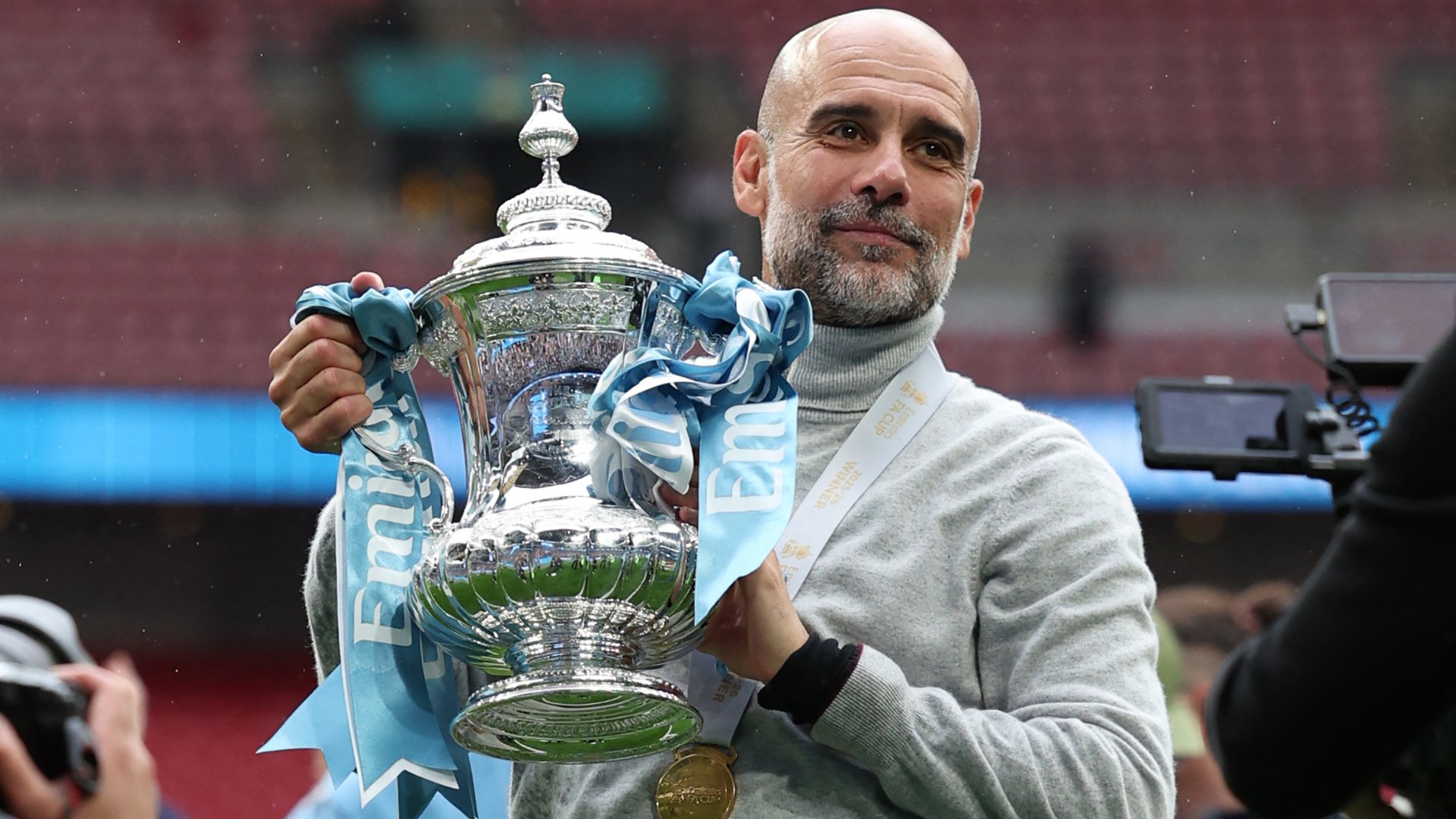
When Pep Guardiola arrived at Manchester City in 2016, he inherit a squad that had finished fourth in the Premier League. Nine league titles across three clubs in Spain and Germany had preceded him, but the English game presented a different problem set entirely — faster transitions, more physical centre-backs, less rigid positional conventions. Seven Premier League titles later, the question is no longer whether Guardiola transformed the league. It is whether the league transformed him.
That question sits at the heart of how elite tactical thinking circulates in professional football. Guardiola's influence is not merely stylistic. It is structural. The inverted full-back, the false nine, the high defensive line calibrated to compress rather than simply advance — these are no longer his trademarks alone. They have been absorbed, adapted, and in some cases countered by the very league that once seemed overawed by them.
The Language Guardiola Left Behind
The BBC Sport analysis published on 22 May 2026 traces how Guardiola's tactical landscape has shifted over his decade in English football. His early seasons at City were defined by insistence — positional rigidity, aggressive pressing, a refusal to compromise methodology for immediate results. The 2017-18 season, in which City registered 100 points, remains the statistical ceiling of that approach. But it was also, paradoxically, the moment the rest of the league began studying.
What followed was a quiet arms race. Jürgen Klopp at Liverpool found a pressing geometry that could disrupt City's build-up. The inversion of the full-back role, once Guardiola's signature, became standard practice across the top half of the table. City adapted by becoming less dogmatic — introducing physicality in midfield, deploying Erling Haaland as a striker who relishes space rather than creating it, shifting between 4-3-3 and 3-2-4-1 mid-game depending on the opposition's structure.
The tactical dialectic is asymmetric by design. Guardiola's staff operate with longer planning horizons, superior data infrastructure, and squad depth that most clubs cannot replicate. But the ideas travel faster than the resources. When City play a newly promoted side, they face a pressing scheme that owes something to City's own coaching manuals, filtered through a decade of diffusion.
What the Counter-Strategists Found
The counter-argument to Guardiola's hegemony is not tactical naivety. It is, increasingly, a willingness to let City have the ball in areas that do not matter. The low block — once a sign of timidity — became, in the hands of well-drilled mid-tier clubs, a viable survival mechanism. Guardiola's teams, for all their dominance in possession metrics, have historically struggled against disciplined defensive shapes that deny central progression.
This is not lost on the Premier League's tactical analysts. The league has produced a generation of managers — some trained in Guardiola-adjacent systems, others reacting explicitly against them — who treat positional dominance as one tool among several rather than a philosophical end-state. The result is a competitive environment where the gap between tactical sophistication at the top and the middle has narrowed considerably.
Guardiola has noticed. His post-match comments increasingly reference the specific preparations of opponents, acknowledging tactical variety in a way his earlier pronouncements did not. The manager who once insisted his principles were non-negotiable now speaks of reading games and making in-running adjustments as core competencies. The league taught him that.
The Structural Advantage That Remains
If tactical ideas circulate freely, what sustains City? Three factors: continuity, recruitment, and adaptation speed. Guardiola has worked with the same core coaching staff for most of his decade in Manchester. That institutional memory allows for cumulative refinement rather than periodic reinvention. When a new player arrives, the system absorbs them rather than reshaping around them.
Recruitment skews toward technical intelligence. City do not simply buy the best athletes; they buy players capable of operating in tight spaces under pressure, comfortable with the cognitive load of Guardiola's system. The investment in players like Kevin De Bruyne, Rodri, and Rúben Dias was not primarily about individual brilliance but about system compatibility.
Adaptation speed matters most in the Champions League, where opponents from other leagues arrive with unfamiliar tactical signatures. City's European struggles — relative to their domestic dominance — reflect the limits of a methodology refined against Premier League patterns. When the opponent has not spent a decade absorbing Guardiola's influence, the advantages shrink.
The Stakes Beyond the Trophy
The broader significance of Guardiola's project is not the accumulation of titles but its role as a forcing function for the league's tactical development. The Premier League's reputation as the world's most competitive domestic competition is partly a product of managers spending their careers trying to solve the same puzzle. Guardiola did not create that puzzle. He became its most prominent inhabitant.
What happens when he leaves — and the question is no longer if but when — will test whether the diffusion of his ideas creates a more evenly distributed tactical intelligence across the league, or whether the vacuum reveals how much of the competition depended on his specific presence. The answer will shape how the Premier League thinks about coaching development, recruitment strategy, and the relationship between individual genius and collective progress for years to come.
The league is better for having had him. Whether it is better without him remains the question that will define the next tactical era.