Gulf Diplomacy's Quiet Revolution: What Qatar's Tehran Talks Really Mean
A Qatari delegation's visit to Tehran on 22 May 2026 signals something deeper than diplomatic choreography — it suggests middle powers are building their own pathways to de-escalation, with or without Washington's blessing.
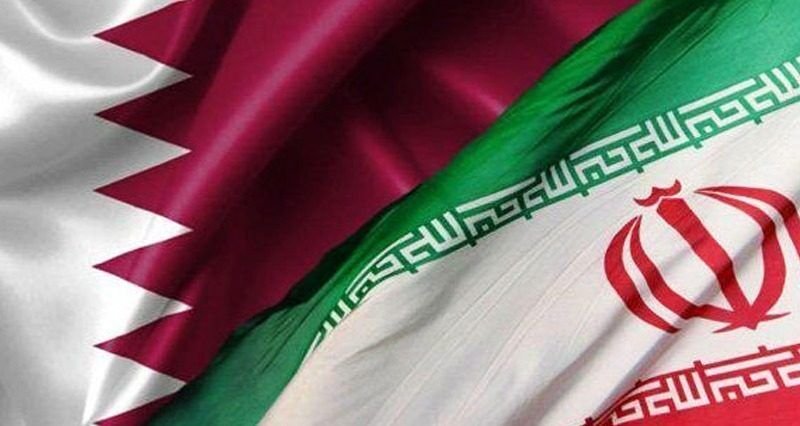
A Qatari delegation landed in Tehran on 22 May 2026 with a message: different countries are working to prevent escalation of tensions in the Middle East. Iran's foreign ministry confirmed the visit and the substance of the talks. This was not a back-channel whisper dressed up for domestic consumption — it was official, on the record, and, crucially, public. The medium mattered as much as the message.
The question is whether this represents anything more than diplomatic theatre. The evidence suggests it does.
What Tehran actually said
Iran's foreign ministry spokesperson laid out a specific position. The focus must be on ending the war across all fronts, resolving the situation in the Strait of Hormuz, and halting what Iran calls American sea piracy. These are not vague aspirations — they are framed as the substance of any serious discussion. Iran is not asking for charity. It is presenting terms.
The nuclear dimension reinforces the picture. Iran reiterated its status as a Nuclear Non-Proliferation Treaty signatory with the right to peaceful nuclear energy. This is not a concession — it is a restatement of legal standing. Tehran is signalling that it wants to negotiate from a position of recognised entitlement, not admitted weakness. That framing matters when assessing whether these talks are genuine.
Why Qatar can do this
Qatar's diplomatic portfolio is unusual. It hosts the largest US military installation in the Middle East at Al-Udeid Air Base, maintains workable — if tense — relations with Iran, and has historically served as an interlocutor with actors the West prefers to isolate. Western observers often describe this as inconsistency. It is, more accurately, a hedge in a multipolar environment.
The conventional model of great-power conflict management assumed that the United States, as the dominant external actor, would broker or impose settlements. What is happening instead is that middle powers with complex portfolios — Qatar, the UAE, Turkey — are building independent channels. This does not mean Washington is irrelevant. It means Doha is calculating that Gulf stability requires direct engagement with Tehran, regardless of what the US preference might be.
The structural shift beneath the talks
There is a pattern here that goes beyond this specific visit. The great-power framework for managing Middle Eastern conflicts — direct US engagement, calibrated pressure, proxy support — is producing diminishing returns. Washington's attention is contested across multiple theatres simultaneously. China's economic footprint in the Gulf grows by the year. And regional actors are tired of waiting for outside arbitrators.
The Qatari delegation is not acting as a US surrogate. It is acting on Doha's assessment of its own interests, using diplomatic assets that do not require American approval. That distinction — between a proxy and an independent actor pursuing parallel goals — is the structural story beneath the headlines.
The Hormuz question
Beneath the diplomatic surface, the Strait of Hormuz is the geological reality that shapes everything. Approximately 20 percent of the world's oil passes through the narrow channel separating Iran from Oman and the UAE. Iran has used this geography as leverage; it is also the reason Tehran has an economic interest in a functioning, non-blockaded waterway.
The tension is real: Iran benefits from the strait's strategic value, but that same value ensures any move to truly close it would trigger an international response Iran cannot sustain. The Hormuz question is therefore both a pressure point and a constraint. How Iran frames it — as a negotiating chip or a red line — will determine whether these talks produce anything durable or merely buy time.
The stakes ahead
The immediate priority is de-escalation. These talks, if they produce anything, will produce a pause, not a resolution. The structural forces driving tension — competition over strait access, contested regional influence, the presence of multiple external powers with overlapping but distinct interests — will not dissolve because two diplomats shook hands in Tehran.
But the Qatari outreach is not nothing. It is evidence that Tehran is willing to engage through channels that do not require American brokerage. It is evidence that smaller Gulf states are building independent diplomatic infrastructure. And it is a signal that the region's future may be negotiated by regional actors using their own frameworks, rather than imposed through the inherited architecture of great-power management.
Whether that is a good outcome depends on your position. What is not in doubt is that it is the direction things are moving.
Wire provenance
This editorial synthesis draws on the following public wire/social posts:
- https://t.me/farsna/78941
- https://t.me/farsna/78939
- https://t.me/farsna/78937
- https://t.me/farsna/78935