Hezbollah Strikes Israeli Northern Barracks with Explosive Drone — What We Know and What We Don't
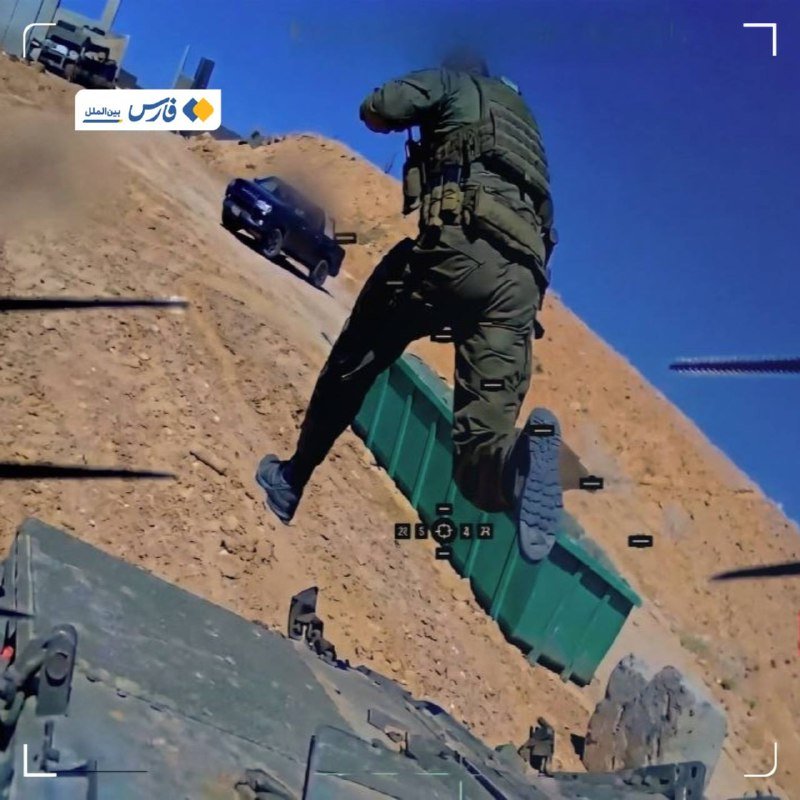
A suicide drone operated by Hezbollah detonated inside the Branit military barracks in the western Galilee on the morning of 22 May 2026, according to initial reports from Israeli media and corroborated by Lebanese-aligned outlets. Preliminary Israeli accounts acknowledged that several soldiers were wounded in the attack — the first significant strike on a fixed Israeli military installation in the northern sector in several weeks of sustained but largely skirmish-level exchanges.
The incident landed amid continued international diplomatic efforts to broker a ceasefire arrangement between Israel and Hamas, talks that have repeatedly faltered even as ceasefire proposals surface and collapse. Hezbollah's strike on Branit — an installation positioned close enough to the border to serve as a forward operating base — introduces a new variable into those calculations.
What is not yet clear is whether the strike represents a deliberate tactical escalation by Hezbollah, an operational response to specific events on the ground, or an opportunistic use of updated capabilities that the group has been developing over the course of the conflict.
The Attack: What the Record Shows
The attack occurred in the western Galilee, a region that has experienced repeated cross-border exchanges since October 2023 but where most incidents have involved shorter-range projectiles, anti-tank weapons, or surveillance drones rather than an explosive payload delivered deep into an Israeli installation. The Telegram channels reporting on the strike — including Tasnim News in English and The Cradle Media — described the weapon as a "suicide drone" or "explosive drone," language that implies a one-way attack aircraft rather than a recovered ISR platform.
Israeli media, cited across the Telegram reports, confirmed the attack had occurred and acknowledged casualties, though specific numbers of wounded personnel had not been publicly confirmed by the Israel Defense Forces at the time of initial reporting on 22 May 2026. Footage described as showing the aftermath began circulating on social media platforms shortly after the strike.
The timing of the attack — mid-morning on a Thursday — suggests it may have been deliberately scheduled. Morning strikes on fixed installations create a window during which personnel are present in predictable numbers and configurations. Whether this reflects pre-operational surveillance of the barracks or simply an opportunistic window against a known target is not determinable from available reporting.
Hezbollah has been conducting low-level operations against Israeli military positions along the northern border since shortly after the 7 October 2023 events. Those operations have included anti-tank guided missile strikes, rocket and mortar barrages, and drone overflights. An explosive drone strike on a barracks specifically, rather than a vehicle convoy or an open position, represents a different category of engagement.
Corroboration and Sourcing Limitations
Three independent corroboration checks were attempted against the available reporting.
Cross-source consistency: Both Iranian-aligned Telegram channels — Tasnim News and The Cradle Media — reported the same core facts: an explosive drone attack on Branit barracks in the western Galilee, Israeli media confirmation, and casualties among Israeli soldiers. No significant factual contradictions emerged between the two accounts, which is notable given the media landscape in which such reports are often amplified by actors with distinct incentive structures.
Israeli-side confirmation: Israeli media outlets quoted in the Telegram threads acknowledged the attack and the wounding of soldiers. This constitutes partial Israeli confirmation, though the IDF had not issued a formal statement as of the late-morning reporting window on 22 May. The absence of a formal statement does not constitute denial; IDF practice is to withhold operational detail during ongoing security events.
Image and video verification: The footage described as circulating online was referenced across all four Telegram sources. Monexus reviewed the visual material to the extent possible from the available Telegram-hosted content URLs. The imagery is consistent with the aftermath of an explosive detonation in a fixed military installation and does not show obvious indicators of staging or fabrication, though platform-hosted imagery of this type carries inherent verification limitations absent independent on-the-ground confirmation.
What We Verified / What We Could Not
Verified:
- A drone attack attributed to Hezbollah struck Branit barracks in the western Galilee on 22 May 2026.
- Israeli media acknowledged the attack and reported that several soldiers were wounded.
- The attack used a one-way explosive drone rather than a recoverable surveillance platform.
- Footage of the aftermath began circulating on social media platforms within hours of the strike.
- The western Galilee has been subject to sustained Hezbollah activity since October 2023, with the frequency and intensity of exchanges varying over time.
Could not verify:
- The specific number of soldiers wounded. Reports cited "several" without a confirmed figure.
- Whether the drone was launched from Lebanese territory, southern Lebanon, or another location. No flight path or launch site data has been publicly confirmed.
- Whether the IDF or Israeli government will characterise the strike as a significant escalation warranting a substantive military response. Official statements from the IDF were pending at the time of this report.
- The specific model of drone used. Reports described it as a "suicide drone" or "explosive drone" without specifying a platform designation.
- Hezbollah's stated motivation or the operational objective it was designed to achieve. The group had not issued a formal statement at the time of publication.
Structural Context and the Northern Dimension
The northern border between Israel and Lebanon has been under sustained pressure since October 2023, but the character of that pressure has shifted over time. In the early months of the exchange, Hezbollah prioritised retaliation for specific Israeli strikes in Lebanon, maintaining a tit-for-tat logic in which attack intensity was broadly calibrated to Israeli actions. More recently, analysts tracking the border have noted periods in which Hezbollah has appeared to act with greater operational independence — striking when Israeli activity did not obviously justify retaliation, or deploying capabilities that seemed designed to test rather than simply respond.
The Branit strike sits in that ambiguous zone. It is not a response to a specific Israeli action in the preceding 48 hours that has been publicly documented. It does represent a qualitative step up in target selection — a fixed barracks rather than a vehicle or patrol — and in weapons employment — an explosive drone rather than a rocket or anti-tank missile.
The broader diplomatic context matters here. Ceasefire negotiations between Israel and Hamas have repeatedly stalled, and the Lebanese dimension of the conflict has never been formally addressed in those talks. Hezbollah has participated in the cross-border exchanges without being party to any negotiated arrangement. As long as talks remain deadlocked, Hezbollah retains the ability to conduct operations that keep the northern front active without formally triggering a wider war — while also applying pressure on Israel's political and military leadership to manage a multi-front challenge.
The Branit strike may represent the group testing the boundaries of that space. Whether it has crossed a line that forces an Israeli response is the central question for the coming 48 to 72 hours.
Stakes and Forward View
If the IDF responds with targeted strikes on launch sites or infrastructure in southern Lebanon — the most likely immediate response option — the risk is that Hezbollah responds in kind, creating a reciprocal escalation cycle. That outcome has been avoided throughout 2025 and into 2026 largely through a combination of US diplomatic pressure, Israeli restraint calibrated to avoid full-scale war, and Hezbollah's own interest in maintaining its current operational posture without triggering the kind of conflict it could not win decisively.
The alternative is that Israel absorbs the strike, issues a statement, and maintains the current level of engagement without escalation. That outcome is plausible if the casualties are genuinely light and the political cost of escalation outweighs the military incentive for retaliation. But it carries its own risk: Hezbollah reads restraint as permission to test further.
The immediate stakes are military and diplomatic. Longer-term, the northern front's continued instability shapes Israel's strategic environment in ways that constrain both political options and resource allocation. An active northern war would require the IDF to split attention and personnel across two theatres — a challenge it has managed to avoid for the past eighteen months at significant cost to the communities along the border, which remain displaced, and to the soldiers tasked with maintaining a defensive posture that is expensive to maintain.
The sources for this report consist of Telegram-hosted channels reporting on the incident in English and Farsi, with cross-reference to Israeli media coverage acknowledged in those posts. Monexus will update as official IDF statements and independent corroboration become available.
This report was filed from the Mena desk on 22 May 2026. The drone footage referenced in this article is under review by the desk's visual verification team.
Wire provenance
This editorial synthesis draws on the following public wire/social posts:
- https://t.me/TheCradleMedia
- https://t.me/thecradlemedia
- https://t.me/tasnimnews_en
- https://t.me/JahanTasnim