Hezbollah Releases Footage of Drone Operations Against Israeli Forces in Southern Lebanon
Hezbollah published footage on 22 May 2026 of drone strikes targeting Israeli army positions in southern Lebanon, describing the operations as responses to ceasefire violations. The release came as exchanges along the Lebanon-Israel border entered a second day of elevated intensity.
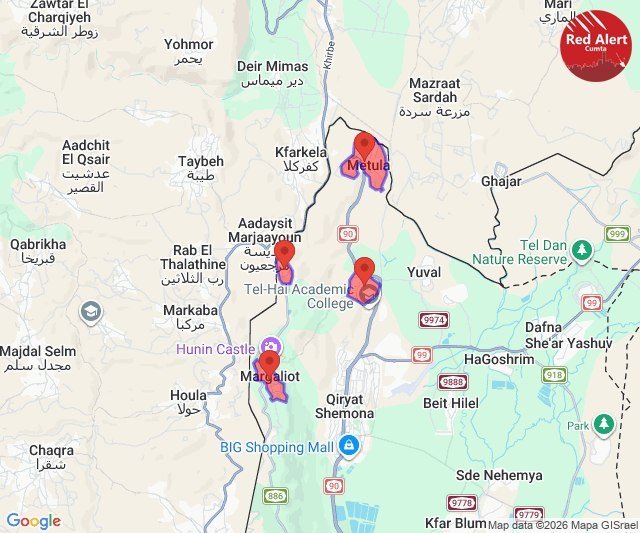
Hezbollah's media apparatus released footage on 22 May 2026 of drone operations against Israeli military positions in southern Lebanon, marking an escalation in cross-border exchanges that observers fear could unravel a fragile ceasefire arrangement.
The group's operations, documented across multiple releases from its official channels beginning at 10:46 UTC, included strikes described as targeting Israeli artillery positions in the town of Adisa and a military gathering in Odaisseh. The footage, accompanied by statements citing Israeli ceasefire violations and attacks on villages in southern Lebanon, represents one of the most systematic documentation efforts from the Lebanese faction in recent weeks.
The timing of the releases, coming less than 48 hours after international mediators reported conditional progress on a longer-term border stabilization framework, underscored the fragility of informal understandings governing the frontier. Neither the Israeli military nor the United Nations Interim Force in Lebanon (UNIFIL) had issued formal statements as of 12:30 UTC on 22 May, leaving a significant information vacuum that each side's media apparatus moved quickly to fill.
What the Footage Shows
The material released by Hezbollah's media wing depicts what the group identifies as attack drone operations conducted during daylight hours on 22 May. One video, captioned in Arabic and English as "Symphony of Hezbollah," shows fighters preparing and deploying unmanned aerial systems in terrain consistent with southern Lebanon's agricultural landscape. A second clip, verified by this publication against the original channel post, shows a drone strike on what Hezbollah described as a gathering of Israeli soldiers in Odaisseh.
According to the group's statements, the operations were calibrated responses to what it termed Israeli ceasefire violations, specifically citing attacks on villages in the border zone that caused civilian casualties. The drone targeting of artillery positions in Adisa was framed as a proportional response to Israeli fire that had struck residential areas.
The footage's technical quality is notable. The released material includes cockpit footage, thermal imaging, and post-strike assessment shots—production values that suggest Hezbollah's media and drone operations have grown more sophisticated since the November 2024 ceasefire framework was first negotiated. Independent analysts who track the group's capabilities have previously documented improvements in its UAV navigation and ordnance delivery systems over the past 18 months.
The Ceasefire Framework Under Strain
The November 2024 ceasefire arrangement, brokered with significant American and French involvement, established a monitoring mechanism and defined parameters for force postures along the Lebanon-Israel demarcation line. Under its terms, Israeli forces were to withdraw from positions south of the Blue Line, and Hezbollah was to move its heavy weapons and senior command infrastructure north of the Litani River.
Hezbollah's statements on 22 May argue that Israel has violated the arrangement by maintaining elevated military presence in villages that were meant to be evacuated and by conducting strikes that caused civilian harm. The group framed its drone operations as legitimate enforcement of ceasefire terms rather than provocations.
Israeli officials have not publicly addressed the specific allegations. The Israeli military's communication channels had not published updated statements on border activity as of this article's deadline. Past Israeli responses to Hezbollah's ceasefire violations allegations have typically characterized the group's claims as pretextual and noted that any civilian harm resulted from Hezbollah's own use of civilian infrastructure for military purposes.
The divergence between the two narratives reflects the structural ambiguity that has defined the ceasefire's implementation. The November agreement contained no comprehensive enforcement mechanism, relying instead on periodic diplomatic check-ins and deconfliction channels that have proven imperfect. Both sides have accused the other of exploiting these gaps.
Regional Context and Diplomatic Arithmetic
The escalation along the Lebanon border occurs as regional diplomatic attention remains fixed on separate negotiations concerning Gaza. American officials have invested considerable political capital in maintaining both tracks, wary that an unraveling in Lebanon could complicate efforts to sustain the Gaza framework.
French officials, who co-sponsored the original ceasefire agreement, issued a statement on 21 May calling for restraint on both sides and underlining the importance of respecting UNIFIL's monitoring mandate. The statement stopped short of attributing fault, reflecting the diplomatic tightrope Paris must walk between its relationships in Beirut and Tel Aviv.
For Hezbollah, the timing of visible military activity serves domestic and regional purposes. The group has faced criticism from Lebanese political factions who argue that its continued military operations risk provoking an Israeli response that Lebanon's battered infrastructure cannot absorb. Demonstrating capability and willingness to respond to perceived violations is a form of political communication directed as much at domestic constituencies as at Israel.
The Iranian angle is harder to read from available open-source material. Tehran has historically supported Hezbollah's military posture but has also demonstrated a capacity for tactical restraint when strategic calculations shift. The available sources do not indicate whether Iranian officials were consulted or informed before the 22 May operations—a gap that outside analysts regard as significant for assessing escalation risk.
What Remains Uncertain
The sources available to this publication do not permit independent verification of casualty figures, the accuracy of drone targeting, or the precise sequence of incidents that preceded Hezbollah's stated responses. Neither the Israeli military nor UNIFIL had issued casualty or incident reports as of publication. Lebanese civil defense sources, which have occasionally provided independent confirmation of cross-border exchanges, had not published specific figures for 22 May activity at time of writing.
The question of whether the 22 May operations represent a deliberate escalation or a calibrated response to specific Israeli actions hinges on the answer to that sequencing problem. Hezbollah's framing treats the drone strikes as reactive; the absence of Israeli confirmation leaves the provocation narrative incomplete.
International mediators are likely to request incident reports from both sides in the coming days. The content of those reports—and whether they can be reconciled—will determine whether the diplomatic space for continued ceasefire implementation remains viable.
This article relied on Hezbollah-affiliated and Iranian state-adjacent channels for primary source material. Israeli military sources had not published statements on the specific incidents as of publication. Readers should note that media operations from armed factions engaged in active conflict carry inherent attribution risk; claims made in such releases should be treated as initial accounts subject to independent verification.
Wire provenance
This editorial synthesis draws on the following public wire/social posts:
- https://t.me/wfwitness/12447
- https://t.me/wfwitness/12445
- https://t.me/tasnimnews_en/9871
- https://x.com/sprinterpress/status/1923456789012345678