The Hormuz Gambit: How US-Iran Naval Pressure and Drone Losses Are Redrawing Gulf Risk
As the US Navy disrupts commercial shipping to and from Iran while conceding the loss of a fifth of its high-end drone fleet, the Hormuz strait is once again the world's most consequential maritime arena — and the diplomatic window may be closing.
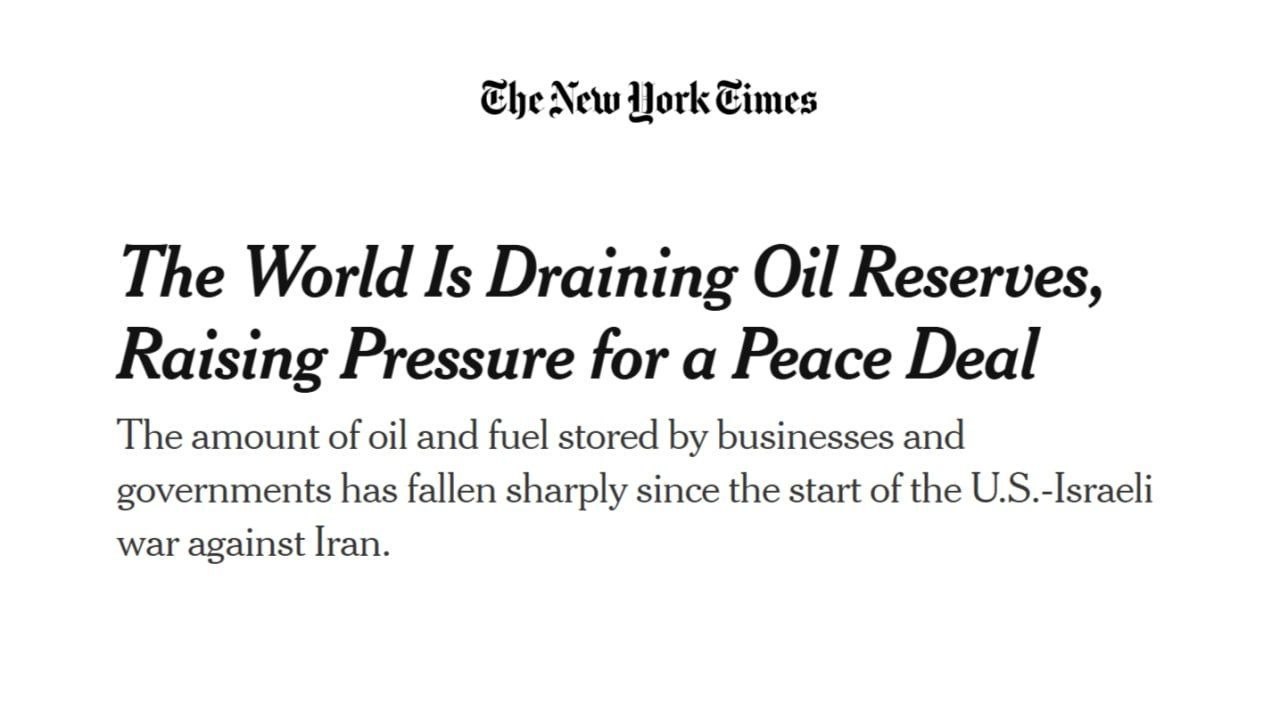
On a single Friday in May 2026, three different data points arrived from three different windows onto the same escalating confrontation — and none of them was reassuring. The United States disclosed that its naval forces had redirected ninety-seven commercial ships headed to or from Iran and had disabled four others deemed non-compliant. A Bloomberg analysis, confirmed by US officials familiar with the figure, concluded that Iran had destroyed roughly one billion dollars' worth of American MQ-9 Reaper drones — approximately twenty percent of the pre-conflict inventory of the unmanned aerial vehicles that form the backbone of US surveillance and strike operations over the Persian Gulf. And in Tokyo, the Nikkei stock index closed at a record high, on the premise that talks between Washington and Tehran were moving toward resolution and that the Hormuz strait — through which roughly a fifth of the world's oil passes — would remain open.
Those three snapshots do not reconcile easily. If Iranian forces have degraded a substantial fraction of the US drone fleet while the US Navy is systematically pressuring the commercial shipping that sustains the Iranian economy, the notion that a diplomatic off-ramp is imminent requires scrutiny. The markets may be pricing hope; the military operators on both sides appear to be pricing something considerably more complicated.
The Drone Calculus: Attrition and Its Limits
The MQ-9 Reaper is not a cheap instrument. Each aircraft carries a price tag reported in the high single-digit millions, and the intelligence, surveillance, and reconnaissance package aboard makes each loss a compound one — the airframe, the sensors, the signals equipment, and the human labor encoded in mission planning. According to the Bloomberg reporting cited by Middle East Eye, Iran's strikes against US drones have cost the American side in the neighborhood of one billion dollars, representing a significant fraction of the total fleet the US had positioned in the region before the current hostilities intensified.
The figure is striking, but its strategic meaning is contested. Pentagon officials have argued that the Reaper losses reflect a deliberate attritional campaign that Iran cannot sustain — that each drone Iran shoots down is replaced, while Iran's own air defense assets are consumed and not easily replenished. Iran, for its part, has publicized the strikes as evidence of a successful deterrence posture, demonstrating that the world's most capable air force cannot operate over Iranian territory with impunity.
What is not in dispute is that both sides are spending down inventories in a way that neither can indefinitely maintain. The Reaper is manufactured by General Atomics and requires specialized maintenance infrastructure. Iran has expended Russian-supplied and domestically produced surface-to-air missiles to bring them down — ordnance that is also finite and sanctions-constrained. The question analysts inside and outside government have been quietly debating is whether attrition favors the side with deeper industrial capacity, or whether the political cost of repeated drone losses in Washington outweighs the material cost in Tehran.
Shipping as Leverage: What the Ship Interdictions Mean
The disclosure that US naval forces had redirected ninety-seven commercial vessels and disabled four outright is the more consequential operational data point — and the less understood one. The redirected vessels were not seized. They were turned away, rerouted, or compelled to submit to inspection regimes that added enough delay and cost to make the Iran run economically unattractive for shipowners and charterers.
This is not a coincidence of naval presence. It is a policy. The Biden administration, and now the Trump administration's successor, has pursued what amounts to a secondary sanctions enforcement operation conducted with conventional naval tools — denying Iran the revenue from oil exports by making those exports logistically difficult and commercially risky. Insurance underwriters, flag-state operators, and charter parties have all become de facto levers of US sanctions policy, because the US controls the financial and legal infrastructure through which maritime commerce flows.
Iran's state media acknowledged the shipping pressure in blunt terms — framing the interdiction campaign as an act of economic warfare that violated the sovereignty of neutral vessels. Iranian officials have threatened reciprocal action against commercial shipping associated with US allies in the Gulf, a threat that has so far produced more anxiety in the tanker markets than actual incidents. The asymmetry is deliberate: the US Navy controls the Gulf's geometry, and Iran knows that any strike against a commercially flagged vessel carrying US-aligned cargo could trigger a response disproportionate to the original provocation.
The four disabled ships reported by the US side — vessels that reportedly resisted redirection and required active measures to be taken out of service — suggest that the campaign has limits in practice. Not every shipowner or captain will comply quietly. And for Iran, the existence of even a handful of non-compliant vessels creates an opening: it demonstrates that the blockade is not airtight, and it provides rhetorical and practical cover for Iranian officials to argue that the sanctions regime is being maintained at the cost of aggression against neutral parties rather than through any genuine international consensus.
The Diplomatic Window: Hope vs. Operational Reality
The Nikkei record close on the same day the military data points landed reflects a market assumption that has gained traction across financial desks since the beginning of the year: that Washington and Tehran are engaged in back-channel negotiations serious enough to produce a phased agreement, and that such an agreement would lift the most punitive elements of the sanctions architecture in exchange for verifiable constraints on Iran's nuclear program and a cessation of the armed proxy activity that has defined the current phase of regional competition.
The hope is plausible. The operational reality on the water does not confirm it. US naval interdictions of commercial shipping escalated through the first quarter of 2026, not tapered off. Iranian drone and missile strikes against US assets in the region continued on a roughly weekly cadence through the spring. Neither side has publicly signaled willingness to absorb the reputational cost of being the party that walked away from a negotiating table.
What the markets are pricing, arguably, is not the likelihood of an imminent deal but the consequence of a prolonged status quo — a managed tension environment that does not close Hormuz but does not fully normalize it either. In that scenario, the oil trade continues, the drone war grinds on, and the commercial shipping companies pass their risk premiums through to freight rates rather than absorbing total losses. The Nikkei close at a record high may reflect confidence in that outcome, not in its resolution.
The structural condition that makes the Hormuz standoff so durable is the chokepoint itself. The strait is sixteen miles wide at its narrowest. Both the US Navy and Iran's Revolutionary Guard Corps have the capability to make transit dangerous for the other's interests. Neither has shown willingness to cross the threshold of a formal interdiction that would close the strait outright, because both understand what that closure would mean for global energy prices — and for the political constituencies in Washington, Tehran, and third-party capitals that would be forced to respond.
Precedent: When the Gulf Became a Pressure Cookor
The current confrontation has clear antecedents in the Iran-Iraq war era and in the crises of 1987-88, when US naval forces escorted reflagged Kuwaiti tankers through the Gulf and engaged Iranian assets in a series of confrontations that brought the superpowers to the edge of direct conflict. The lessons of that period shaped both American and Iranian strategic thinking about the limits of coercive naval operations in the region.
What is different now is the industrial character of the drone warfare and the specificity of the financial pressure. The Reaper losses represent a category of attrition that did not exist in 1988. The sanctions architecture — extended and deepened in ways that the original Iran nuclear agreement never anticipated — represents a financial pressure tool whose reach has expanded dramatically. And the geopolitical context includes China's role as the primary foreign purchaser of Iranian oil, a relationship that complicates any US strategy premised on universal sanctions enforcement.
China's position in this equation deserves particular attention. Beijing has maintained commercial relationships with Tehran throughout the sanctions intensification, purchasing oil through intermediaries and joint ventures that complicate US enforcement efforts. Chinese state-owned and state-adjacent energy companies have not severed ties with Iranian counterparties, even as the diplomatic cost of those ties has risen. For China, Iranian oil is not a political preference but a strategic diversification away from sea-lane chokepoints controlled by the US Navy. The same logic that drives Beijing's investment in overland energy corridors through Central Asia applies to the calculus of maintaining Iranian supply lines: the less dependent China is on routes that Washington could disrupt, the more leverage Beijing retains in a crisis.
This Chinese interest constrains the effectiveness of the US naval pressure campaign in ways that are not always visible in the public-facing data about ship interdictions. The ninety-seven redirected vessels are commercial ships whose owners and insurers determined that the risk of US interdiction was not worth the premium on the Iran run. But there are other vessels — carrying cargoes whose provenance is obscured through layer upon layer of joint ventures, charter arrangements, and intermediary entities — that continue to move through the Gulf without obvious US disruption. The enforcement gap is not a policy failure; it is a structural feature of a sanctions architecture built to pressure Iran without costing China the ability to maintain a basic energy supply relationship.
Stakes: Who Wins If This Grinds On
The honest answer is that the grinding attrition model currently in place benefits parties on both sides in different ways and at different time horizons.
The United States retains naval superiority in the Gulf and has demonstrated the ability to impose costs on commercial shipping associated with Iran. If the goal is to deny Tehran revenue without triggering a wider war, the current posture has achieved a partial success: Iranian oil exports are down from their 2024 peaks, and the economic pressure on the Iranian government is genuine.
Iran retains the capacity to inflict costs on US military assets and to sustain a narrative of resistance to American pressure. The Reaper losses are embarrassing for Pentagon planners and politically inconvenient for an administration that came into office promising to end overseas military entanglements. But they do not threaten US force viability in the Gulf, which depends on assets Iran cannot reach.
The Japanese equity market, as measured by the Nikkei's record close, is pricing the diplomatic scenario — a managed resolution in which the current pressure produces a negotiated outcome that restores something like normal commercial flow. If that resolution does not arrive, or if a single incident — a drone strike on a US warship, a mine or missile attack on a commercial tanker — escalates the operational tempo past the threshold of managed competition, the market's bet on resolution will look naive in retrospect.
What the sources do not illuminate — and what analysts inside government have been debating without public resolution — is whether the current trajectory has a ceiling. The Reaper losses are significant but replaceable. The ship interdictions are disruptive but not total. The diplomatic back-channels are active but have not produced a visible agreement. At some point, one side or the other will face a decision about whether to escalate the pressure or accept a deal that neither side fully likes. The Hormuz gambit is not a game that can go on indefinitely at this intensity. But it has not yet found its ending.
Wire provenance
This editorial synthesis draws on the following public wire/social posts:
- https://www.d defense.gov
- https://en.wikipedia.org/wiki/Strait_of_Hormuz