Péter Magyar's Budapest Memorandum gambit is mostly theatre — but the argument Hungary is making deserves a real answer
Budapest's new prime minister is invoking a 1994 security agreement to stake out a position on Ukraine — but the framing tells us more about Hungarian domestic politics than about any shift in Budapest's Russia policy.
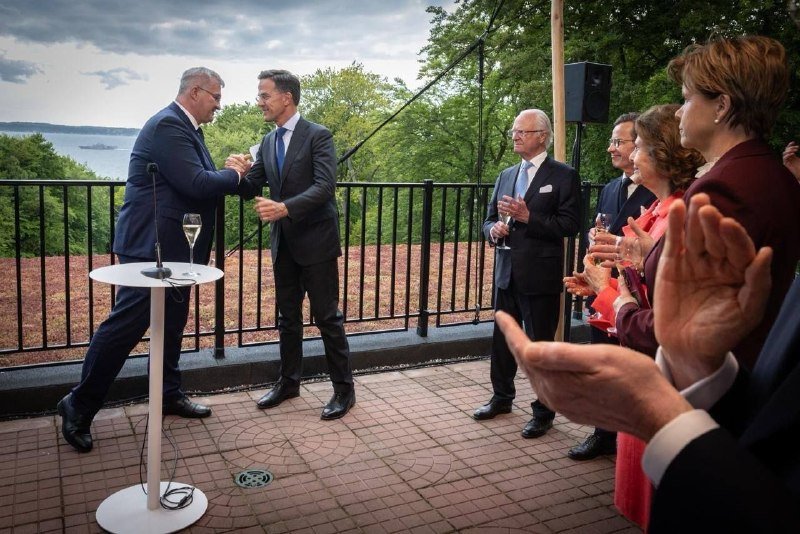
Hungary's new prime minister has found his talking point. On 22 May 2026, Péter Magyar told reporters that the territorial integrity of Ukraine was guaranteed in 1994 under the Budapest Memorandum — an agreement signed in Budapest, he noted, as if location were argument — and that Hungary has no plans to send its soldiers to Ukraine.
The framing is designed to do several things at once. It positions Hungary as a country with legitimate views on European security architecture, rather than as the outlier that EU capitals increasingly treat it as. It invokes an actual international document rather than purely transactional interests. And it separates Budapest from the harder-line NATO rhetoric without actually breaking with Moscow.
That last point is the one that matters.
What the Budapest Memorandum actually was
The memorandum, signed in December 1994 by Ukraine, the United States, the United Kingdom, and Russia, was a landmark security arrangement. Ukraine gave up the world's third-largest nuclear arsenal — some 1,900 strategic warheads — in exchange for written guarantees that its borders would be respected and that no country would use force against it.
Russia violated that guarantee in 2014 with the annexation of Crimea. It violated it again in February 2022 with the full-scale invasion. The other signatories did not intervene militarily. The memorandum contains no enforcement mechanism, and no country has faced consequences for ignoring it.
This history is not obscure. Ukraine references it constantly. Kyiv has argued — with considerable moral force — that the failure to defend the Budapest Memorandum is precisely why Western security guarantees have credibility problems now. Magyar appears to be borrowing that framing, or at least acknowledging it.
The question his comments raise is whether Budapest is making a principled argument about the weaknesses of international security architecture, or whether it is using that argument as cover for a position it would hold anyway.
Hungary's track record on Russia
Since Viktor Orbán's government consolidated power in 2010, Hungary has been the most Russia-adjacent member of both NATO and the European Union. It has blocked EU aid packages to Ukraine, delayed sanctions implementation, maintained energy dependence on Russian supply, and cultivated strategic relationships with Moscow even as every other NATO member on the alliance's eastern flank has moved in the opposite direction.
Péter Magyar, as Orbán's successor, has not signalled any departure from this orientation. His statement on Hungary not sending troops to Ukraine is consistent with a position Budapest has held since 2022. The novelty — if there is one — is the invocation of the Budapest Memorandum itself.
That instrument, in the mouths of Ukrainian officials and Western analysts, is typically deployed to illustrate the costs of disengagement: what happens when a country disarms on faith and the faith is broken. In Magyar's mouth, the same document becomes something different: an argument about the limits of collective security obligations, and by implication, a rationale for why Hungary does not need to do more.
The rhetorical move is not new. Governments that want to do less for Ukraine have found various ways to question the terms of engagement. But citing the Budapest Memorandum while declining to send troops does something specific: it acknowledges that Ukraine has legitimate grievances about the failure of Western guarantees, without committing Budapest to remedying that failure.
The argument Budapest is actually making
Stripped of diplomatic packaging, what Magyar appears to be saying is this: the international system failed Ukraine once already, in 1994, when the memorandum was written without teeth. It failed again when Russia breached it. Hungary has no obligation to make good on a commitment that others broke first.
This is a selective reading of history, but it is not an incoherent one. The Budapest Memorandum was always structurally weak. It was not a treaty. It created political rather than legal obligations. The United States explicitly declined to treat it as a binding security guarantee — a fact that Ukrainian negotiators have bitterly noted ever since.
What Budapest is doing, then, is using the memorandum's own ambiguities to justify continued restraint. If the agreement was always porous, Budapest's obligations under it are correspondingly limited. The argument works — provided you are not bothered by the fact that the party most responsible for the memorandum's failure is Russia, and that Hungary's actual policy alignment has consistently benefited Moscow.
What this means for European security
There is a version of the Budapest Memorandum argument that deserves a genuine hearing: the architecture of European security is indeed weaker than its architects claimed, and the 1994 document is a case study in the gap between promise and enforcement. Countries that want to reform that architecture — by building binding collective security arrangements, by creating the enforcement mechanisms the memorandum lacked — have a real case to make.
That is not the argument Budapest is making. Hungary has not proposed any alternative security framework. It has not advocated for treaty-based guarantees that would bind all signatories. It has simply noted that the existing arrangement is imperfect, in a way that conveniently excuses doing nothing.
The stakes of this rhetorical posture are real, even if the theatre around it is thin. Every EU member that invokes the Budapest Memorandum to justify inaction chips away at whatever credibility the West retains as a security partner. Kyiv watches. The Global South watches. The argument that international commitments cannot be trusted gains another citation. And the country making that argument continues to import Russian energy, continue to delay EU sanctions, and continue to align itself with Moscow on matters where Budapest has no plausible security interest in doing so.
Magyar is right that the Budapest Memorandum failed Ukraine. He is right that the signatories who walked away bear responsibility. He is conspicuously silent about the fact that Hungary is now among those walking away — and that Budapest's own track record offers the strongest argument for why the memorandum's failures were not accidental but structural.
The real question is whether Hungary will engage with that history, or whether it will keep citing it selectively, in the way that lets Budapest have it both ways: acknowledging the failure while perpetuating it.
This publication's reading of the Budapest Memorandum framing — a document often invoked in Kyiv and Western policy circles to illustrate the costs of nuclear disarmament without enforcement guarantees — differs from the wire in one key respect: most outlets treat Hungary's citation of it as evidence of Budapest's pragmatic independence from NATO orthodoxy. Monexus reads it as a rhetorical convenience that lets Budapest gesture at principle while maintaining a policy unchanged since 2022.
Wire provenance
This editorial synthesis draws on the following public wire/social posts:
- https://t.me/DDGeopolitics/12471
- https://t.me/ClashReport/18842
- https://t.me/ClashReport/18840