ICE and OKX Bet on Oil as the Next Frontier for Crypto Finance
Intercontinental Exchange and crypto exchange OKX are quietly building a bridge between the world's most traded commodity and 120 million crypto users. Whether that changes anything for Bitcoin may depend on what Washington decides next.
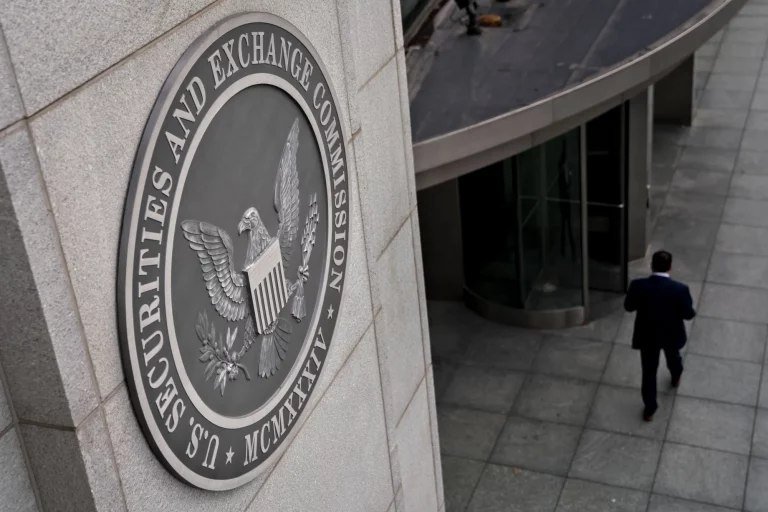
Intercontinental Exchange, the Atlanta-based operator of the New York Stock Exchange, announced on 22 May 2026 that it had partnered with OKX, one of the world's largest crypto exchanges by volume, to expose oil benchmarks to the exchange's 120 million registered users. The deal — framed in corporate language as an expansion of digital-asset infrastructure — is quietly one of the more consequential integrations between traditional finance and the crypto ecosystem in years.
The commodity in question is Brent crude, the seaborne oil grade that underpins the most widely traded physical oil contract on earth and the basis for roughly half the world's internationally traded crude. For decades, accessing Brent meant institutional desks, brokerage accounts, and the interbank market. ICE's new arrangement with OKX compresses that chain: a crypto trader in Lagos, Nairobi, or Manila can now reference the same benchmark a commodities trader at Goldman Sachs uses to price a Suezmax tanker cargo. The implications, while not always visible at the retail surface, are structural.
Bitcoin quiet as a new financial layer builds
The timing of the announcement coincides with a notably calm stretch for Bitcoin itself. According to CoinDesk's implied volatility analysis, BTC's 30-day implied volatility dropped to a seven-month low in the week of 19 May 2026 — a reading that sits uncomfortably with the macro noise around it. Geopolitical tensions in the Middle East, renewed talk of dollar reserve currency stress, and a rotating cast of US regulatory signals have all failed to move Bitcoin's price range in any sustained direction.
CoinDesk's day-ahead analysis for 22 May framed it plainly: Bitcoin has been left behind in the geopolitical melee. The asset that bulls once argued would decouple from traditional risk asset correlation has, in practice, been stuck in a corridor roughly $80,000 and $95,000 since late March. Meanwhile, the infrastructure layer underneath crypto markets — the plumbing that connects digital assets to equities, bonds, and commodities — continues to build at pace. The ICE-OKX partnership is the most recent example of that structural activity, and it matters more, in the medium term, than Bitcoin's near-term price action.
What the benchmark actually means
ICE operates a suite of commodity benchmarks used by producers, traders, and financial institutions to settle physical and derivative contracts. Brent crude futures, cleared through ICE Futures Europe, represent the most liquid seaborne oil price discovery mechanism in the world. When ICE brings that benchmark into the OKX ecosystem, it is not simply putting a price on a screen for crypto users to observe. It is creating the conditions for settled exposure — a scenario where a trader can take a position referencing Brent without converting in and out of fiat, and without the settlement lag that has historically made commodity exposure impractical for retail crypto users.
OKX has not disclosed the specific product structure, which will matter enormously for how this is interpreted. A price-feed integration is one thing; a fully collateralised, margined derivatives product referencing ICE's Brent settlement is another. What the company has confirmed is that the integration covers the exchange's user base — which spans retail and institutional tiers — and that it is designed to make Brent accessible through the same interface used for Bitcoin, Ethereum, and USDT. That integration is worth examining carefully, because it is precisely the kind of arrangement that US regulators have moved to restrict when it involves crypto-native counterparties touching regulated commodity markets.
The regulatory shadow
The Commodity Futures Trading Commission has spent the better part of three years refining its position on crypto commodities. Bitcoin and Ethereum have received partial clarity through enforcement actions and guidance documents, but the broader question of whether a crypto exchange can offer margined, leveraged exposure to a regulated commodity benchmark without registering as a Futures Commission Merchant remains unsettled in practice. OKX is not a US-registered entity. ICE is. That asymmetry is the crux of the regulatory tension.
The CFTC's position has been that digital asset derivatives referencing physical commodities fall under the same rules as any other commodity derivative. ICE's legal team almost certainly ran that analysis before announcing the partnership. Whether OKX's downstream integration of the ICE Brent benchmark into leveraged or margined products triggers CFTC jurisdiction depends on product design — specifically whether there is actual delivery, actual counterparty exposure, and actual margin intermediation inside the OKX platform or whether it stays at the level of a reference-price feed.
The SEC's parallel involvement is also relevant. The SEC has maintained that most crypto tokens constitute securities, and that digital asset platforms offering those tokens alongside commodity-linked derivatives need to be careful about how they structure cross-asset exposure. Neither agency has published formal guidance on the specific configuration ICE and OKX are operating, which means the partnership exists, for now, in a regulatory grey zone that both parties have decided to enter anyway.
Dollar architecture and the quiet bet on commodity tokenisation
The deeper context is the broader push toward commodity tokenisation — the idea that physical-world assets can be represented as digital tokens on distributed ledgers, enabling faster settlement, programmable ownership, and around-the-clock markets. ICE is not the only institution making this bet. BlackRock, Goldman Sachs, and a cohort of commodity trading houses have each made moves in the past 18 months to explore how tokenised physical assets interact with existing settlement infrastructure.
What ICE's OKX partnership signals is a specific assumption: that the next phase of commodity market development runs through crypto-native distribution channels. OKX's 120 million users are not going to migrate to a Bloomberg terminal. If the commodity market of the future is accessed via a crypto wallet interface, the benchmark needs to travel to where those wallets live. ICE is moving Brent there. The question is whether the dollar-denominated nature of that benchmark survives the journey intact.
Brent crude is priced in dollars globally. The dollar oil pricing convention is not a technical necessity — it is a structural artefact of US financial dominance, cemented after the 1974 Petrodollar recycling arrangements and maintained through the dominance of US clearing infrastructure. Bringing Brent into a crypto exchange does not immediately challenge that. But it introduces an environment where Brent pricing is accessible alongside Bitcoin, Tether, and USDC — assets that operate outside the dollar settlement layer in meaningful ways. Over time, that adjacency normalises alternative settlement pairs. Whether that matters depends on the scale the integration achieves and whether non-dollar participants — particularly sovereign entities with dollar reserve diversification mandates — begin to use the OKX channel as a way to access Brent exposure without touching US correspondent banking.
The deal is, in the near term, a product integration. In the medium term, it is a test case for whether commodity benchmarks can migrate to crypto infrastructure without triggering the regulatory and financial architecture responses that would curtail the experiment. Bitcoin, for its part, continues to wait: subdued in price, low in volatility, and watching from the sideline as the infrastructure that was supposed to support it gets quietly built by a different asset class.
This publication's wire feed focused on Bitcoin's price stasis through the week of 19 May 2026. We chose instead to trace the infrastructure layer underneath — the deals being struck, the benchmarks being moved, and the regulatory parameters still being defined — which we assess will have more durable impact on crypto's role in global finance than any single price cycle.
Wire provenance
This editorial synthesis draws on the following public wire/social posts:
- https://t.me/CryptoBriefing/48291
- https://t.me/CryptoBriefing/48290
- https://t.me/CoinDesk/27841
- https://t.me/CoinDesk/27840
- https://t.me/CoinDesk/27839