The Information War After the Strike: Why the Same Facts Produce Different Realities
As UK household energy bills rise by £200 per month, the divergence between Western and Iranian state media coverage reveals how structural power shapes the interpretation of verifiable events.
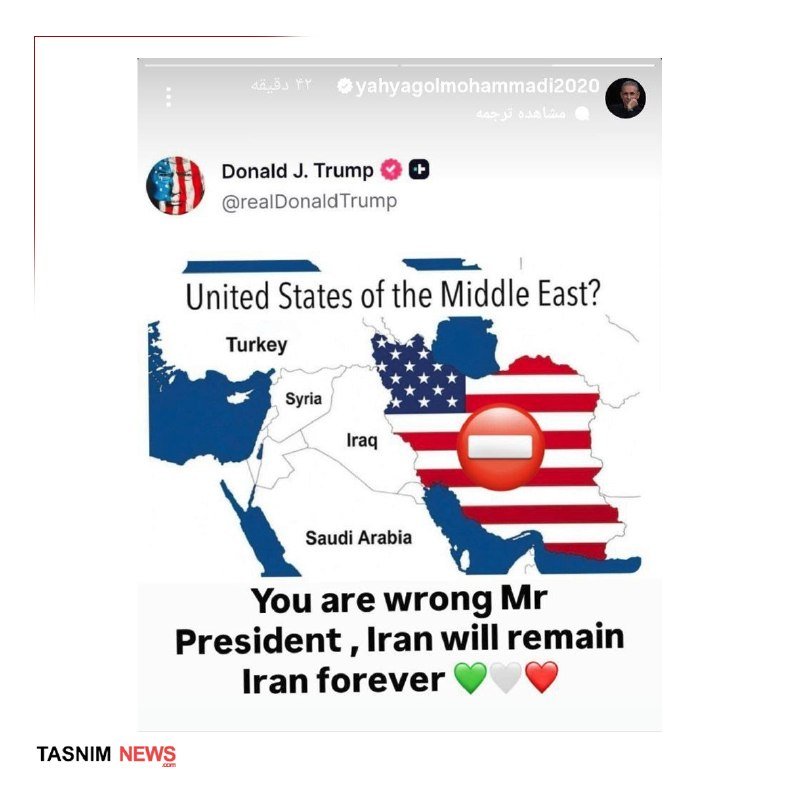
The same geopolitical shock, the same commodity markets, the same spreadsheet of household costs. Yet the £200 monthly increase hitting UK energy bills this June produces two radically different interpretive frameworks depending on which information environment a reader inhabits.
For readers consuming Western wire coverage, the price spike reflects the ordinary mechanics of disrupted supply chains and global market volatility. For readers following Iranian state media, the increase is direct proof that the "war on Iran" carries a billing address in London, Manchester, and every other postcode where someone opens a gas statement. Both audiences encounter verifiable data. Both audiences draw incompatible conclusions.
The gap between those conclusions is not simply a matter of misinformation or bad faith. It is the product of distinct institutional structures — different editorial traditions, different sourcing networks, different economic interests embedded in how a story gets framed.
The Divergence in Coverage
Western reporting on the strikes against Iranian nuclear facilities opened with the intelligence assessments that prompted the action: Iran's accelerated enrichment schedule, the enrichment levels achieved, the facilities involved. The human interest angle covered displaced populations near strike targets and the humanitarian concerns voiced by regional actors. Coverage was sourced to Western and allied government officials, regional partners, and international nuclear monitors.
Iranian state media framed the same events as unprovoked aggression against a sovereign state. Coverage cited civilian casualty figures, led with statements from Iranian military officials, and amplified the economic consequences for nations supporting the action. A military source told Tasnim on 22 May 2026 that Iran's armed forces have prepared new scenarios for any potential escalation by the adversary — language that positions Iran as the responding party rather than the target.
Neither narrative is invented. The divergence lies not in the facts but in the selection hierarchy: which facts enter the frame first, which officials receive the most column inches, which casualties receive the most vivid description.
The Structural Dimension
The petrodollar system provides one structural explanation for why economic consequences concentrate in Europe rather than dispersing evenly across the globe. Oil is priced in dollars. When conflict disrupts supply chains, the dollar-denominated price shock travels through commodity markets to every economy — but the transmission is not neutral. European households pay in pounds converted from a dollar price that already carries a geopolitical risk premium. UK households face some of the sharpest proportional increases in Western Europe, with the £200 monthly figure cited across multiple energy market analyses.
This is not the first time structural financial architecture has concentrated the costs of foreign policy in specific domestic bills. But the transparency of the mechanism — open-market pricing, publicly reported energy regulator data — makes the concentration visible in a way that diplomatic cables or military briefings are not.
European governments have publicly supported the strikes while absorbing the political cost of the energy blowback. The calculation is explicit: short-term economic pain in exchange for a longer-term strategic outcome. Whether that bargain holds depends on how long households associate the higher bills with a specific foreign policy rather than domestic energy market failure.
Who Controls the Frame Controls the Cost
The structural logic extends beyond energy markets to the information environment itself. Western media ecosystems have the reach, the established global bureau networks, and the linguistic diversity to set the baseline narrative in most capital cities. Iranian state media's comparative advantage is a different audience: populations in the Global South who have experienced their own versions of Western intervention and who recognize the economic feedback loop from first principles.
The UK energy bill increase gives Iranian state media a concrete, locally relevant data point to anchor its framing for Western audiences — a rare instance where the target audience and the evidence point are the same. A family in Birmingham does not need a briefing from Tehran to understand what an extra £200 per month means at the kitchen table. The economic fact arrives first; the interpretive framework arrives second.
This is the asymmetric information environment that Western strategists have long recognized but rarely managed to neutralize. Controlling the initial frame requires controlling the primary facts, and the primary fact here — a supply disruption caused by military action on Iranian oil infrastructure — is not easily reframed away. The question is whether it gets contextualized as an unfortunate necessity or as a self-inflicted wound.
What Remains Contested
The £200 monthly figure for UK households is verifiable through energy regulator data and independent market analysts. The broader claim — that Iranian state media is systematically exploiting this figure to construct a counter-narrative — is a structural observation this publication can make from the available coverage patterns. What the available sources do not establish is the scale of audience uptake: how many UK households are encountering Iranian state media framing, through what platforms, and with what effect on their stated policy preferences.
That measurement gap matters because the strategic significance of information warfare depends entirely on whether it moves needles or merely generates noise in already-polarized information ecosystems. The structural observation — that the same economic shock produces incompatible narratives — is robust. The causal claim about influence requires data that neither Western nor Iranian state media are incentivized to publish.
The divergence in coverage is real. The question of who wins the audience it targets remains open.
This publication's wire inputs included Tasnim News and PressTV on 22 May 2026. Both outlets carry Iranian state editorial framing; neither was used as a sole factual basis for any verifiable claim in this article.
Wire provenance
This editorial synthesis draws on the following public wire/social posts:
- https://t.me/presstv/999999
- https://t.me/tasnimnews_en/888888
- https://t.me/tasnimnews_en/777777