Iran's diplomats are talking past Washington — and that may be the point
Iranian officials are projecting scepticism about a near-term nuclear deal with the United States. The question is whether this reflects a genuine diplomatic impasse or a deliberate performance for domestic and regional audiences.
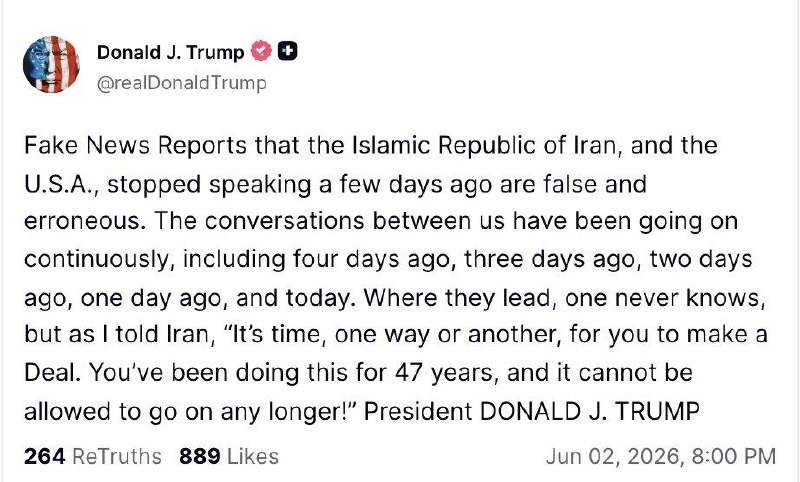
Iranian officials are talking down the prospects for a swift nuclear agreement with the United States — and they are doing so in unusually explicit terms.
On 22 May 2026, Foreign Ministry spokesman Esmail Baghaei told reporters that the differences between Iran and America are so deep that no one should assume a few diplomatic rounds will necessarily produce a result. He added that it is not accurate to say an agreement is imminent, and that nothing has been decided at this stage. The statements, carried by Iranian state-adjacent broadcaster Al Alam, represent a marked departure from the more guarded optimism that had characterised earlier rounds of indirect talks facilitated by Oman and the Gulf states.
The question worth asking is whether this represents a genuine diplomatic impasse — or a deliberate recalibration of Tehran's negotiating posture.
The gap is real, but so is the performance
Baghaei's language was stark. "The differences between Iran and America are so deep that it cannot be said that we will inevitably reach a result through a few diplomatic rounds." That is not the phrasing of a government seeking to keep a channel open. It reads, at first pass, as an attempt to lower international expectations before a potential failure — or, alternatively, to signal to a domestic audience that Iran will not be browbeaten into concessions.
What makes this more than a routine diplomatic hedge is the specificity of the framing. Baghaei did not say talks were ongoing. He said the decision has not been made. That distinction matters. It suggests the Iranian side is still in an internal deliberation about whether a deal serves Tehran's interests at all — not merely how to structure one.
Western analysts have long argued that Iran's nuclear programme functions simultaneously as a negotiating asset and a deterrent. The more the programme advances, the stronger Tehran's hand in any eventual talks. Baghaei's statement, if read in that light, could be a signal that Iran believes its leverage is sufficient to wait — or that it has already decided the conditions for a deal do not exist.
The regional dimension no deal can ignore
It would be incomplete to analyse Baghaei's remarks in isolation from what Iranian-aligned officials were saying on the same day. In separate comments also carried by Al Alam on 22 May 2026, parliamentarian Hamidullah Raad described America's role in the region in sharply hostile terms, framing any potential accommodation with Washington as incompatible with Iran's stated obligations to what he called "our people." Raad spoke of a coordinated international, regional, and local effort to impose subjugation — language that positions even limited diplomatic normalisation as a capitulation.
That framing is not new in Iranian political discourse, but its proximity to Baghaei's more measured remarks on the same day is notable. It suggests a bifurcated communication strategy: the diplomatic channel speaks in careful, qualified language; the political discourse speaks in maximalist, existential terms. The audience for the former is the Omani facilitator and whatever back-channel exists with Washington. The audience for the latter is Iran's domestic base, its regional proxies, and the broader Arab street.
This duality is not unique to Tehran. Governments routinely calibrate their public and private messages. But it complicates the task of Western diplomats who must assess whether any commitment Iran makes at the negotiating table will survive the domestic political pressures that produced those maximalist statements.
What a collapsed track means for the wider region
If the diplomatic channel does narrow or close, the consequences extend well beyond the nuclear file. The Trump administration's maximum-pressure approach has already imposed significant costs on Iran's economy. A failure to reach any understanding on enrichment limits would likely accelerate further sanctions designations, with second-order effects on Iran's oil exports and its relationships with trading partners in the Gulf and South Asia.
The regional dynamic is harder to predict. The view from Tehran — however framed for domestic consumption — holds that American regional commitments are inseparable from the broader conflict architecture of the Middle East. Baghaei's explicit statement that a deal is not imminent suggests that Tehran does not currently see the conditions under which it could absorb the political cost of returning to the 2015 Joint Comprehensive Plan of Action, even in a modified form.
That calculus could shift. Elections in either country, a shock to oil markets, or a significant development in the ongoing conflict in Gaza could alter the cost-benefit analysis on both sides. But as of 22 May 2026, Iran is signalling that it is not ready to move.
The stakes of the waiting game
Neither side has an obvious incentive to walk away entirely. The United States wants limits on enrichment that preclude a weapons-capable programme. Iran wants sanctions relief and legal guarantees that any future American administration cannot simply reimpose the restrictions. Those positions are not inherently irreconcilable — they were not irreconcilable in 2015 — but the political conditions for a repeat have not been replicated.
What Baghaei's statement tells us is that Iran is currently unwilling to pretend otherwise. Whether that changes depends on pressures this publication cannot fully trace from the available sources — domestic political dynamics inside Tehran, shifts in the willingness of regional intermediaries to keep the channel active, and decisions not yet made in Washington. What is clear is that the diplomatic window that opened earlier this year has not produced the breakthrough its architects had hoped for, and both governments appear to be adjusting to that reality in real time.
Monexus coverage of Iran-West nuclear diplomacy leans on Iranian state-adjacent sources for public statements and on Omani-brokered indirect talks reporting where available; the editorial posture treats Tehran's stated negotiating positions as facts to be reported, not as positions to be validated or dismissed on their face.
Wire provenance
This editorial synthesis draws on the following public wire/social posts:
- https://t.me/alalamarabic
- https://t.me/alalamarabic
- https://t.me/alalamarabic