Iran Dismisses Breakthrough Talk as Doha-Backed Diplomacy Quietly Advances
Tehran poured cold water on expectations of imminent progress in nuclear talks with Washington, even as a Qatari negotiating team arrived in the Iranian capital to continue shuttle diplomacy that has kept channels open for months.
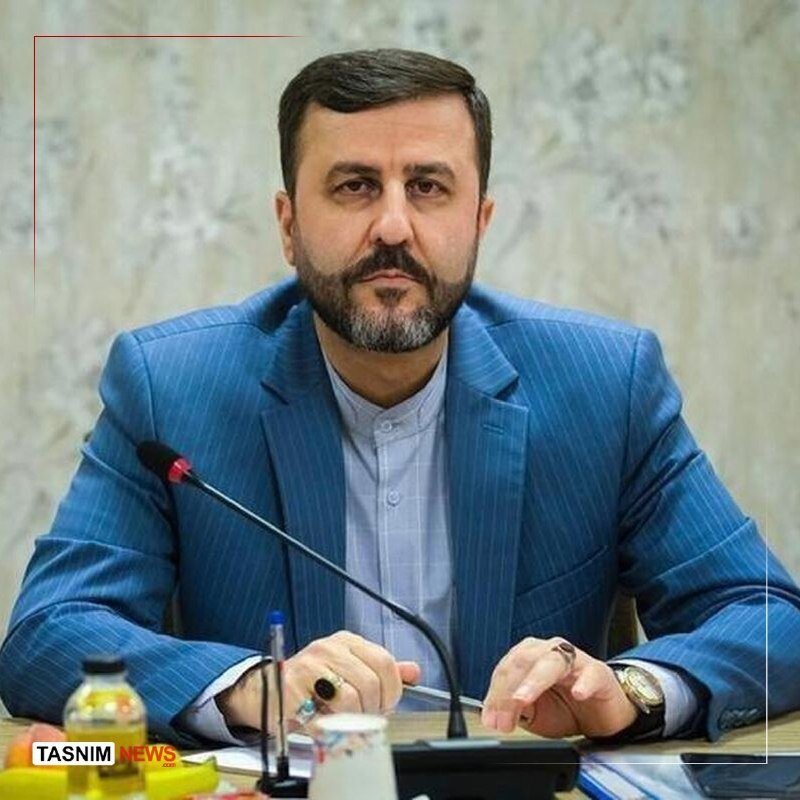
Iran's foreign ministry said on 22 May 2026 that negotiations with the United States remained far from a breakthrough, with senior officials warning that fundamental disagreements still separate the two sides. The statement, reported by Middle East Eye, represents a deliberate effort to manage expectations after weeks of informal signals that a deal might be within reach. "Major gaps still separate the two sides," an Iranian spokesperson told reporters in Tehran, without elaborating on which issues proved most stubborn.
The cooling rhetoric arrived, paradoxically, at a moment of heightened diplomatic activity. A Qatari delegation touched down in Tehran the same day, part of a sustained Qatar-mediated channel that has kept indirect US-Iran communication alive since formal talks stalled in early 2026. A source familiar with the matter, cited by Michael A. Horowitz on social media, confirmed the Qatari team had arrived to advance discussions. Iranian state media separately noted that a Qatari delegation was holding talks in Tehran as part of ongoing diplomatic efforts, though official statements stopped well short of describing any breakthrough.
The mediation architecture
Qatar's role as an intermediary is not new, but its current intensity reflects a deliberate choice by Washington to maintain a back-channel while publicly maintaining pressure. Doha's relationship with both Tehran and Washington gives it a credibility that few other capitals possess. The emirate hosts the largest US military footprint in the Middle East and simultaneously maintains commercial and political ties with Iran that survived the maximum-pressure campaign years. That dual standing has made Qatar the default venue whenever the two adversaries need a conversation without a conversation.
Japan's foreign minister held a separate telephone call with his Iranian counterpart on 22 May 2026, covering bilateral relations and the latest regional and international developments. The call, first reported by sprint.press, signals that Tehran is running a broader diplomatic offensive simultaneously with the US track — not solely focused on the nuclear question but on its overall international standing and economic relationships. Japanese diplomatic engagement with Iran has been largely overlooked in Western coverage, but Tokyo has long sought to preserve its oil supply relationships with Tehran and has occasionally positioned itself as a discreet interlocutor.
What the gaps actually are
The precise sticking points in US-Iran negotiations remain partly opaque, as both sides conduct talks through intermediaries. Western officials and analysts following the file have identified several areas of contention: the scale of Iran's uranium enrichment programme, the timeline for sanctions relief, the verification mechanisms that would govern any agreement, and — increasingly — Iran's ballistic missile capabilities, which the United States insists must be addressed even if the nuclear file is resolved. Iran, for its part, has demanded legal guarantees that any sanctions lifted will not be reimposed under a different domestic political configuration in Washington — a condition the Trump administration has thus far rejected.
What is clear is that neither side appears willing to absorb the political cost of a collapsed negotiation, which gives both an incentive to keep the process alive even when progress is minimal. Iran's public dismissal of breakthrough expectations serves a domestic audience as much as it does a diplomatic function; hardliners in Tehran have long opposed concessions to Washington, and any hint of imminent capitulation would provoke a backlash that could destabilise the negotiating team. The United States, meanwhile, faces a regional environment in which Israel and Gulf partners are watching closely, and any perception of diplomatic softness toward Iran carries domestic political risk.
The structural logic of continued engagement
The Iran nuclear file is, at its core, a story about the limits of both pressure and defiance. Maximum-pressure campaigns have not delivered the regime-change outcome that their architects once envisioned. Revolutionary rhetoric, meanwhile, has not shielded Iran from the economic consequences of isolation. What remains is a negotiated equilibrium that both sides periodically approach and periodically abandon, with periods of engagement punctuated by crises — some manufactured, some accidental — that set the process back. The current Qatar-mediated track fits that pattern. It is neither a breakthrough nor a breakdown; it is the management of a relationship that neither side can fully escape.
Qatar's willingness to host this architecture also reflects a broader shift in Gulf diplomacy, in which traditional enmities are being recalibrated in favour of de-escalation and economic pragmatism. The Abraham Accords reframed the possibilities for Arab-Israeli normalisation, but they also introduced new variables into regional calculations. For Qatar, the mediator role is not altruism — it is a strategic asset that enhances Doha's standing with Washington, its relationship with Tehran, and its leverage over both.
Forward view
The immediate trajectory appears to be continued talks without resolution. Both sides have incentives to keep the channel open — Iran to prevent further economic deterioration and the United States to avoid the military contingencies that a collapsed negotiation might necessitate. The gaps are real, but they have been real for two years. What changes is the political weather in Washington and Tehran, and on that score the evidence is mixed. The Trump administration has shown a capacity for dramatic reversals that its predecessors did not; the Iranian system remains internally contested between factions that view nuclear compromise differently. The Qatari team will return to Doha having moved nothing dramatically forward. That, in this particular negotiation, counts as a result.
Wire provenance
This editorial synthesis draws on the following public wire/social posts:
- https://t.me/osintlive