Iran's Strait of Hormuz Gambit Tests the Limits of Maritime Sovereignty
Tehran says 35 ships transited under its coordination. Washington calls it an attempted shakedown. The gap between those framings tells you everything about who controls the world's most critical chokepoint — and who thinks they should.
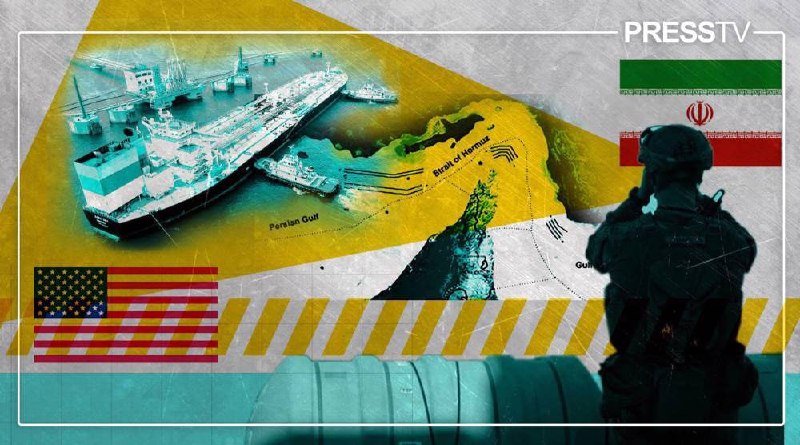
On the morning of 22 May 2026, Iran's Islamic Revolutionary Guard Corps Navy announced that thirty-five vessels — oil tankers, container ships, and commercial carriers — had safely passed through the Strait of Hormuz under its coordination and security escort. By midday, United States Senator Marco Rubio was framing the same event very differently: Iran, he posted on the social platform X, was attempting to establish a toll system at the chokepoint and was working to recruit Oman into the arrangement.
The IRGC's statement and Rubio's accusation are not simply in tension — they represent two entirely incompatible visions of who legitimately governs one of the world's most strategically saturated waterways. Parsing that gap matters, because the Strait of Hormuz is not a metaphor. Roughly twenty percent of global oil and fifteen percent of liquefied natural gas flow through its 33-kilometre-wide pinch point every year. What happens in those waters ripples directly into energy markets,航运 costs, and the calculus of every major economy from Beijing to Berlin.
The IRGC's Numbers Game
The Guard Corps' announcement of thirty-five transits in a single twenty-four-hour window is, on its face, unremarkable. The strait handles enormous traffic volumes under normal conditions — maritime跟踪数据显示常规单日通航量通常远高于这个数字。Iranian state media, including the Tasnim News Agency affiliated with the IRGC's ideological wing, presented the figure as evidence of Tehran's capacity and willingness to maintain freedom of navigation.
That framing is not accidental. When the announcement drops within hours of Rubio's accusation — both within the same news cycle on 22 May — the timing suggests an intentional counternarrative. Tehran is saying, in effect: we are not disrupting shipping; we are facilitating it. The question is whether that claim holds scrutiny. The thirty-five figure alone tells us nothing about average daily traffic; a claim of facilitation requires comparison against baseline. The sources do not provide that baseline, and no independent verification of the IRGC's figure is currently available from Western maritime monitoring services.
What is verifiable is that Iran has previously used naval harassment, detained vessels, and demanded port-of-entry concessions as instruments of statecraft. The Guard Corps' maritime arm operates under different command logic than the conventional Iranian Navy, with strategic objectives that include demonstrating Tehran's reach and influence in waters the US Navy has historically treated as its own domain.
Rubio's Toll Thesis — Signal or Noise?
The Senator's framing — that Iran is attempting to install a de facto toll system — is structurally significant even if the thirty-five-ship number is not. A toll arrangement at a strategic chokepoint would represent something qualitatively different from sporadic harassment: it would be an attempt to institutionalise extractive leverage over global trade.
Rubio's claim that Iran is also seeking Oman's participation in such a system is the most consequential element of his statement. Oman controls the strait's southern shore and has historically maintained a carefully calibrated neutrality between Tehran and Washington. Muscat has hosted back-channel negotiations, provided diplomatic cover for nuclear talks, and declined to join Saudi-led anti-Iran coalitions. If Oman were to participate in any Iranian security coordination framework — even implicitly — it would represent a quiet but profound realignment in Gulf state calculations.
The sources do not indicate whether Oman has received any formal Iranian approach, nor whether Muscat has responded. That absence of confirmation is not evidence of absence; diplomatic approaches of this sensitivity are rarely made public until one side chooses to signal. The fact that Rubio is willing to state Oman's involvement as an active rather than speculative proposition suggests his staff have received intelligence — or at minimum, a credible reporting lead. Without that intelligence in the public record, the claim remains contested.
Who Controls the Strait, and Who Should
The deeper structure of this episode is a dispute over the norms that govern international straits. The United States, backed by its regional allies, operates on a longstanding interpretation that international waterways must remain open to transit passage — meaning vessels can move through without prior notification or state coordination. Iran's preferred framework, expressed through its legal claims and practical conduct, leans toward requiring innocent passage — meaning vessels sailing through must coordinate with or acknowledge the authority of littoral states.
This is not merely a legal nicety. Transit passage doctrine treats straits as global commons; innocent passage doctrine allows coastal states significant leverage over who enters and on what terms. Iran's periodic enforcement actions, its designation of exclusion zones, and now the IRGC's framing of itself as a coordinator rather than an obstructor of shipping all point toward an effort to habitualise Iran's role in strait governance — not by closing the waterway, which would trigger an immediate and overwhelming response, but by making Iran's participation necessary for safe passage.
The irony — and it is a significant one — is that Iran's IRGC is framing itself as a security guarantor while the United States frames it as a racketeer. Both framings cannot be simultaneously true in the same register, yet both capture something real about how the Guard Corps operates. The Corps provides genuine protection to vessels that cooperate with its protocols; it also extracts compliance and signals power through that protection. Whether thirty-five ships transited in a day is a fact or a flex, it lands the same message: the IRGC is in the water, and ships ignore it at their peril.
What Happens If This Escalates
The stakes are not abstract. If Iran succeeds in establishing even an informal toll or coordination framework at Hormuz — with or without Omani participation — it normalises a security relationship that the United States and its allies have spent decades resisting. Every vessel that accepts IRGC coordination, even implicitly, is endorsing a new operational reality. Insurance premiums, shipping route decisions, and naval patrol patterns would all shift accordingly.
For Washington, the challenge is that any direct countermove — increased US naval presence, secondary sanctions on entities cooperating with Iranian maritime protocols, or direct confrontation with IRGC vessels — carries escalation risk. Iran's strategy appears calibrated precisely to stay below that threshold: visible enough to establish a presence, deniable enough to avoid triggering a response.
What we are watching, in the narrow space between Rubio's accusation and the IRGC's thirty-five-ship claim, is a contest over whether the Strait of Hormuz remains a governed commons or becomes a managed corridor — and who does the managing. The next data point will not be another press release. It will be whether Oman's government responds, whether the US Fifth Fleet adjusts its posture, and whether commercial shipping begins adjusting its routes or its protocols. Those are the signals that will tell us whether Tehran's latest move was a statement or a beginning.
Wire provenance
This editorial synthesis draws on the following public wire/social posts:
- https://t.me/ClashReport
- https://t.me/GeoPWatch