Iran's Military Alert and the Language of Escalation
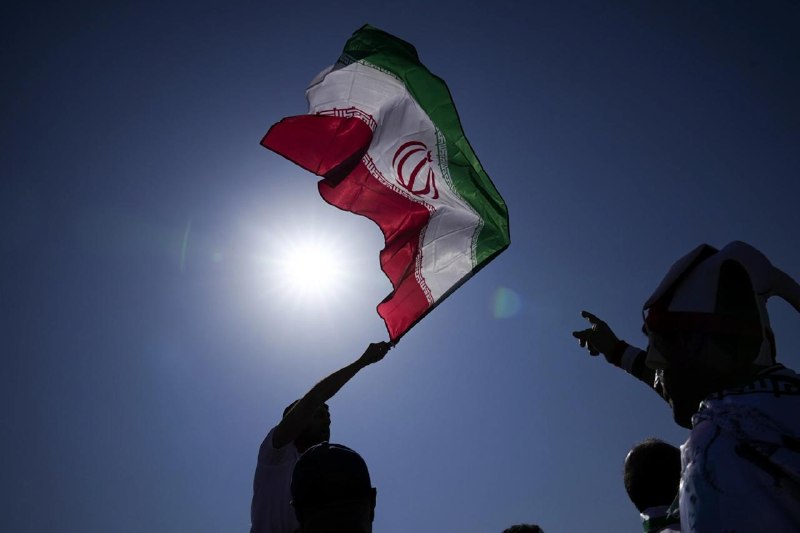
On the evening of 22 May 2026, multiple state-adjacent Telegram channels carried the same alert in near-simultaneous postings: Iran's Armed Forces had entered their highest state of operational readiness. The language was unambiguous — a red-level designation, the maximum alert posture available to the Islamic Republic's command structure. Within hours, the Speaker of Iran's Parliament, Mohammad Bagher Ghalibaf, had addressed the public directly, warning that "all covert and overt actions currently indicate that the enemy intends to restart the war" and assuring Iranians that the Armed Forces had taken "the necessary measures."
The statements landed in Western capitals as a provocation. In Tehran, they arrived as something more complicated: a simultaneous act of deterrence, domestic reassurance, and — depending on which faction within Iran's fractured security apparatus is driving the messaging — a genuine preparation for conflict. Disentangling those three functions is the central challenge for anyone attempting to read the current moment.
The Immediate Signal
Ghalibaf's statement was notable for its specificity of framing. He did not claim an imminent attack was underway; he claimed one was being prepared. The distinction matters. A warning that an enemy intends to restart hostilities is designed to do two things simultaneously: put adversaries on notice that the costs of escalation have been calculated, and reassure a domestic audience that their government sees the threat clearly and is responding. Both objectives require public articulation — the deterrence message needs to reach Washington and its regional partners, while the reassurance message needs to land in Tehran, Isfahan, and Mashhad.
The channels carrying the alert — DDGeopolitics and Middle East Spectator, both operating as open-source intelligence aggregators with large followings — amplified the military alert designation rapidly, a pattern consistent with how breaking geopolitical news now moves: not from government press release to mainstream wire to audience, but from official statement to Telegram to X to a global readership within minutes. The speed of that pipeline itself shapes how the message is received. By the time official spokespeople in Western capitals had formulated responses, the alert designation was already circulating in dozens of languages and contexts, stripped of the calibrations that official statements typically carry.
What is less clear from the public record is which specific command authority within Iran's layered military structure initiated the alert. The Islamic Republic of Iran's Armed Forces comprise the regular military (Artesh), the Islamic Revolutionary Guard Corps (IRGC), and a network of parallel command structures that do not always move in concert. An alert designation at the highest national level implies coordination across those structures — but whether that coordination reflects genuine consensus or a political settlement enforced from the top is not something the public statement illuminates.
Domestic Pressure and the Politics of Alert
Ghalibaf, as Speaker of Parliament, is not the commanding officer of Iran's Armed Forces. His public role is legislative and, increasingly, rhetorical. The fact that he was the principal voice delivering a message about military readiness — rather than the Defense Minister or the Supreme Leader's official office — reflects a pattern that analysts of Iranian politics have noted over the past two years: the Parliament, and particularly its defense committee, has been used as a forum for messaging that serves multiple audiences simultaneously.
The statement's domestic register was unmistakable. "The people can remain confident" is not the language of military communication; it is the language of political reassurance. In a country where economic pressure from sanctions has compressed living standards, where the protest cycles of 2022 and 2024 left deep institutional scars, and where the succession question around the Supreme Leader's health has never been fully resolved, the language of military confidence serves a domestic political function that is at least as important as its deterrent value abroad.
This does not make the military alert虚假的 — that is, false. It makes it layered. The signals Iran sends are almost always layered, which is why analysts who treat Tehran's statements as either purely aggressive or purely performative tend to miss what is actually happening. The alert is real in the sense that the institutional mechanisms for implementing it have been activated. It is performative in the sense that the timing, the channel, and the specific framing of the accompanying statements are designed for audiences beyond the military chain of command.
The Structural Context
To understand why this alert is arriving now, it is necessary to situate it within the longer trajectory of US-Iranian confrontation, which has not followed the arc that either side's strategists predicted. The Biden administration's diplomatic outreach produced the 2023 prisoner exchange and a temporary freeze on some nuclear activities, but no broader normalization. The Trump administration's return to "maximum pressure" in 2025 did not produce the regime collapse that its architects anticipated — but it also did not produce the negotiated capitulation that Iran hawks predicted would follow sustained isolation.
What emerged instead was a managed stalemate: Iran advancing its nuclear programme in measured increments, the United States responding with targeted sanctions and occasional kinetic actions in the Gulf, and both sides avoiding the threshold that would trigger irreversible escalation. The deal framework that Axios and others reported as a live negotiating track in early 2026 has produced no public breakthrough, and the collapse of those talks — or their indefinite suspension — appears to be one factor pushing Tehran toward harder public language.
There is also a regional dimension. Iran's network of proxy forces — across Iraq, Syria, Lebanon, and Yemen — has been under sustained pressure from Israeli operations and from US targeting campaigns. The destruction of key command infrastructure, the killing of senior IRGC commanders, and the degradation of Hezbollah's offensive capabilities have forced Iran to recalculate the utility of its traditional deterrence architecture. When the cost of maintaining proxy deterrence rises, states tend to move the deterrence function closer to the center — toward their own regular military capabilities. An alert at the national level is consistent with that shift.
Historical Precedent and the Limits of Analogy
Iran has deployed maximum readiness language before. In October 2022, following the Mahsa Amini protests and the subsequent crackdowns, Tehran issued similar alerts in response to what it characterized as Western-orchestrated destabilization. In January 2020, following the US drone strike that killed Quds Force commander Qasem Soleimani, Iran announced a range of escalatory measures — some implemented, some rhetorical — in a sequence that demonstrated how carefully calibrated escalation language can be even under conditions of genuine fury.
The pattern in each case was similar: maximum-alert designations accompanied by public statements framing the threat in existential terms, followed by a period of what analysts call "controlled ambiguity" — actions that demonstrated capability without triggering the threshold that would force a reciprocal response. Iran is experienced at operating in that space. Its adversaries are not always as skilled at reading it.
The current moment differs from those precedents in one important respect: the nuclear question. In 2022 and 2020, the military escalations occurred against a backdrop of Iran formally adhering to nuclear restrictions. That is no longer the case. Iran's advancement of its enrichment programme — now operating at levels that would, under any previous framework, have triggered immediate international concern — means that the stakes attached to any military miscalculation are materially higher than they were in prior episodes.
What Comes Next
The immediate question is whether the alert designation leads to observable military movements. Satellite imagery of force repositioning, changes in naval patrol patterns in the Gulf, or movements of missile units would provide a clearer signal than any public statement. Intelligence services in Washington, Tel Aviv, and European capitals will be focused precisely on those indicators.
The diplomatic question is whether the alert creates space for de-escalation — the classic "forking path" in crisis management, where heightened tension either forces negotiation or becomes self-fulfilling. The record of the past decade suggests that Iran uses escalation language as often to improve its negotiating position as to foreclose dialogue. Whether this episode follows that pattern depends heavily on signals that have not yet emerged from the US side.
For the Gulf states caught between the two sides, the alert is a reminder that the architecture of regional security is more fragile than its formal alliances suggest. For European powers who have attempted to maintain a negotiating channel with Tehran, it is a moment of assessment: whether the channel still functions, and whether Iran is using it to manage escalation or to conduct it.
For analysts attempting to read Tehran's intentions, the challenge remains what it has been throughout the Islamic Republic's history: separating the signal from the noise in a political system where public statements are always shaped by multiple audiences and multiple factions. The Armed Forces are at maximum readiness. Whether that readiness is aimed at deterrence, preparation, or domestic political management — or all three at once — is the question that will define the coming weeks.
This desk monitors Iran coverage across wire services and open-source intelligence channels. Monexus attempts to foreground the structural conditions shaping Tehran's public messaging — the sanctions pressure, the proxy degradation, the collapsed nuclear negotiations — rather than treating each alert designation as an isolated provocation. The Telegram-first pipeline by which these statements now reach global audiences introduces its own distortions; this article attempts to name and account for that pipeline rather than reproduce its framings unexamined.
Wire provenance
This editorial synthesis draws on the following public wire/social posts:
- https://t.me/DDGeopolitics
- https://t.me/Middle_East_Spectator
- https://x.com/sprinterpress/status/1924438912345678901