Iran's Military Drums Beat Louder as US Shipping Blockade Tightens
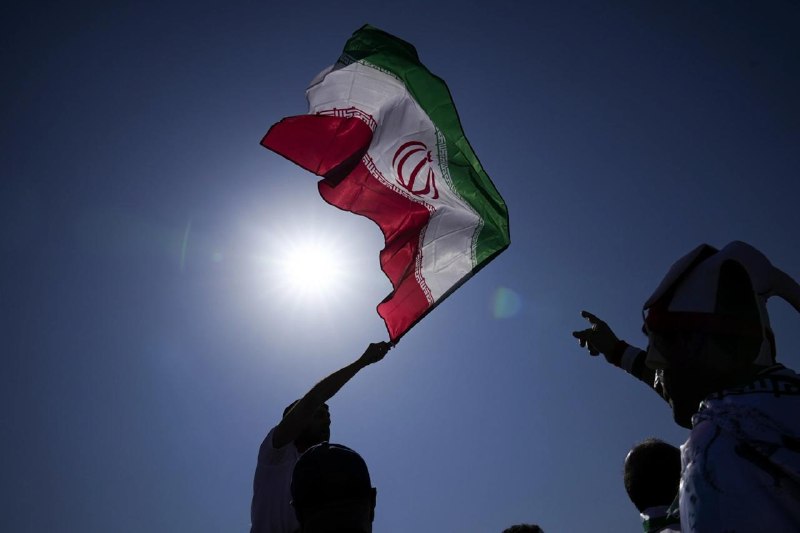
As of Friday, 22 May 2026, the United States had redirected 97 commercial ships bound for or departing from Iranian ports and had disabled four vessels, according to Pentagon briefings. The interdiction campaign, launched without a formal congressional authorization for offensive operations, has now prompted explicit war-preparation rhetoric from Tehran. Iranian state media, citing military sources, reported on 22 May that the armed forces were preparing for a potential return to hostilities with the United States — language that represents a qualitative shift from the calibrated brinkmanship that has characterised Iranian deterrence messaging for the past decade.
The convergence of a shipping blockade, the explicit naming of an adversary, and the internal political pressures facing the Islamic Republic's leadership creates a compound risk that is greater than the sum of its parts. This is not simply sanctions enforcement with naval muscle attached. It is an economic asphyxiation campaign that Tehran appears to have decided it cannot absorb without a military response — or at least the credible threat of one.
The Blockade's Architecture
The mechanics of the interdiction operation deserve close attention because they reveal a strategy that goes beyond targeted sanctions enforcement. Redirecting 97 vessels in under two weeks requires continuous naval presence across a vast maritime theatre — the Gulf, the Arabian Sea, the approaches to the Strait of Hormuz. Four vessels disabled implies the use of force beyond warning shots: boarding actions, deliberate damage to propulsion systems, or strikes on vessels that refused to comply with diversion orders. The operational tempo suggests this is not a signal; it is a sustained campaign.
The economic logic is transparent: Iran exports crude oil and imports refined petroleum products, food, and manufactured goods. Disrupting the inbound commercial flow — particularly the vessels carrying refined fuels — puts pressure on domestic markets that are already strained by years of sanctions. The Trump administration has argued this constitutes legitimate enforcement of its "maximum pressure" framework, reimposed in earnest after the collapse of the nuclear agreement. But the operational tempo and the explicit naval component mark a departure from the sanctions-harassment model of 2018-2025.
Tehran's Calculus
The Iranian framing, carried on state media on 22 May 2026, treats the interdiction as an act of war rather than a law-enforcement action. That framing is not merely rhetorical. Iranian military doctrine has long held that economic warfare constitutes a form of armed conflict, a position that has legal resonance under international law when blockades are not formally declared. The language of "preparation for a potential return to war" is calibrated: it stops short of a formal declaration while signalling that Iranian commanders are moving assets and briefing contingencies.
Counter-arguments circulate in Western capitals. The interdiction is framed as freedom-of-navigation operations against a sanctions-busting regime. The vessels redirected were likely carrying illicit cargo; their owners assumed the risk. Iran's military posturing is domestic political theatre, designed to rally nationalist sentiment around the hardline establishment ahead of succession pressures within the clerical hierarchy. These framings are not mutually exclusive with the war-preparation narrative — both can be true simultaneously.
What the sources do not clarify is whether Iranian military preparation involves offensive positioning — naval assets moved toward offensive postures, missile units placed on higher alert, or proxies briefed on potential escalation triggers — or whether it represents a defensive reinforcement of existing postures. The distinction matters enormously for assessing near-term conflict probability.
The Structural Context
Strip away the immediate tactical language and what emerges is a contest over the architecture of hydrocarbon trade in a dollar-constrained world. Iran has spent years developing workarounds to the SWIFT-based financial system: barter arrangements with regional partners, cryptocurrency settlements, ship-to-ship transfers in waters beyond effective naval coverage. The current interdiction campaign is an attempt to close those workarounds by making maritime transit itself the chokepoint.
This approach reflects a broader logic that has been building since the reimposition of full sanctions: if financial pressure alone cannot force Iranian compliance, physical control of the shipping lanes can. The United States maintains unmatched naval dominance in the Gulf theatre. No third party can meaningfully contest US naval operations in these waters without escalation to direct great-power conflict. Iran knows this. Which means the current campaign is designed not to win a naval battle but to impose costs that make continued non-compliance more painful than capitulation.
The parallel to the Greenland situation, referenced in separate reporting on 22 May 2026, is not incidental. Both reflect an American willingness to use unilateral economic and territorial leverage as a primary policy instrument — a pattern that is reshaping relationships across multiple theatres simultaneously. Whether this represents strategic coherence or transactional overreach depends on whether the various pressure campaigns reinforce each other or dilute each other's impact through scope overreach.
Stakes and Forward View
The stakes are immediate and regional. A naval exchange in the Gulf — whether a single vessel disabled, a US warship struck, or an Iranian commercial target sunk — could trigger an escalation ladder that brings in IRGC-linked forces in Iraq, Lebanese Hezbollah, or Houthi assets in the Red Sea. The Pentagon has been careful to frame current operations as defensive and proportional, but the ambiguity of that framing is itself a source of instability.
For Iran, the costs of absorbing the blockade without response include accelerated economic deterioration, a signal that maximum-pressure sanctions can be reimposed without meaningful cost to Washington, and potential internal challenges to the legitimacy of a leadership that has staked its authority on resistance to US pressure. The costs of response include military retaliation, deeper international isolation, and the prospect of strikes on nuclear infrastructure that Tehran has spent years protecting.
What remains genuinely uncertain is whether the current military-preparation reporting reflects a decision already made or a posture designed to create negotiating leverage before a new round of back-channel talks. Iranian state media is a controlled environment; the content of these reports is shaped by political considerations at least as much as by operational realities. The sources do not specify the nature of the military assets being prepared or the command-level decisions that would precede their activation.
What is clear is that the window for de-escalation without face-saving diplomacy is narrowing. An economic blockade that is described by its target as an act of war carries its own momentum. The question is no longer whether Iran will respond, but when and at what scale — and whether Washington has calculated that cost correctly.
This article draws on reporting from The Epoch Times Telegram wire and The Spectator Index Twitter feed as of 22 May 2026. Monexus coverage has foregrounded the Iranian state-media framing that this constitutes war preparation rather than treating it as solely a sanctions-enforcement story, reflecting our editorial assessment that the language shift itself carries significance for regional stability.
Wire provenance
This editorial synthesis draws on the following public wire/social posts:
- https://twitter.com/spectatorindex/status/2057935342070845618/photo/