Iran Nuclear Talks Stuck in Familiar Place as Both Sides Reject Flexibility Claims
A Pakistani Foreign Ministry source tells Al-Araby al-Jadeed that Washington and Tehran remain entrenched on core outstanding issues, repeating a pattern that has defined nuclear diplomacy since the 2015 JCPOA's unraveling.
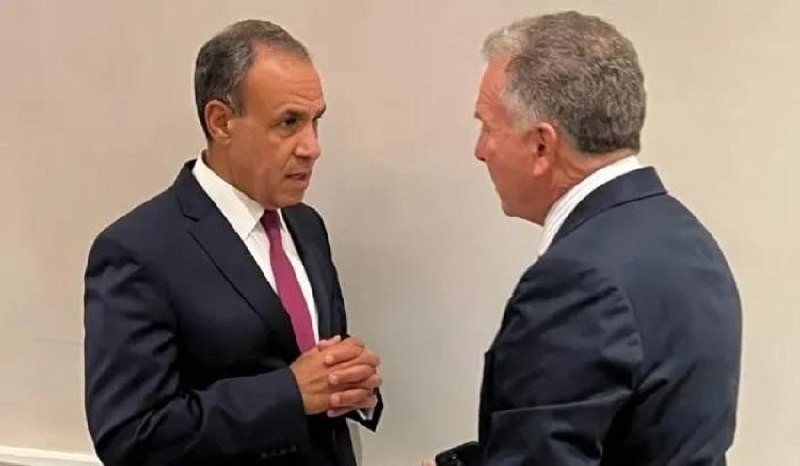
A Pakistani Foreign Ministry source told Al-Araby al-Jadeed on 22 May 2026 that Washington and Tehran continue to display insufficient flexibility on the principal outstanding issues blocking a renewed nuclear accord. The assessment, relayed through diplomatic channels, repeats a characterization that has defined US-Iran nuclear diplomacy for years: two parties publicly committed to negotiation but structurally unable to move on the substance that divides them.
The assessment aligns with a pattern visible across multiple rounds of indirect and direct talks since the original 2015 Joint Comprehensive Plan of Action began unravelling in 2018. Both governments face domestic political constraints that limit their room to offer concessions, and neither side has yet signalled willingness to absorb the political cost of a visible compromise.
The Sticking Points Have Not Changed
The core disputes in any renewed nuclear framework concern uranium enrichment levels, the scope of international monitoring, the timeline for sanctions relief, and the duration of any eventual agreement. These were the same fault lines that produced the 2015 deal under Obama-era diplomacy, that contributed to its collapse after the Trump administration withdrew in 2018, and that have resurfaced in every subsequent negotiation.
The Pakistani diplomatic channel — Islamabad maintaining residual capacity as an interlocutor between Washington and Tehran — offers a third-party readout that neither the United States nor Iran has an incentive to provide directly. The value of that readout lies precisely in its lack of direct attribution: neither government is forced to own or deny the assessment.
Iran's enrichment programme has advanced significantly since 2018. The International Atomic Energy Agency has reported growing inventories of uranium enriched to levels approaching weapons-grade purity, a development that did not exist when the original JCPOA was negotiated. The enrichment dispute is therefore not merely a repeat of 2015 terms but a negotiation that begins from a materially different technical baseline.
Domestic Constraints on Both Sides
The Biden administration faces a Congress that remains divided on any arrangement that could be characterized as removing sanctions without ironclad verification guarantees. Republicans have consistently framed diplomatic engagement with Iran asappeasement; the administration has limited political capital to offer significant sanctions relief in exchange for nuclear restraints that critics will argue are temporary by design.
Tehran, for its part, operates under a theocratic-bureaucratic structure where the Supreme Leader's office retains final authority over major diplomatic commitments. Hardline factions within Iran's political establishment view any compromise with Washington as inherently illegitimate, regardless of the terms. Those factions have structural influence over the nuclear negotiating team and have periodically used public statements to foreclose flexibility that western negotiators might otherwise expect.
Neither set of constraints is new. What has changed is the accumulated technical progress of Iran's programme, which means that the gap between what Iran is willing to accept and what Washington can sell domestically has widened rather than narrowed since 2018.
The Verification Problem Has Become Central
A central tension in any renewed framework concerns what international inspectors would be permitted to access and for how long. The IAEA has repeatedly raised concerns about gaps in its knowledge of undeclared nuclear sites in Iran — a concern that predates the current negotiation but shapes the negotiating environment. Any framework agreed between Washington and Tehran would require third-party verification mechanisms that Iran has historically resisted and that current Iranian leadership shows no indication of accepting readily.
The verification problem intersects with a broader credibility question. Iran argues that it has consistently honored its commitments under the original JCPOA and that the United States broke faith first by withdrawing. Washington argues that the deal's sunset provisions were insufficient and that Iran's regional behavior — through proxy networks across the Middle East — demonstrated bad faith that the nuclear framework failed to address. Both positions have internal logic; neither has produced movement sufficient to bridge the gap.
What a Collapse Would Mean
The stakes of continued deadlock are asymmetric but real for both sides. For Washington, a failed negotiation removes the diplomatic alternative and increases pressure toward a more confrontational posture, potentially involving expanded sanctions or covert action against nuclear facilities — measures that carry significant escalation risk. For Tehran, continued negotiations without progress maintain the fiction of diplomatic engagement while the programme advances, which may be the preferred outcome for a leadership that benefits from拖延 while accumulating leverage.
Regional actors — Israel, Saudi Arabia, the UAE — are watching closely. Each has its own calculations about acceptable Iranian nuclear status and its own relationships with Washington that will be tested by the outcome. A collapsed negotiation would likely accelerate arms-race dynamics in the Gulf, with Saudi Arabia and the UAE under renewed pressure to develop or acquire independent nuclear deterrence capabilities.
The Pakistani Foreign Ministry source's characterization of the current state suggests that neither government has yet concluded that movement is in its interest. That may change if technical progress on the Iranian side reaches a threshold that makes the costs of diplomacy more attractive than its alternatives — or it may not. The sources do not indicate any timeline for the next formal negotiating round, and neither government has publicly signalled willingness to alter its opening position.
Monexus is monitoring developments across multiple diplomatic channels and will update as verifiable information becomes available.
Wire provenance
This editorial synthesis draws on the following public wire/social posts:
- https://t.me/TheCradleMedia/11789
- https://t.me/thecradlemedia/11789