Iran and Oman Edge Toward Permanent Strait of Hormuz Fee System as Gulf Tensions Mount
Tehran and Muscat are in active negotiations over a system to charge vessels for passage through the Strait of Hormuz, the 21-mile waterway through which roughly a fifth of the world's oil flows. The talks coincide with Iran's expanded claims to maritime jurisdiction that have alarmed Gulf neighbours and drawn sharp responses from the United Arab Emirates.
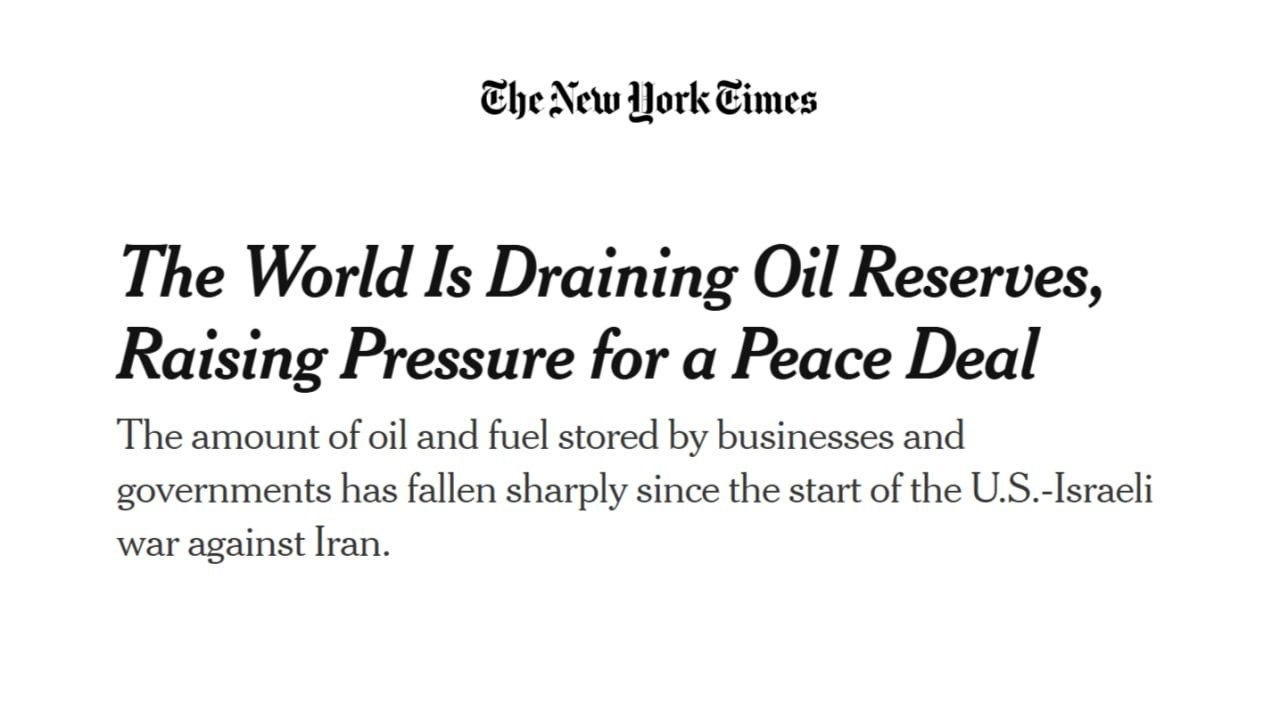
Iran and Oman are in active negotiations over a permanent system to charge fees for vessels transiting the Strait of Hormuz, according to reporting by Reuters on 21 May 2026. The talks represent the most concrete effort yet to formalise what has long been an informal Iranian revenue-raising mechanism at one of the world's most strategically vital chokepoints.
The Strait of Hormuz, a 21-mile-wide channel separating the Persian Gulf from the Gulf of Oman, handles approximately 21 million barrels of oil per day — roughly a fifth of global oil consumption and a far larger share of seaborne liquefied natural gas. Any alteration to the terms of transit carries consequences well beyond the Gulf's littoral states. Western military planners have long treated the strait as a flashpoint; Tehran has treated it as leverage.
The Toll Architecture
According to Reuters, the proposed mechanism under discussion between Iran and Oman would replace what analysts describe as an ad hoc system of unofficial payments and selective enforcement with a structured, publicly acknowledged fee regime. Oman, which shares the strait's northern entrance and maintains diplomatic relations with both Tehran and Washington, has positioned itself as a discreet intermediary in the talks.
The timing is not incidental. Iranian officials have in recent weeks expanded their public assertions about where Tehran's zone of control over the Strait of Hormuz begins and ends. According to OSINTdefender, a Telegram channel tracking regional military and maritime developments, Iran has claimed that its claimed jurisdiction extends into waters traditionally considered part of the United Arab Emirates' exclusive economic zone. The UAE has responded forcefully to those claims, which, if accepted, would redraw the maritime map of the lower Gulf and place fee-collection points much closer to Emirati coastlines.
The stakes for Gulf Arab states are considerable. Saudi Arabia, the UAE, Kuwait, Bahrain, and Qatar all export the bulk of their hydrocarbons through the strait. Any new fee structure — even a modest one — establishes a principle that Gulf producers have long resisted: that passage through the通道 is not a right but a concession, granted by Tehran and purchasable at a price Tehran sets.
The UAE Response
Emirati officials have not publicly detailed their specific objections, but the reaction from Abu Dhabi has been described by observers tracking Gulf diplomacy as unusually direct. The dispute centres on a cluster of islands near the strait's southern approach — territory that Iran has administered since a 1971 takeover coinciding with British withdrawal from the Gulf. The UAE has never recognised Iranian sovereignty over those islands, and the question of adjacent maritime boundaries remains formally unresolved under international law.
Reuters separately reported that Iran is developing what it characterises as a multi-layered mechanism for asserting control over the strait, combining island-based checkpoint infrastructure with diplomatic agreements and naval presence. The architecture is designed, according to analysts familiar with Iranian naval doctrine, to create layers of enforcement rather than a single chokepoint — making any attempt to bypass or challenge Iranian authority technically complex and politically costly.
The Multipolar Framing
The toll talks do not occur in a geopolitical vacuum. For decades, the United States Navy has maintained a de facto guarantee of freedom of navigation through the strait, operating under the principle that international waters must remain open. Washington has repeatedly stated that it regards any attempt to block or extract payment for lawful transit as unlawful. That position is clear. What is less clear is whether the current administration has the political bandwidth or regional credibility to enforce it with the same assertiveness that predecessors did.
For Tehran, the calculus runs differently. A formal fee arrangement with Oman — a country that Washington regards as a partner and that hosts no American military bases — offers a degree of international camouflage that a unilateral Iranian demand could not. If Muscat administers the system, Tehran collects the revenue, and Washington objects, the dispute becomes an Omani problem as well as an Iranian one. That diffusion of accountability is precisely the kind of ambiguity Tehran has historically sought in its Gulf relations.
There is also an economic dimension that should not be overlooked. Iran's economy remains under substantial Western sanctions, and foreign currency reserves are constrained. Even modest fee revenue from the world's busiest oil transit corridor would represent a meaningful infusion of hard currency — one that sanctions regimes struggle to target without also penalising allied shipping. This structural feature is why Gulf analysts treat the toll talks not primarily as a security issue but as a sanctions-circumvention strategy dressed in maritime law.
Regional and Global Consequences
If the Iran-Oman talks succeed, the precedent they set would be difficult to contain. Other states controlling critical waterways — whether the Suez Canal Authority, Panama Canal administrators, or states controlling major straits in Southeast Asia — would note the outcome. The principle that chokepoint states can extract value from transit, rather than merely project power, would be quietly normalised.
The consequences for oil markets are harder to quantify. A fee of even a few dollars per barrel, passed through to end consumers, would be absorbed without significant market disruption. The greater risk is political: if Gulf Arab states interpret the fee regime as a sign of Iranian ascendance at their expense, they may accelerate their own military modernisation programmes or deepen security partnerships with external powers. Both responses carry their own instability.
What the sources do not yet establish is whether the current negotiations represent a genuine, near-term policy shift or a longer-term Iranian probe of Oman's receptiveness. Diplomatic discussions of this kind routinely outlast the news cycle; the gap between a proposal and an implemented system can be years. It is also unclear whether Oman has agreed to any specific revenue-sharing arrangement, or whether Muscat is merely facilitating talks between Tehran and third-party shipping states.
What Remains Uncertain
The Reuters reporting establishes the existence and general direction of the talks. It does not establish their stage of advancement, the specific fee levels under discussion, or the degree of Omani buy-in. OSINTdefender's Telegram posts corroborate the broad contours — an Iranian claim to expanded jurisdiction, Emirati pushback — but Telegram-channel intelligence of this kind, however consistent across multiple posts, carries lower evidentiary weight than confirmed diplomatic reporting. The gap between what is alleged to be under discussion and what would actually be implemented remains substantial.
For now, the Strait of Hormuz continues to function as it has for decades: a narrow, congested, indispensable corridor through which the global economy's oil flows. The question is not whether that changes tomorrow. The question is whether the current diplomatic moment represents a genuine inflection point — or whether Tehran is once again testing the limits of what it can extract before the world looks away.
Monexus covered the Strait of Hormuz toll talks on 22 May 2026, two days after Reuters first reported the existence of the negotiations. The wire led with the Omani dimension; this desk prioritised the UAE dispute and the sanctions-circumvention logic, which received less prominent treatment in the initial wire filing.
Wire provenance
This editorial synthesis draws on the following public wire/social posts:
- https://x.com/unusual_whales/status/1923184738274058543
- https://t.me/OSINTdefender/7842
- https://t.me/OSINTdefender/7841
- https://t.me/OSINTdefender/7840
- https://t.me/OSINTdefender/7843
- https://t.me/OSINTdefender/7844