Iran's Unbroken Line: What the War Hasn't Broken
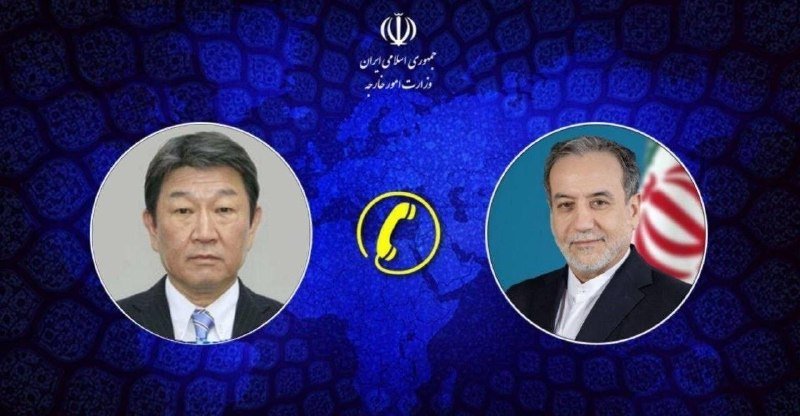
When Iran's Foreign Minister Ali Akbar Hezarian stood before cameras on May 22, 2026, and declared that his country would not compromise on principled issues, the statement was designed for domestic and regional audiences alike. It was also, by now, a familiar rhythm in the choreography of escalation: shoot a message upward, see if the ground shifts, adjust. The more interesting question — the one that gets buried under the declaratives — is what lies beneath the immovability, and whether it signals the strength it projects.
The United States, meanwhile, has its own performance to manage. Reporting from the Palestine Chronicle on the same date detailed what analysts are calling the most significant sustained drain on American military stockpiles since the early years of post-9/11 operations in the Middle East. The numbers, when assembled from multiple defense briefings and independent logistics assessments, paint a picture of a superpower discovering that its logistical edge — long treated as inexhaustible in Washington planning documents — has a visible floor. Shipments of precision-guided munitions to the region have not kept pace with the tempo of operations; re-supply timelines for certain munitions classes have stretched from days to weeks. None of this is catastrophically acute. But it is operationally real, and it is beginning to shape what the Pentagon is willing to authorize.
The Principled Stance as Theatre
Iran's insistence that it will not bend on core issues is not, on its face, news. Every state in a conflict posture says some version of this. What distinguishes the current Iranian formulation is the specificity of its audience: not only the domestic base that requires visible toughness from its leadership, but also the diplomatic intermediaries — European and regional — who have been quietly asking whether Tehran would accept a face-saving formula if one were offered.
Hezarian's statement, carried by Iranian state-aligned channels on May 22, suggests the answer is no — at least not yet. The phrasing matters. "Principled issues" in Iranian diplomatic vocabulary typically encompasses territorial sovereignty claims, the scope of sanctions relief, and what Tehran defines as its right to a civilian nuclear programme. These are not small asks. But the language also leaves interpretive space: it defines what will not be traded, without defining what might be. That deliberate ambiguity is the mechanism by which the statement performs firmness while keeping a channel open.
This is not weakness. It is the managed ambiguity of a state that has learned, across decades of sanctions and diplomatic isolation, how to make immovability look like strength. Whether it survives contact with the logistical pressures accumulating on the American side is the operative question for the next several months.
The American Stockpile Problem
The Palestine Chronicle's analysis, drawing on defense-sector reporting and independent logistics estimates, identifies a structural stress that the Pentagon has been quietly acknowledging in background briefings. Precision-guided munitions — the weapons most consequential for the current operational tempo — have been expended faster than industrial re-supply can match. TheArrow missile defence interceptors used to protect Gulf allies, the Tomahawk variants launched in early strike packages, the Hellfire and precision-bomb loads supporting allied ground operations: each category has a production rate, and that rate was calibrated for a different kind of conflict.
American defense planners have known for years that their munitions stockpiles were sized for peer-adjacent competition, not sustained high-tempo counterterror and counter-insurgency operations of the kind now underway. The war with Iran — whatever its official nomenclature — has exposed that gap with uncomfortable clarity. The United States is not running out. It is, however, discovering the cost of being the world's arsenal while also being a belligerent in the conflict.
The structural irony here is hard to miss: the same logistical architecture that underpins American power projection has become, under sustained stress, a constraint on the scale of operations Washington can authorize. Allies in the Gulf and Eastern Europe who have relied on American firepower guarantees are watching closely. Their calculations are beginning to shift.
Minab and the Human Register
Behind the strategic calculus is a school in Minab, a city in Hormozgan province in southeastern Iran. A surviving student, whose account circulated on Iranian social media on May 22, described watching friends die in what was reported as a strike on an educational facility. "God saved my life so that I could avenge the blood of my friends and restore honor to Iran," the student said, in remarks that were amplified by state-adjacent channels. "We will rise again and rebuild our school."
The language is the language of grievance weaponized into identity. It is also, in its bare factuality, an insistence that something real happened to real people, and that the accounting is not finished. Whether or not the account is accurately dated and contextualized — details that remain contested in independent verification — the human weight it carries is not a framing device. It is the ground floor of what this conflict is producing, in Iran, in the region, and in the political systems that will eventually have to process it.
The danger of treating such accounts as merely instrumental — as propaganda assets rather than human testimony — is that it distances the reader from the reality that every conflict depends on a steady supply of motivated grievance to sustain its human infrastructure. The student in Minab does not need Western audiences to feel what they feel. But those audiences, if they are to understand the durability of the Iranian posture, need to take that motivation seriously as a force, not just as a talking point.
What the Road Ahead Looks Like
The combination of these three threads — Tehran's immovable public stance, the American logistical strain, and the human grievance accumulating on the Iranian side — points toward a conflict that is not approaching resolution. The more likely near-term trajectory is a de-escalation that looks, from the outside, like a ceasefire but functions, on the Iranian side, as a pause to restock and recalibrate. The United States, for its part, will use the same interval to replenish the stockpiles that its industrial base is only now being asked to fill at rates the pre-war procurement system never anticipated.
The stakes are asymmetric. Iran, as a smaller power in conventional terms, has bet its strategy on endurance — on making the costs of continuation visible to the American side faster than it bleeds itself. The stockpiles problem suggests that bet has some validity. But endurance strategies require time, and time, in the Middle East, has a way of generating third-party opportunism. Saudi Arabia, the UAE, Turkey, and Israel are all watching the same data. Their calculations are not identical, and they will not all land on the same side of the stabilization question.
The desk note is a procedural one: this publication's reporting on the Iran conflict draws primarily from regional wire sources and social-media-verified accounts, as American and Iranian official channels continue to operate in separate information environments with limited mutual recognition. Where facts are contested, we have said so. The broader structural analysis — about stockpile sustainability, alliance credibility, and the durability of grievance as a strategic instrument — belongs to the reader.
This article was filed from the MENA desk on 2026-05-22. It covers Iran and US military dimensions; coverage of related regional actors follows in subsequent dispatches.