The Iran Vote That Wasn't and the War Powers Congress Can't Seem to Hold
House Republicans pulled an Iran war powers vote they couldn't beat — not because they had the votes to pass it, but because they lacked the votes to kill it. That distinction reveals something structural about executive war-making in 2026.
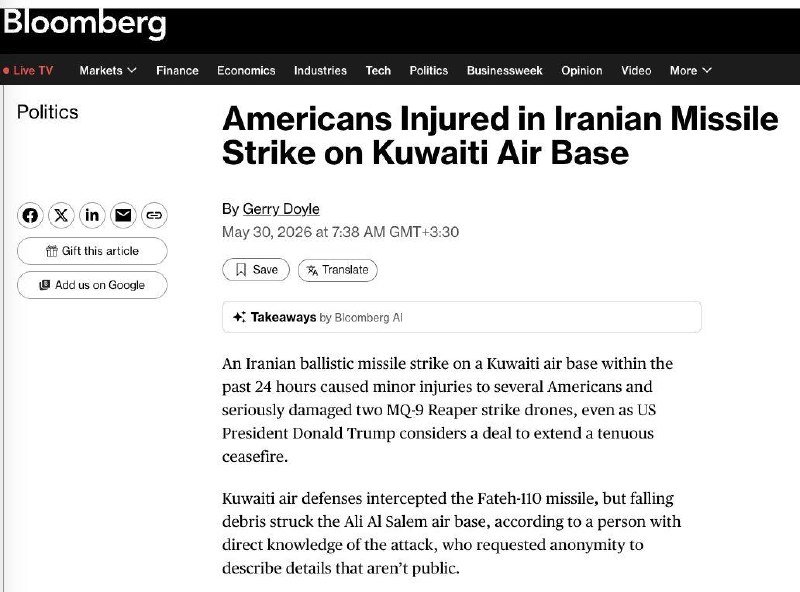
On May 22, 2026, House Republican leadership pulled a vote on a resolution that would have directed the Trump administration to withdraw US forces from Iran. They did not pull it because they had the votes to pass it. They pulled it because they did not have the votes to kill it — a distinction that tells you almost everything about where war powers authority actually rests in Washington right now.
The resolution, a legislative attempt to reassert Congress's constitutional role in declarations of hostilities, had enough Republican defections that leadership could not marshal a majority to reject it. The math was not there for supporters of executive restraint. And so the vote vanished from the schedule, and the executive retained its current latitude to conduct or threaten military operations against Iran without an affirmative congressional authorization.
\n\n## The Gasoline Frame
One day earlier, on May 21, President Trump offered an economic rationale for whatever pressure campaign his administration was conducting against Tehran. Gasoline prices, he said, would fall once Iran "stops its actions." The framing is familiar: a foreign adversary is driving up costs at the pump, and their compliance is the price of relief. It is a story that assigns the president the role of broker — the one actor capable of negotiating the price down — while framing anyone who resists that negotiation as the source of the problem.
This framing does real work. It reframes the question of war powers from a constitutional allocation of authority into a consumer issue. The president does not need congressional backing to negotiate; he needs adversaries who will capitulate. The legislative branch, meanwhile, is cast as the obstacle — the body that might, by constraining the executive, keep prices elevated. It is a rhetorical structure that makes executive unilateralism feel like the pro-consumer position.
\n\n## The Parallel Track
The same day Trump was publicly linking gasoline prices to Iranian behaviour, Iranian state media reported that a final draft of a US-Iran agreement had been reached through Pakistani mediation, with an announcement possible within hours. The report cited no specific terms, named no US officials on record, and did not specify which Pakistani channel was facilitating the back-channel.
Pakistani mediation in a US-Iran deal is not without precedent — Islamabad has played this role before when regional dynamics aligned — but it is also a jurisdiction with its own complicated relationship to Washington and Tehran. The question the reporting raises is whether this parallel diplomatic track makes the war powers debate moot, or whether it deepens the problem: if an agreement exists, why did Congress not know about it? And if no agreement exists and military pressure is ongoing, what exactly are US forces in Iran doing?
\n\n## The Structural Gap
The war powers resolution was not a fringe measure. It reflected a genuine constitutional argument that has been on the table since the 1973 War Powers Resolution codified Congress's role in committing US forces to hostilities. That law has always been contested. Every president since Nixon has found ways to conduct military operations — covert or otherwise — without triggering its reporting requirements. Congress, for its part, has repeatedly failed to sustain the two-thirds threshold needed to override a presidential veto on war powers questions.
The Republican walkback on May 22 is a specific instance of a structural pattern: a party that campaigned on executive constraint, when in power, defaults to executive latitude. The conservative wing that might be expected to champion limited government has shown, repeatedly across administrations, that limited government is a principle that applies selectively — to domestic regulatory rollback, not to foreign policy deference.
What is striking about this particular episode is the sequencing. Congressional Republicans could not muster the votes to constrain the president on Iran at the precise moment when the administration itself may have been close to a negotiated outcome. If a deal was imminent, Congress was not a party to it. If no deal was imminent, the war powers question remained open-ended and unresolved — with US forces still in place and no congressional authorization on record.
\n\n## What the Sources Do and Do Not Establish
The Reuters reports confirm the vote cancellation and the White House gasoline framing. Iranian state media reports the Pakistani-mediated draft — but those reports carry no independent corroboration from a US source, and the story does not name the specific Pakistani interlocutors or the mechanism by which the draft was transmitted. Axios has not published a follow-up confirming or contradicting the Iranian account as of this writing.
The sources do not specify the number of Republican defections, the specific content of the war powers resolution as filed, or the legal authority under which US forces are currently deployed in Iran. They do not establish whether the Pakistani-mediated process is a genuine diplomatic breakthrough, a negotiating tactic, or an Iranian public relations operation designed to complicate the US military posture.
What they establish is this: on May 21–22, 2026, three separate signals were traveling simultaneously — a congressional attempt to claw back war authority, a presidential economic frame for Iran pressure, and a report of a near-complete agreement via a third-party mediator. Those signals do not cohere neatly. And the inability of Congress to force a vote it could not win tells you where the center of gravity in US foreign policy actually sits.
This publication covered the vote cancellation and the Pakistani-mediated agreement report as distinct but connected signals in the same policy space — where wire outlets tended to treat each for its own headline.
Wire provenance
This editorial synthesis draws on the following public wire/social posts:
- https://t.me/osintlive/3821
- https://t.me/Cointelegraph/12471
- https://t.me/Cointelegraph/12469
- https://t.me/Cointelegraph/12463