IRGC Navy Coordinates 35-Vessel Commercial Transit Through Strait of Hormuz
The IRGC Navy reported coordinating the passage of 35 commercial vessels through the Strait of Hormuz on 22 May 2026, a transit volume consistent with baseline Gulf shipping activity that underscores Tehran's persistent interest in framing itself as a regional maritime steward.
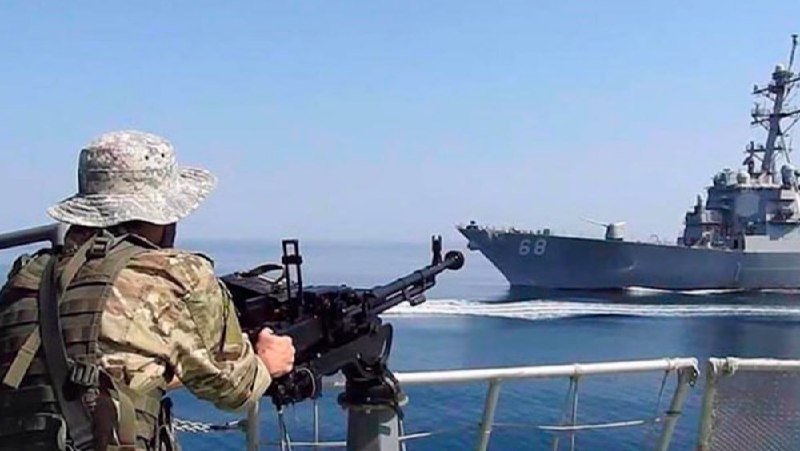
On 22 May 2026, the Islamic Revolutionary Guard Corps Navy announced the coordinated passage of 35 commercial vessels through the Strait of Hormuz, including oil tankers, container carriers, and other cargo ships. The IRGC Navy's public relations office released the figure in a statement carried simultaneously across three Iranian news agencies — Tasnim, Mehr News, and Alalam — describing the transit as occurring over the preceding 24 hours.
The number, while specific, requires contextual framing. Thirty-five vessels represent a substantial but unexceptional volume for the world's most heavily trafficked oil chokepoint, through which roughly 20 percent of global oil output and 30 percent of globally traded liquefied natural gas passes on any given day. The figure is consistent with baseline commercial traffic through the strait and aligns with what Iranian officials have periodically reported during periods when bilateral rhetoric with Washington is relatively restrained. Monexus was unable to independently verify the count through non-Iranian sources within the thread context; Western naval monitoring data from the period was not present in the available source material.
Hormuz's Commercial Gravity
The Strait of Hormuz is, by design, a geographic fact before it is a political one. The waterway — at its narrowest point just 34 kilometres wide — funnels all Gulf shipping between Oman and Iran into a single lane of controlled passage. Whoever maintains standing operational relationships with commercial mariners transiting that lane wields structural leverage over global energy logistics, regardless of whether the underlying military calculus is about interdiction or stewardship.
For Tehran, that leverage has long been the central argument. Iran's position on the northern shore, combined with its extensive coastal missile and naval assets, gives the IRGC Navy the ability to monitor and, in extremis, interrupt the flow of Gulf energy to world markets. In practice, that threat has been exercised selectively — most recently during periods of acute sanctions escalation — while the routine posture has been one of facilitation. Coordinated commercial transit, as reported on 22 May, is the peacetime version of that posture.
The Steward Framing
There is a deliberate communication strategy embedded in the IRGC Navy's statement. By foregrounding its coordination role — acting as a navigational clearing house for oil tankers and container ships rather than a blockade force — Tehran positions itself as a responsible party with skin in the game of global trade. The contrast with Western framing of the IRGC as an destabilising regional actor is not accidental.
The three Iranian outlets carrying the statement — Tasnim, Mehr News, and Alalam — operate within the state media ecosystem and do not represent independent corroboration of the claim. Western naval authorities, including the US Fifth Fleet based in Bahrain, do not routinely publish vessel-specific transit counts, which makes independent cross-verification of the 35-ship figure difficult in the near term. Satellite tracking services such as MarineTraffic, which monitor Gulf shipping independently, were not included in the thread context and would be required to substantiate the specific claim.
Structural Logic of Chokepoint Politics
What is observable is the pattern. Iranian maritime communications about Hormuz tend to emphasise one of two modes depending on the political moment: either the threat of interdiction — typically deployed during sanctions escalations or heightened bilateral tensions with the United States — or the normalisation of commercial flow under IRGC coordination. The 22 May statement falls clearly into the latter category, arriving on a date when no major sanctions expansion or Gulf military incident was reported in the available sources.
This dual-track approach is not unique to Tehran. Multiple actors along the Gulf's rim have long understood that control of a chokepoint is most strategically valuable when it is latent rather than exercised. The option to disrupt is the asset; the decision not to exercise it is the message. By reporting routine commercial coordination with the precision of a logistics bulletin, the IRGC Navy reinforces its operational presence without triggering the insurance market volatility that actual interdiction threats reliably produce.
The commercial shipping industry is attuned to that distinction. Lloyd's of London and affiliated maritime insurers monitor Gulf transit conditions continuously; a coordinated 35-vessel passage without incident registers as normal operating conditions, keeping insurance premiums and war-risk surcharges at baseline. Were the framing to shift — toward threats of inspection, detention, or harassment — those premiums would move within hours.
What Remains Unresolved
The thread context provides Iranian state-adjacent reporting of a single transit event. It does not include Western naval assessments, satellite imagery confirmation, commercial shipping company statements, or insurance market commentary. The 35-ship figure should be read as what it is: a data point released by one interested party, useful for calibrating Tehran's current communications posture but insufficient as a standalone basis for conclusions about Gulf security conditions on 22 May 2026.
Several questions the available sources do not resolve: whether the IRGC Navy coordinated with any non-Iranian vessel traffic management authorities during the transit; whether US or allied naval vessels were present in the strait during the same period; and whether the composition of the 35 vessels — specifically the ratio of oil tankers to other cargo — reflects any particular commercial routing pattern that would itself signal supply-side developments.
Monexus covered this story through the lens of commercial transit logistics and regional maritime governance. Western wire services in the available thread context focused on the figure's political communication dimension rather than its operational substance.
Wire provenance
This editorial synthesis draws on the following public wire/social posts:
- https://t.me/tasnimnews_en/48291
- https://t.me/mehrnews/98234
- https://t.me/alalamfa/55612