The Targeters: How Israel's Lebanon Sanctions Campaign Is Erasing Emergency Response
Israeli forces have killed at least 120 Lebanese paramedics and first responders since March 2026 — a campaign that legal scholars and humanitarian organisations say may constitute deliberate obstruction of emergency care, raising questions about the boundaries of lawful targeting in modern conflict.
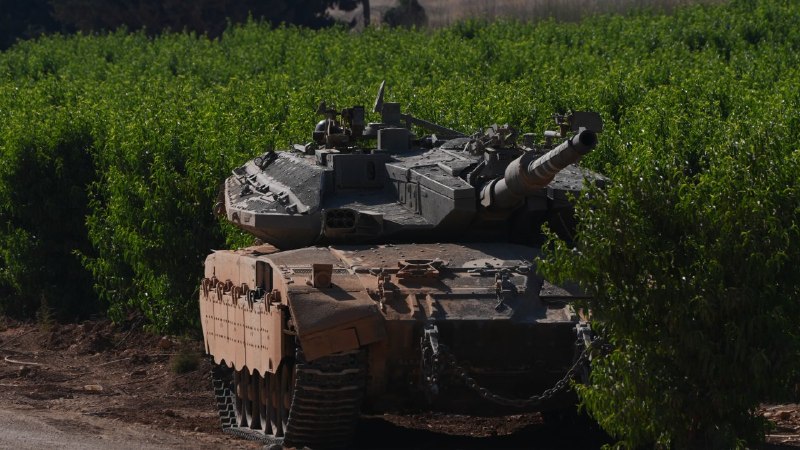
The ambulances came under fire in the early afternoon of May 22, 2026, in the outskirts of Khiam. Eight paramedics from the Lebanese Red Cross and civil defence corps were pronounced dead at the scene. Their vehicles bore clear insignia. Their coordinates had been communicated to international monitoring bodies. Within hours, according to The Cradle Media, Israeli strikes had killed another eight first responders in southern Lebanon — the latest in a campaign that has now claimed at least 120 emergency workers since Israel escalated its campaign against Hezbollah in early March.
The numbers are stark. The Lebanese Health Ministry, as cited by Middle East Eye, records 3,089 people killed and 9,397 injured by Israeli strikes between March 2 and May 21. Within that grim total, the systematic targeting of those tasked with saving lives has drawn particular alarm from humanitarian organisations and legal scholars who study the mechanics of armed conflict. Paramedics, the argument runs, occupy a protected category under international humanitarian law precisely because their function — triage, evacuation, stabilisation — is essential to preserving human life in war zones. When they become the target rather than the beneficiary of strikes, something fundamental shifts in the conduct of hostilities.
Israel has offered a consistent justification: Hezbollah uses emergency responders as human shields, embedding fighters within civilian medical infrastructure and exploiting the protected status of ambulances for logistics and communication. IDF spokespeople have cited specific incidents in which, they claim, paramedic vehicles were observed carrying weapons or communicating fighter positions. The Israeli framing does not typically address individual strikes directly but has repeatedly asserted that all precautions are taken to distinguish combatants from non-combatants, and that violations are investigated through internal military mechanisms.
That justification — contested,challeged, and deeply disputed by the organisations tracking Lebanese casualties — sits at the centre of a widening legal and diplomatic debate about what the rules of modern warfare actually permit, and what they forbid, when the adversary embeds itself deliberately among civilian infrastructure.
The Scope of the Campaign
The scale of first-responder deaths in southern Lebanon is not a statistical artefact. Between March 2 and May 22, 2026, at least 120 emergency workers were killed by Israeli strikes, according to reporting by The Cradle Media, a figure that exceeds what humanitarian monitors say is any comparable conflict zone on a per-capita basis for medical personnel. The concentration is notable: the deaths are not distributed randomly across Lebanon's territory but cluster in the three border districts — Bint Jbeil, Marjayoun, and Tyre — where Hezbollah's defensive positions and Israeli ground incursions have overlapped most intensely.
The pattern of strikes has followed a recognisable rhythm, according to incident reports compiled by monitoring groups. Multiple medical workers have been killed while travelling to retrieve wounded civilians from previously struck sites. Others have died in secondary strikes — what the IDF terms "dangerous compound attacks" — where a rescue vehicle arriving at one site is struck shortly after its arrival, sometimes within minutes. Civilian infrastructure including hospitals, clinics, and primary healthcare centres in Tyre and Nabatiyeh have sustained damage or been placed out of service, according to local health authorities. The World Health Organisation and the International Committee of the Red Cross have issued multiple statements expressing concern, though neither body has issued formal findings of violation pending investigation.
The Lebanese Health Ministry figures — 3,089 dead and 9,397 injured across the broader campaign — represent cumulative civilian harm across all strike types, not only those targeting first responders. But the subset of emergency-worker deaths is what has drawn sustained attention from international observers precisely because it implicates a specific legal category. Under Additional Protocol I to the Geneva Conventions, to which Israel is not formally a signatory but whose provisions are widely considered customary international law, medical personnel "shall be respected and protected in all circumstances." The phrase carries weight: respected, not merely tolerated; protected, not merely warned.
The Israeli Counter-Narrative
Israel's position, articulated through IDF spokesperson briefings and government communications, is that Hezbollah has systematically weaponised civilian infrastructure in southern Lebanon — including medical facilities, ambulances, and first-responder networks — as part of its defensive doctrine. The IDF has published what it describes as intercepted communications and photographic evidence of weapons stored in proximity to medical buildings, and has cited specific incidents in which, it alleges, paramedics were directly observed co-ordinating with armed fighters.
The military logic, as IDF sources have described it, is straightforward: if an adversary deliberately obscures the distinction between combatants and protected persons, the targeting calculus changes. A vehicle or structure that is simultaneously a combat asset and a protected one does not automatically gain immunity, the argument runs, particularly when the combat function is active at the time of strike.
This framing draws on a broader legal debate within international humanitarian law about what constitutes "direct participation in hostilities." The ICRC's interpretation, which many legal scholars consider the dominant academic consensus, holds that continuous integration into a party's combat operations forfeits protected status. An IDF spokesperson brief in early April, quoted in regional wire reporting, described emergency workers affiliated with Hezbollah as having "crossed the line from neutral medical actors to active participants in the enemy's military infrastructure."
Lebanese officials and Hezbollah-affiliated media have rejected this characterisation categorically, asserting that all paramedics killed were engaged in civilian medical functions and that the Israeli evidence is either fabricated or taken out of context. The Lebanese Red Cross has stated publicly that its workers carry no weapons and operate under protocols communicated to all parties. Independent verification of either position — Israeli allegations or Lebanese denials — remains difficult given the practical constraints on international investigators operating in active conflict zones.
The Legal Threshold
The concept that requires closest examination here is what international law terms "proportionality" in targeting decisions, and its interaction with the duty to take precautions. Proportionality is not a mathematical formula; it is a judgment about the relationship between anticipated military advantage and anticipated civilian harm. When applied to the killing of first responders, the analysis requires asking not only whether a specific individual or vehicle was a legitimate target in isolation, but whether the cumulative pattern of strikes — 120 emergency workers in under three months — can be reconciled with the requirement to distinguish, continuously, between lawful and unlawful targets.
Legal scholars who have reviewed incident summaries from southern Lebanon — speaking in general terms without reference to any specific academic framework — note that the threshold for losing protected status is high. It requires evidence of direct participation in a specific hostile act at the time of the strike, not merely affiliation or proximity to a armed group. The ICRC's guidance on this point is widely cited: the loss of protection must be assessed for each specific act, must be temporary in the case of discrete acts, and must not be presumed from organisational membership alone.
What this means practically is that if the Israeli evidence of Hezbollah's use of medical infrastructure is as extensive as IDF spokespersons suggest, the legal situation is genuinely contested — not simply a matter of Israel violating clear rules. But the converse also holds: if the majority of the 120 killed paramedics were engaged in civilian medical functions without direct combat participation, the targeting cannot be justified under the same rubric, and the pattern suggests either a systemic failure of targeting discipline or a deliberate campaign to degrade emergency response capacity.
International humanitarian law also imposes a affirmative duty to cancel or suspend an attack if it becomes apparent that the target is not a military objective. Secondary strikes on rescue vehicles arriving at strike sites are where this obligation becomes most acute. Several of the documented incidents — strikes occurring minutes after an initial strike, as paramedics arrived — raise direct questions about whether the attacking force had the information necessary to assess the nature of the arriving vehicles, and whether the decision to strike again was reassessed in real time.
The ICRC and WHO have both indicated, in general terms, that they are compiling incident reports and have requested access to the conflict zone for independent investigators. Israel has cited security concerns about enabling Hezbollah intelligence gathering. Neither organisation has been granted meaningful access to southern Lebanon as of May 22.
Precedent and the Problem of Embedded Civilian Infrastructure
The dilemma Israel presents — an adversary that deliberately blurs the combatant/civilian boundary by embedding fighters within civilian infrastructure — is not unique to this conflict, though its intensity and geographic concentration in southern Lebanon are unusual. Other conflicts have generated similar legal and operational tensions: the use of mosques, schools, and hospitals by combatants in urban warfare has been litigated extensively in post-conflict proceedings at the International Criminal Court and in domestic courts.
What distinguishes the Lebanon situation is the degree to which the infrastructure in question — the ambulance network, the civil defence corps, the hospital system in the south — was already under severe strain before the current escalation, and the speed at which its emergency response capacity is being degraded. Local health authorities have reported that several districts in the south now have no functioning emergency medical service coverage, a condition that is not merely a statistical problem but a direct humanitarian consequence: civilians wounded in strikes are dying before they can reach hospital, not because of lack of will on the part of medical workers but because the workers themselves are being killed or driven out.
This creates what humanitarian organisations describe as a "mutual reinforcement loop": strikes that degrade emergency response lead to higher civilian mortality from subsequent strikes, which in turn generates additional demand for emergency response that cannot be met, which generates further harm. Whether this outcome is intentional — a deliberate aspect of Israeli strategy — or a predictable but unintended consequence of a targeting approach that undervalues the protection of medical infrastructure is a question the available evidence does not definitively answer. The distinction matters enormously for legal and diplomatic purposes, but the humanitarian effect is the same regardless of intent.
What Comes Next
The immediate stakes are measured in lives that could be saved. Every day that emergency response capacity in southern Lebanon is degraded, civilians wounded in strikes face longer transport times, fewer available crews, and reduced capability at receiving hospitals. The longer the campaign continues, the more the medical infrastructure that remains will be concentrated in areas further from the conflict zone, further reducing response times in the most heavily struck districts.
For Israel, the stakes are operational and diplomatic. Operationally, the IDF faces a complex threat environment in southern Lebanon where Hezbollah fighters have prepared defensive positions extensively, and the degradation of emergency response may be seen as a secondary benefit to the extent it limits the adversary's capacity to evacuate and resupply fighters. Diplomatically, the campaign is generating sustained pressure from European and Gulf state capitals, where governments that maintain varying degrees of engagement with both Israel and Lebanon are expressing concern about civilian harm at levels that complicate their political positioning.
The United States, which remains Israel's principal diplomatic patron and arms supplier, has issued general statements affirming the importance of distinguishing between combatants and civilians without directly addressing the specific incidents involving paramedics. Congressional response has been divided along familiar lines, with members broadly supportive of Israeli security operations but increasingly attentive to the humanitarian dimensions of the campaign as images of killed first responders circulate in international media.
For Lebanon, the consequences are layered. The death of 120 emergency workers is not simply a wartime casualty figure; it represents an attrition of institutional capacity that will persist long after hostilities cease. Recruiting, training, and deploying replacements takes years, and the trauma of working in an environment where medical workers are routinely targeted will constrain the willingness of qualified personnel to serve in the south. The Lebanese health system, already under severe strain from economic collapse and the 2020 Beirut port explosion, is absorbing a loss it cannot easily replace.
The legal outcome — whether any individual strikes rise to the level of war crimes, whether the cumulative pattern constitutes a systemic violation, whether Israel's affirmative defence of military necessity is sustained — will depend on evidence-gathering that has not yet occurred. The ICC has jurisdiction over the situation given Lebanon's state party status, though investigations have not been formally opened as of May 22. What the available evidence does support is the conclusion that at least some of the strikes on first responders require more rigorous scrutiny than either the Israeli internal review process or the current international monitoring mechanisms have yet provided.
The paramedics who died in Khiam on May 22 had names, families, and training. They responded to a call for help and were killed doing so. Whether the strikes that killed them were lawful under international humanitarian law is a question that demands a credible, independent accounting — not because the answer is predetermined, but because the question is genuinely open and the stakes for the living are immediate.
This publication covered the May 22 strikes on Lebanese paramedics through reporting by Middle East Eye and The Cradle Media, which provided the primary incident documentation. Israeli government and IDF spokesperson communications were reported through regional wire services. The legal analysis in this article draws on publicly available ICRC guidance and customary international humanitarian law standards without reference to any specific academic framework.
Wire provenance
This editorial synthesis draws on the following public wire/social posts:
- https://t.me/TheCradleMedia
- https://t.me/thecradlemedia