Israeli Strikes on Lebanon Have Killed More Than 3,000 People Since March, Health Ministry Says
Lebanon's Health Ministry reports over 3,000 dead and 9,000 wounded since Israel intensified operations on 2 March, as diplomatic efforts to halt the strikes continue to falter.
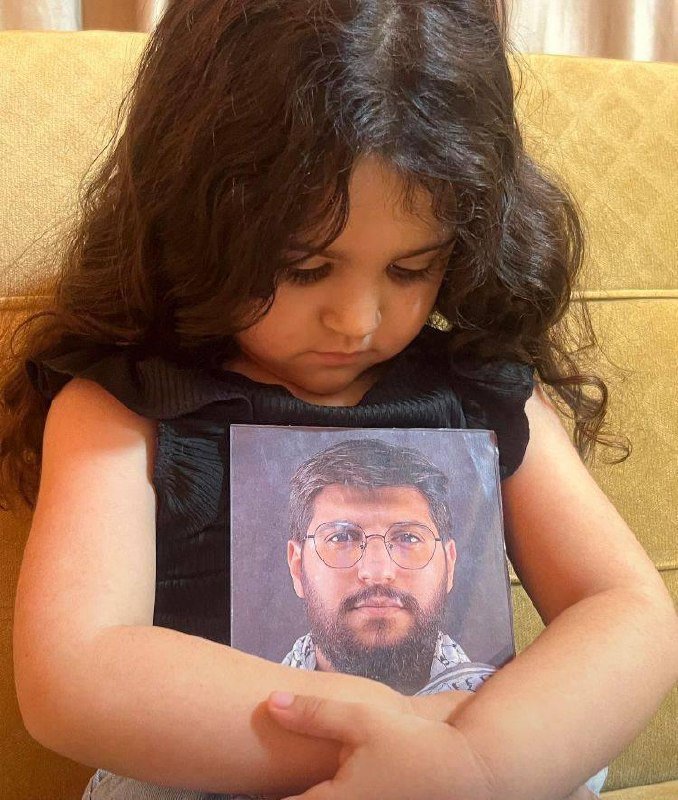
At least 3,089 people have been killed and 9,397 injured in Israeli strikes on Lebanon since 2 March, according to the Lebanese Health Ministry. The death toll, released on 22 May 2026, crosses a threshold that aid agencies had warned would be reached within weeks of the intensification of operations. The figures cover the period through 21 May.
The count makes this one of the deadliest phases of the conflict since the border hostilities between Hezbollah and Israel escalated in late 2023. Civilian infrastructure — residential buildings, medical facilities, and displacement shelters — has been hit alongside what the Israeli military describes as militant targets. The gap between the official Israeli framing of precision operations and the reality on the ground in Lebanese towns has widened into a credibility problem for the allies who back Israel's stated security objectives.
The scale of civilian harm
Lebanon's Health Ministry, whose casualty figures have been broadly consistent with independent tallies, reported on 22 May that 3,111 people had been martyred — a term the ministry uses for those killed — and 9,432 injured since March 2. The slight variance with Middle East Eye's figure of 3,089 dead reflects different cut-off times for data collection, not a substantive dispute. Both numbers tell the same story of mass civilian casualties over an eleven-week period.
The casualties are not concentrated in a single sector. Emergency responders in Tyre, Sidon, and the Bekaa Valley have described repeated strikes on areas nominally designated as safe corridors, as well as attacks on ambulances and paramedic teams. Lebanon's Health Minister has publicly appealed for international protection of medical personnel, a request that has received no binding response from the United Nations Security Council. The International Committee of the Red Cross said on 19 May that its teams had been denied access to several strike sites by ongoing Israeli surveillance, a charge the Israeli military denied.
Israeli officials have maintained that the strikes are directed at Hezbollah infrastructure and personnel, and that civilian harm is regretted but unavoidable given the group's use of populated areas as operational bases. The IDF Spokesperson has published strike footage and after-action summaries for several high-profile incidents, though independent verification of target attribution has been limited by access restrictions imposed on journalists covering southern Lebanon.
The diplomatic record
France and the United States have each issued calls for a ceasefire, and a White House statement on 18 May urged "all parties to de-escalate." Those calls have produced no binding agreement. The diplomatic rhythm — statement, rebuff, silence, repeat — has become a familiar pattern, and Lebanese officials privately describe it as insufficient. Lebanon's caretaker government has formally requested an emergency session of the UN General Assembly; no date has been set.
The absence of a ceasefire framework has left humanitarian operations scrambling. UNRWA, which provides services to a large portion of Lebanon's displaced population, said on 20 May that its shelters in the south were operating at three times their intended capacity. Water, sanitation, and maternal health services have been the first casualties of the overcrowding. The World Food Programme has warned of supply chain disruptions affecting northern districts that were previously considered outside the strike zone.
Iran, which has historically backed Hezbollah, has issued statements condemning the strikes through its Foreign Ministry and state media. Iranian state outlets have framed the campaign as part of a broader effort to destabilise the resistance axis in the Levant. Tehran has not, however, taken visible steps that Western intelligence assessments would characterise as escalatory — no significant weapons transfers, no observable repositioning of proxy forces. Three Western officials, speaking to Middle East Eye on condition of anonymity, said their governments did not currently assess Iran as pursuing direct military intervention. The restraint, one official suggested, reflects a calculation that direct Iranian involvement would provide Israel with the broader regional conflict it has sought to avoid.
The structural context
What is striking about this phase of the conflict is not simply the casualty count but the disconnect between the intensity of the strikes and the diplomatic noise surrounding them. Previous rounds of Israel-Hezbollah hostilities — in 1996, 2006 — produced immediate international mediation efforts with ceasefires reached within weeks. The current engagement has generated statements, consultations, and expressions of concern, but no mechanism with coercive force behind it.
That gap reflects a structural reality: the current US administration, while publicly calling for de-escalation, has continued to supply the Israeli military with the munitions and intelligence support that make sustained operations possible. Arms transfer data compiled by defence analysts and reported in independent outlets shows that precision-guided munitions deliveries have not ceased. The framing — that Washington is calling for peace while enabling the war — is not a conspiracy theory advanced by Israel's critics. It is the observable policy outcome, visible in public procurement records and confirmed by officials who speak to reporters without attribution.
Lebanon, for its part, faces a state apparatus that was already weakened by its 2019 economic collapse, the 2020 Port of Beirut explosion, and years of political paralysis. The government cannot mount a credible military defence of its territory; it can only appeal to international law and hope that the appeals produce consequences. They largely have not. The Health Ministry figures are accurate, timely, and publicly available. They have not produced a change in the trajectory of the conflict.
What comes next
The immediate trajectory is shaped by two forces: the Israeli military's assessment of whether Hezbollah's command structure has been sufficiently degraded to allow a sustainable reduction in strikes, and whether the accumulating civilian toll provokes a shift in either the diplomatic pressure on Israel or the strategic calculus of its allies.
Hezbollah has continued to fire rockets into northern Israel throughout the campaign. IDF assessments cited in Israeli media describe the group's rocket launch capability as reduced but not eliminated. That suggests the strikes will continue unless a ceasefire agreement is reached — and the diplomatic record offers no grounds for optimism that one is imminent.
The longer-term question is what the cumulative damage does to Lebanon's already fragile social fabric. Displacement at this scale, in a country that has absorbed multiple refugee crises, creates pressures that do not resolve when the strikes stop. Educational disruption, psychological trauma in a young population, the collapse of small businesses in the south — these are the second-order consequences that will outlast any ceasefire framework, whatever form it eventually takes.
Lebanon's Health Ministry updates its casualty figures daily. Monexus will continue to track the official count alongside independent corroboration efforts.
Wire provenance
This editorial synthesis draws on the following public wire/social posts:
- https://t.me/alalamfa
- https://t.me/FarsNewsInt