Linda McGill's 1976 Hong Kong Island Circumnavigation Was More Than a Record
Fifty years on, the Australian's 16.5-kilometre passage around Victoria Harbour remains a landmark in open-water swimming—and a window into a Hong Kong on the cusp of transformation.
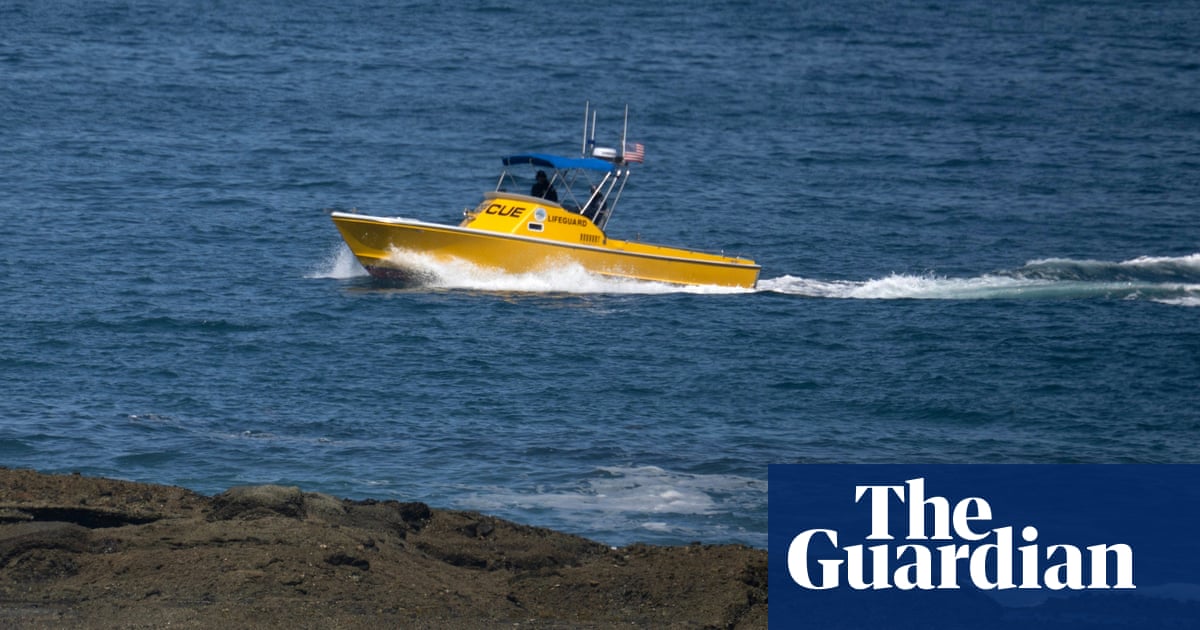
On 28 September 1976, Australian swimmer Linda McGill slipped into the waters of Victoria Harbour and began what no swimmer before her had achieved: a circumnavigation of Hong Kong Island. The distance—roughly 16.5 kilometres—would take her close to two days of continuous swimming across tides, shipping channels, and the shimmering open stretches of the South China Sea. When she emerged at Shek O forty-one hours later, she had not merely completed a physical ordeal. She had navigated the circumference of a place in the middle of its own transformation, one whose future was already being contested on the world stage.
The SCMP archive notes that McGill was living and working in Hong Kong at the time, a detail that matters. This was not a stunt athlete flown in for a publicity lap. She was embedded in the colony, familiar with its currents, its rhythms, its weather windows. The swim was ambitious and technically demanding, but it was also rooted in genuine local knowledge—a quality that distinguished it from the spectacle-driven endurance records that sometimes passed through the territory in later decades.
A Record Set Before the Handover
McGill's achievement came at a specific historical moment. In 1976, Hong Kong was still eleven years from the 1997 handover to China, and the colony was in a period of rapid acceleration. The manufacturing economy was peaking; the第一批现代化基础设施 was beginning to reshape daily life. But the political uncertainty that would define the final decade of British rule had not yet become the dominant public preoccupation. It was, in retrospect, a window—between the turbulent Cultural Revolution on the mainland and the 1980s sovereignty negotiations—where an individual athletic feat could register as just that: a feat, not a geopolitical statement.
McGill's swim around Hong Kong Island was in this sense apolitical. She was not making an argument about colonial legitimacy or Chinese reunification. She was testing the limits of her own body against a specific maritime geography. But fifty years on, the achievement takes on a different colour. It stands as a marker of what the territory was capable of producing in the years before the handover became the lens through which everything else was read.
A Woman's Feat in a Male-Dominated Field
The gender dimension of McGill's record is worth dwelling on. Open-water endurance swimming in the 1970s remained heavily male-dominated, and women's long-distance achievements were routinely treated with scepticism by sports authorities and media alike. McGill's circumnavigation challenged that framework directly. The SCMP archive entry notes that she made the swim "from the SCMP archive"—the phrasing itself a signal that this is history being surfaced, not routine record-keeping.
Her performance predated the formal expansion of women's open-water events at the international level by more than two decades. It was, in that sense, ahead of its institutional moment. The achievement existed outside the structures that would later canonise such records, which makes it harder to place in a clean sports-historical narrative—and perhaps more interesting for that gap.
Victoria Harbour as Symbol
There is a tendency, in retrospective coverage of colonial-era Hong Kong, to treat the harbour as backdrop—a scenic amenity rather than a working waterway with its own demands. McGill's swim complicates that reading. The waters she navigated were not a pool, not a controlled course. They were tidal, subject to weather, crossed by cargo traffic and fishing vessels. The harbour that visitors photograph from elevated viewpoints was, for the duration of her swim, an arena.
This matters because it humanises the geography. Victoria Harbour was not merely observed from above—it was inhabited, traversed, sometimes fought over in small ways by the people who lived and worked around it. McGill's passage is a reminder that the harbour had a use-value that extended beyond the aesthetic. It was a space of risk and reward, and her willingness to swim its full perimeter was an implicit argument about what the territory's waters were capable of demanding.
What the Record Leaves Out
The archive entry is thin on some details. The sources do not specify what training or logistical support enabled McGill's swim, whether she had a crew monitoring her progress, or how local authorities responded to the attempt. These are not trivial questions for an endurance event of this scale, and their absence from the available record means the achievement arrives to contemporary readers partially reconstructed.
The sources also do not address whether McGill was among a cohort of women swimmers pushing boundaries in the region, or whether hers was an isolated achievement. Without that context, it is difficult to position her swim within a broader pattern—though the record, standing alone, is significant enough to warrant attention.
The Stakes, Fifty Years On
The value of revisiting McGill's swim is not primarily nostalgic. It is structural. Hong Kong's history, particularly in Western media, has come to be organised around the handover, the 2019 protests, and the political reordering of recent years. These are legitimate and important frames. But they tend to compress the decades before 1997 into a prelude, flattening a period that was itself complex, dynamic, and locally significant.
McGill's 1976 circumnavigation is a small correction to that compression. It reminds readers that the territory produced its own athletic culture, its own figures of daring, its own records set on its own terms—before the future became the only thing worth talking about. Whether the current political environment allows for continued public recognition of such moments is, itself, part of a larger and unresolved question about what histories the territory is permitted to hold.
This desk notes that the SCMP archive piece surfaces McGill's swim without the geopolitical scaffolding that now attends most Hong Kong coverage. The decision to run it is deliberate: the record is the story, and the context is for readers to supply.