Moscow and Beijing Are Rewriting the Rules of Gaza Diplomacy
At the United Nations this week, Russian and Chinese delegates advanced a coordinated critique of the Gaza ceasefire framework that challenges Western diplomatic assumptions about aid conditionality and post-war governance — and their arguments deserve scrutiny on their own terms.
The language of ceasefire diplomacy typically flows from Washington, London, and Berlin. This week at the United Nations, it also flowed from Moscow and Beijing — and the substance was notably different.
On 21 May 2026, China's UN mission delivered a detailed statement calling for a comprehensive and permanent ceasefire, demanding that Israel "fully adhere to" its ceasefire obligations, and warning that ongoing violations "undermine the fragile situation and threaten to renew the war." The statement, reported via Al Alam Arabic citing the Chinese delegation, went further on humanitarian access: restrictions on aid entry must be lifted immediately, and UNRWA — the UN agency serving as the primary humanitarian infrastructure inside Gaza — must be protected and enabled to function. The Chinese mission described conditions inside Gaza as "still critical," warning specifically of imminent crisis driven by overcrowding and the spread of infectious disease. On the West Bank, Beijing called for an end to settlement activity and action against settler violence. And on post-war governance, the Chinese position was blunt: any arrangement "must respect the will of the Palestinian people" and adhere to the principle of Palestinian self-determination.
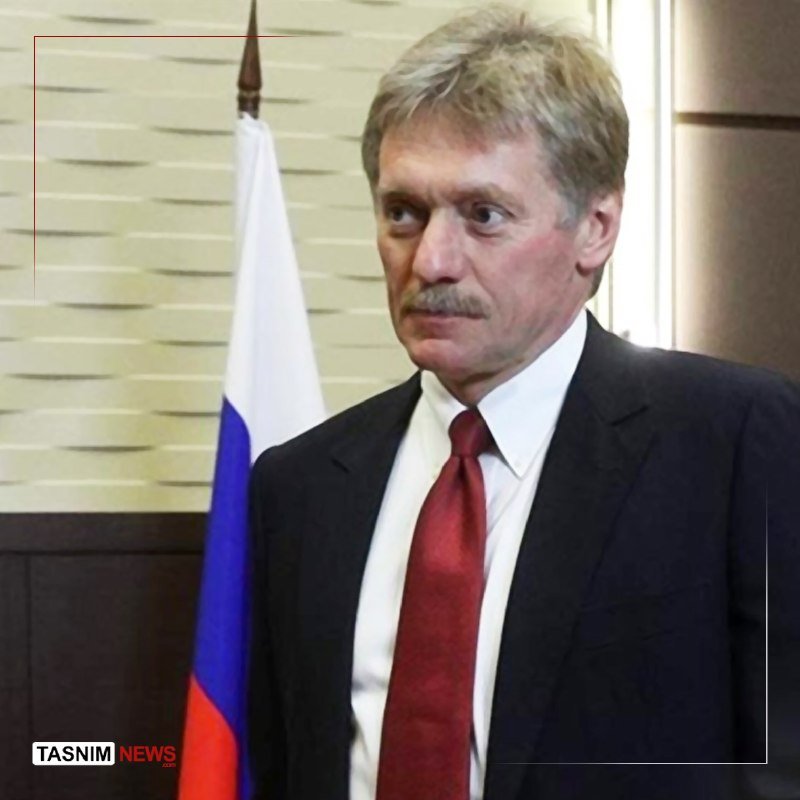
A day earlier, Russia's UN delegate took the floor with a complementary but sharper critique. According to statements reported via the same Al Alam Arabic channel, the Russian delegate described the siege of Gaza as a form of "slow strangulation" replacing "widespread bloodshed" — language that explicitly frames the current aid regime as a continuation of harm by other means. Russia refused to hold Hamas responsible for the humanitarian situation and rejected linking humanitarian aid to political demands. The Russian delegate also noted that funding for the UN humanitarian appeal for Gaza had not exceeded 12 percent — a figure that underscores the gap between international pledges and operational delivery.
Two Frameworks, One Target
The convergence is not coincidental. Both Moscow and Beijing are operating with a common strategic interest: presenting themselves as alternatives to a Western-led diplomatic order they view as self-serving and ineffective. For Russia, the argument also carries domestic utility, reinforcing a narrative of resistance to Western pressure while the war in Ukraine continues to absorb international attention. For China, the posture aligns with its broader diplomatic positioning as a champion of the Global South — a role it has cultivated through BRICS expansion, the Belt and Road initiative, and increasingly assertive UN engagement.
But strategic interest does not automatically disqualify an argument. The substance of what both delegations said warrants examination on its merits rather than dismissal by association.
On the question of aid conditionality, the Russian and Chinese position challenges a framework that Western capitals have applied with increasing directness: humanitarian assistance as leverage for political concessions. The logic is familiar — access to food, medicine, and fuel is withheld or threatened to force compliance with ceasefire terms. Russia and China reject this outright. Their position, stated plainly, is that civilians should not bear the weight of political negotiation failure. That position has a coherent humanitarian argument behind it, regardless of who is making it.
On UNRWA specifically, China's call for the agency's protection and operational enablement reflects a genuine institutional concern. UNRWA serves as the backbone of humanitarian response inside Gaza — the only agency with the infrastructure, staff, and access agreements to operate at scale. Any framework that marginalises or defunds UNRWA without an equivalent replacement does not merely reduce humanitarian capacity; it removes the primary mechanism through which the international community can reach civilians at all. China's framing of the agency as "the main pillar of humanitarian work in Gaza" is not an exaggeration.
The Ceasefire's Structural Fragility
The ceasefire, such as it exists, is under real strain. China's warning about "ongoing violations" is not a hypothetical concern — it reflects the operational reality on the ground, where access routes shift, checkpoints open and close, and aid convoys face delays that can render perishable supplies unusable before they reach distribution points. The overcrowded conditions inside Gaza — a direct consequence of displacement over twenty months of conflict — create the conditions for disease transmission that moves faster than any aid pipeline can respond to.
Post-war governance remains unresolved. The principle that "Palestinians manage their own affairs" is broadly uncontroversial in UN General Assembly rhetoric but bitterly contested in practice. Who governs Gaza, under what mandate, with what security arrangements — these questions are no closer to resolution than they were eighteen months ago. The Chinese insistence that any framework respect Palestinian agency is, in substance, a demand that Gaza's population not be handed from one external authority to another. That demand has wide international support in principle and very little operational follow-through.
What the Alternative Frame Gets Right
The argument advanced by Russia and China at the United Nations this week contains several propositions that do not require accepting either government's broader foreign policy agenda to evaluate on their terms.
Funding for the humanitarian response — at 12 percent of the UN appeal, per the Russian delegate's figure — is catastrophically inadequate. No credible humanitarian actor disputes this. The gap between what has been pledged and what has been delivered is not a technical problem; it is a political one, rooted in donor fatigue, conditionality disputes, and the practical difficulty of moving aid through a conflict zone where the rules of access are set by an occupying power with strategic interests in the outcome.
Linking humanitarian access to political conditions — a framework that Western officials have defended as pragmatic leverage — has demonstrably failed to produce either sustained ceasefire compliance or meaningful humanitarian improvement. If the goal is to get aid to civilians, the mechanism has not worked. If the goal is to use aid as leverage, the leverage has not produced the political outcomes its advocates sought. The Russian and Chinese critique of this approach is not ideologically motivated; it is an observation of empirical failure.
The framing of the siege as "slow strangulation" is uncomfortable precisely because it is difficult to refute. A population that cannot leave, cannot receive adequate food or medicine, and cannot rebuild — is experiencing a form of collective harm that does not require explosions to qualify as catastrophic. Whether one attributes this to Israeli policy, to international inaction, or to the structural impossibility of meaningful aid delivery under current conditions, the outcome for civilians is the same.
The Stakes Ahead
The ceasefire, fragile as it is, represents the only currently operational framework for preventing a return to large-scale hostilities. If it collapses, the humanitarian consequences — already severe — become catastrophic. The disease outbreaks that China's delegation warned about are not speculative; overcrowded, unsanitary conditions with limited medical access are the conditions under which epidemics occur. The timeline for that outcome, if aid access does not improve substantially, is measured in weeks rather than months.
Russia and China are positioning themselves as the alternative voice on Gaza not out of humanitarian concern alone, but because the failure of the Western-led framework creates an opening. That positioning is strategic. The arguments they are making, however, are grounded in observable facts about aid shortfalls, ceasefire violations, and civilian harm that independent humanitarian organisations have documented extensively. The fact that Moscow and Beijing are making these arguments does not make them false. It makes them politically complicated — and that complication is worth acknowledging rather than resolving through dismissal.
This article drew on reporting via Al Alam Arabic, citing statements by the Russian and Chinese delegations to the United Nations on 21 and 22 May 2026.
Wire provenance
This editorial synthesis draws on the following public wire/social posts:
- https://t.me/alalamarabic/78654
- https://t.me/alalamarabic/78652
- https://t.me/alalamarabic/78650
- https://t.me/alalamarabic/78631
- https://t.me/alalamarabic/78629
- https://t.me/alalamarabic/78627
- https://t.me/alalamarabic/78625
- https://t.me/alalamarabic/78623