Moscow's Airlock: What the Drone Incursions Say About Ukraine's Reach
Overnight drone activity over Moscow on May 22 marks the latest in a pattern of Ukrainian strikes reaching deeper into Russian territory — and forcing a recalibration of what the Kremlin considers home soil.
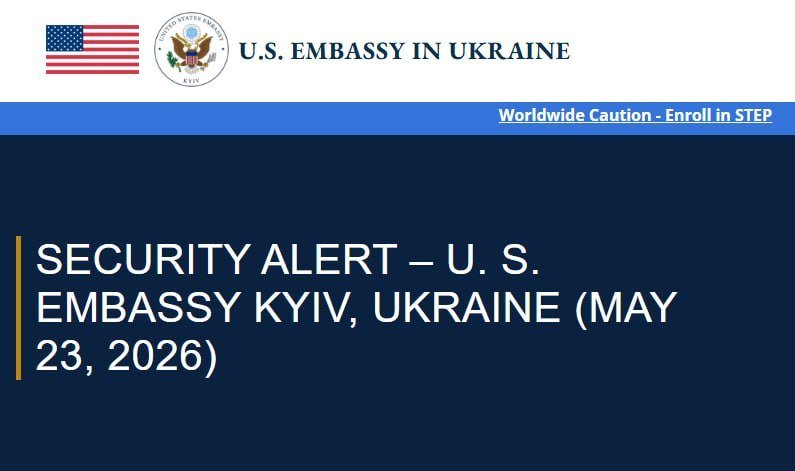
Overnight on May 22, 2026, several drones were reported shot down over approaches to Moscow. According to reports corroborated across Russian military-affiliated channels, restrictions were imposed at Vnukovo and Sheremetyevo — two of the capital's principal airports — as the incidents unfolded. The scale of the overnight activity remained contested as of filing: one channel reported up to ten drones; another put the figure lower. What is not contested is that this was not an isolated occurrence.
Ukraine has been steadily extending the reach of its strikes against Russian territory since mid-2024. The pattern now visible — regular overnight drone activity targeting infrastructure and population centres well beyond the contact line — represents something qualitatively different from the sporadic long-range attacks of earlier phases. The Kremlin, which officially describes its full-scale invasion of Ukraine as a "special military operation," now faces the operational reality that its own capital is within regular striking distance of Ukrainian forces.
The Payload Question
Drone strikes into Russian airspace raise immediate questions about what is actually being delivered. The sources reporting on the overnight incidents did not, as of filing, specify the type of UAVs involved or the payload carried. This is not unusual — military bloggers on all sides of the conflict routinely report airspace violations before the tactical details of each strike are known. What matters structurally is the signal value: Ukraine demonstrating that Moscow's air defence umbrella has gaps, and that it can exploit them with regularity.
It is worth noting that Ukrainian long-range drone operations operate largely outside the envelope of Western-supplied systems. The ATACMS and Storm Shadow missiles provided by the United Kingdom and the United States have been used against military targets in occupied Crimea and rear-area logistics — but the routine night-time penetration of Moscow's airspace is a different capability, one built on Ukraine's own domestic UAV industry. That industry has scaled rapidly since 2022, producing increasingly sophisticated systems at a pace that Russian state media has repeatedly underestimated.
What the Pattern Reveals
The overnight strikes are part of a coherent strategic logic, not opportunistic nuisance raids. Ukraine's stated rationale for striking Russian territory is straightforward: it is defending itself against a state that launched a full-scale invasion, and Russian rear areas — including energy infrastructure, military staging grounds, and command facilities — are legitimate targets under the laws of armed conflict. That framing is accepted by most international legal analysts who have examined the question, though Western governments have been careful not to publicly endorse the strikes.
The practical effect is a slow erosion of the assumption — comfortable for Moscow's domestic narrative — that the war is something happening far away to soldiers at the front. Every drone that reaches Moscow airspace, every airport disruption, every reported incident near the capital, reinserts the war into Russian domestic consciousness in a way that frontline casualty announcements do not. The Kremlin controls the domestic information environment aggressively; it cannot, however, control the physical reality of explosions.
The Air Defence Gap
Russia's air defence architecture is not weak. The S-300 and S-400 systems deployed around Moscow are among the most capable in the world. That they have not closed off drone incursions entirely speaks to a problem of economics and geometry rather than technology. Defending every approach to a city the size of Moscow against low-flying, slow-moving UAVs launched from mobile platforms inside Ukraine requires a density of coverage that is prohibitively expensive and operationally complex. Ukraine does not need to penetrate the defences consistently — it needs only to succeed occasionally to demonstrate the principle.
The sources reporting overnight do not indicate whether any of the reported drones reached their intended targets. That uncertainty is itself significant: it means the incidents generate noise and disruption even when the physical effect may be limited. Airspace restrictions at major airports carry real economic costs. Each such episode reinforces the message that Russian civilians and critical infrastructure are not immune.
The Geopolitical Wager
There is a risk in reading too much into any single night of drone activity. Military analysts caution against extrapolating strategic conclusions from tactical incidents — the overnight strikes may represent a planned operation, an opportunistic response to available windows, or an accumulation of effects from a longer campaign. The sources do not establish a clear operational pattern linking the May 22 incidents to a specific Ukrainian campaign phase.
What is clear is that the trajectory points in one direction. Ukraine's strike radius has expanded, its production capacity for long-range drones has grown, and its willingness to use that capability against Russian territory — including the capital — is now established. Each incident adds to the cumulative pressure on a Kremlin whose stated war aims have been quietly revised as the front lines have shifted. The overnight events of May 22 are data points in a pattern that Western defence analysts have been tracking for over a year. Taken together, they suggest that Ukraine's calculus on striking Russian home territory has shifted from exceptional to routine.
The war is moving north — slowly, intermittently, and in ways the Kremlin's domestic messaging apparatus struggles to absorb.
This publication's reporting on overnight drone activity near Moscow draws on overnight assessments from Russian military-affiliated channels, which are the primary available sources for real-time detail on airspace incidents of this kind. Ukrainian military sources have not issued public statements on the specific May 22 incidents as of filing.
Wire provenance
This editorial synthesis draws on the following public wire/social posts:
- https://t.me/rybar_in_english
- https://t.me/two_majors
- https://t.me/rybar_in_english