The Munitions Pause: What Washington's Taiwan Arms Hold Tells Us About the Iran Calculus
The decision to pause the largest-ever Taiwan weapons package reveals a hierarchy of threats—and a signal to Beijing that the US commitment to allied deterrence may be more conditional than advertised.
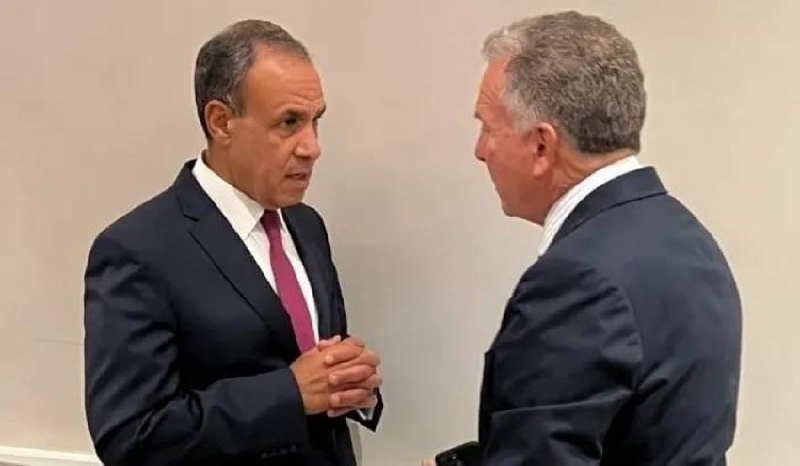
On 22 May 2026, Acting Navy Secretary Hung Ca confirmed what arms-trade analysts had suspected for weeks: the United States was pausing its largest-ever weapons sale to Taiwan, a package whose eventual value had been estimated in the billions of dollars across multiple defense contracts. The reason, according to initial accounts, was straightforward: Washington needed the munitions—specifically the precision-guided missiles, naval ordnance, and air-defense components that would have populated that package—for a possible operation against Iran. Within hours, Polymarket's live feed reflected heightened speculation that an attack on Iranian nuclear or military infrastructure was imminent. The Telegram channel Megatron_Ron, citing unnamed administration sources, described a deliberate decision to prioritize the Middle Eastern contingency over the Pacific deterrence build-up that Taiwan's defense planners had been counting on.
The pause is significant not merely as a procurement matter but as a window into how the current US national-security apparatus is sequencing threats—and what that sequencing costs in terms of alliance credibility. When a superpower signals, through allocation rather than rhetoric, where the priority sits, allies and adversaries alike take note.
What Has Been Paused—and What Taiwan Was Expecting
The weapons package in question represents the single largest transfer of US defense capability to Taiwan in the post-1979 relationship. The sale, first notified to Congress under the Biden administration and expanded under the current White House, includes advanced F-16 fighter components, Harpoon anti-ship missiles, M1 Abrams tank subsystems, and a substantial increment of Stinger surface-to-air missiles—the kind of layered air-defense architecture that Taiwan's military planners have identified as critical in any scenario involving coercive Chinese military activity.
The scope of the package reflected a deliberate US judgment that Taiwan's deterrence posture required not just symbolic support but genuine capability enhancement. Arms sales to Taiwan have historically been a barometer of US-China relations—politically sensitive, administratively slow, and often calibrated to avoid destabilizing the cross-strait status quo. The current package broke with that tradition in both scale and speed, suggesting an assessment that Beijing's military modernization had reached a threshold that demanded a proportional response.
Taipei's defense establishment had integrated this package into its own force-planning timelines. Military analysts familiar with Taiwan's procurement cycles note that the country has been restructuring its reserve forces, investing in asymmetric capabilities, and conducting exercises designed around the assumption that the US would provide sustained, quality-defense material. A pause of indefinite duration—a detail the sources do not specify—disrupts those planning assumptions at a moment when cross-strait tensions have been elevated by Chinese air incursions and naval exercises in the Taiwan Strait and surrounding waters.
Taiwan's Ministry of Foreign Affairs has not issued a public statement as of publication; the sources do not indicate whether Taipei has received formal notification of the pause or its expected duration. That absence of public positioning is itself notable—it may reflect diplomatic discretion, internal deliberation, or a calculation that public protest would risk further straining a relationship whose reliability is now under formal review.
The Iran Draw: Why the Middle East Is Consuming Pacific Stockpiles
The decision to redirect munitions from Taiwan to an Iran contingency is the most concrete signal yet that the current US administration views the Iranian threat as more urgent—and more militarily exigent—than the China challenge in the Taiwan Strait. This is a hierarchy judgment with profound implications.
US precision-munition stockpiles are finite. The production lines for sophisticated air-to-ground missiles, naval strike weapons, and advanced surface-to-air interceptors operate on timelines measured in years, not months. When the US commits significant quantities of these systems to one theater, the inventory available for others compresses. The decision to hold Taiwan's package rather than draw down existing US Pacific stocks suggests either that the Iran planning scenario requires a larger draw than the Pacific fleet can absorb without risk, or that the administration views the Iran timeline as shorter than the Taiwan one.
Iran has been the subject of intense US diplomatic and intelligence focus since the breakdown of nuclear talks in 2025. Iranian nuclear facilities, enrichment infrastructure, and Revolutionary Guard command-and-control nodes have been the target of repeated Israeli strikes, some conducted with US logistical or intelligence support, others apparently unilateral. Each cycle of strikes generates a requirement for follow-on munitions—and for the intelligence, logistics, and air-refueling assets that enable sustained operations at distance. The sources do not specify the nature of the reported Iranian operation, its expected scope, or its legal basis under international law, which this publication considers an open question given the absence of a UN Security Council mandate.
The draw on Pacific-bound munitions also reflects a deeper structural reality: the US military is managing simultaneous global commitments in a way that its industrial base was not designed to sustain at scale. Ukraine has consumed enormous quantities of artillery ammunition and air-defense interceptors. The Middle East posture—expanded after the October 2023 conflict and sustained since—requires carrier-deck air-wing sortie rates and Tomahawk strike capacity. The Pacific deterrence mission requires maritime domain awareness, submarine presence, and the kind of precision-strike depth that the current Taiwan package would have provided. Running these commitments in parallel forces allocation decisions that none of the theaters can win on their own.
The Signal to Beijing—and What Beijing Will Read Into It
Every allied commitment carries an implicit message to adversaries. The message sent by pausing the Taiwan arms sale is available to Beijing in at least two distinct readings, and both carry strategic weight.
The first reading—one that US officials would likely prefer—is that Washington is preparing a decisive operation against Iran that it believes will reduce a significant threat, and that the draw on Pacific deterrence is temporary and manageable because the Iran challenge, in this administration's calculus, is the more immediate danger. Beijing might interpret this as US focus being temporarily diverted from the Indo-Pacific, an opening for pressure calculus—but also as evidence that US capabilities are genuinely stretched, a factor that could cut either way depending on Chinese risk tolerance.
The second reading—and the one that regional allies are most likely to internalize—is that US alliance commitments are hierarchically sequenced, and that commitments to frontline partners like Taiwan can be subordinated to contingencies elsewhere. This reading is not new; it has been a quiet anxiety among US allies in Europe, the Middle East, and the Indo-Pacific since at least the Afghanistan withdrawal. But the pause transforms that anxiety into a concrete, dated, named-instance evidence point. When the US pauses the largest-ever arms package to a democratic ally facing an authoritarian neighbor, the credibility question ceases to be theoretical.
Beijing's official media apparatus has not yet responded to the specific news of the pause; the sources do not indicate any Chinese Foreign Ministry briefing or PLA commentary as of publication. It is notable, however, that Chinese state media and diplomatic channels have consistently framed US arms sales to Taiwan as illegal interference in Chinese internal affairs and as an obstacle to peaceful reunification. A pause—whatever the proximate reason—removes one irritant from the bilateral relationship in the short term. Whether Beijing exploits that window, or uses it to signal restraint in return, will be among the more consequential questions of the coming weeks.
China's defense-industrial base, by contrast, faces no comparable inventory constraints. Chinese weapons production has expanded substantially over the past decade, and the People's Liberation Army's capacity to equip its forces for a cross-strait contingency is not dependent on foreign supply chains. Beijing's position in any extended deterrence contest with Washington is structurally different from Taiwan's—that asymmetry is precisely why the arms-sale relationship has been treated as a cornerstone of cross-strait stability.
Alliance Architecture and the Costs of Conditionality
The US alliance system in the Indo-Pacific is built on a particular understanding: that allied security depends not just on treaty text but on demonstrated reliability—that allies can count on material support when the moment comes, not just rhetorical endorsement in advance. The hub-and-spoke system, centered on bilateral alliances with Japan, South Korea, Australia, the Philippines, and Thailand, has functioned partly because the US has been willing to position actual military assets and actual transfer agreements where adversaries could see them.
The pause introduces a new variable into that architecture: conditionality. When an arms package can be paused because a different contingency has higher claim on the same munitions, every alliance partner must now factor that conditionality into its own planning. Japan has an ongoing interest in advanced maritime capabilities and has been a consistent advocate for strengthening deterrence architecture in the East China Sea. The Philippines, under an administration that has deepened security ties with Washington, has been negotiating Enhanced Defense Cooperation Agreement provisions that depend on sustained US commitment. South Korea's missile-range restrictions, long a source of strategic frustration, are being renegotiated with an assumption that US technology transfer will accompany any agreement.
None of these partners has publicly commented on the Taiwan pause; the sources do not indicate any bilateral consultation between the US and Indo-Pacific allies on the decision or its implications. But the absence of public comment does not mean the absence of internal reassessment. Alliance managers in Tokyo, Seoul, Manila, and Canberra will be running their own calculations: what happens when our package is the one that gets paused? The question is no longer hypothetical.
The Road Ahead: Stakes and Uncertainty
The most immediate question is duration: how long will the pause last, and what conditions would trigger resumption? The sources do not specify an expected timeline, and the absence of that information is itself consequential. A temporary pause of weeks or a few months is a different category of signal than a de facto suspension pending the resolution of the Iran contingency, which could itself be prolonged.
The second question is legal and political: what obligations does the US have under the Taiwan Relations Act, which mandates that the US provide Taiwan with defensive weapons? The Act does not specify quantities or timelines, and no mechanism exists to compel executive compliance with its terms. But the Act represents a congressional finding—codified in statute—that Taiwan's security is vital to US interests. A prolonged pause raises the question of whether that statutory commitment remains meaningful in operational terms.
The third question is strategic: whether the Iran operation, if it proceeds, will achieve its objectives, and whether those objectives—when weighed against the cost to alliance credibility in the Pacific—represent a net gain or loss for US strategic position. The administration may believe that degrading Iranian nuclear capacity reduces a near-term existential threat and thereby strengthens overall US posture. Critics will argue that the cost—in credibility, in deterrence, in the implicit hierarchy of allied needs—exceeds the gain.
What the sources confirm, and what this publication treats as established fact as of 22 May 2026, is that the pause has been ordered, that it is linked to the Iran operation, and that the scale of the Taiwan package makes this qualitatively different from previous arms-transfer delays. What they do not confirm is the expected duration, the specific legal authority under which the pause was ordered, the formal position of the Taiwanese government, or the Chinese government's response. Those are the variables that will determine whether this episode is a manageable operational adjustment or a structural reordering of alliance expectations in the Indo-Pacific.
This publication will continue to monitor developments as they are reported. The thread is active; the story is not closed.
— Monexus Staff Writer
Wire provenance
This editorial synthesis draws on the following public wire/social posts:
- https://t.me/megatron_ron/1823
- https://x.com/sprinterpress/status/1923421187285450761
- https://x.com/sprinterbfs/status/1923384483261964673
- https://en.wikipedia.org/wiki/United_States_arms_sales_to_Taiwan
- https://en.wikipedia.org/wiki/Taiwan_Strait
- https://en.wikipedia.org/wiki/China%E2%80%93United_States_relations
- https://en.wikipedia.org/wiki/United_States_military_deployments_and_operations_in_the_Middle_East_(21st_century)