Muqtada al-Sadr and the Shape of an Iraqi Void
Footage emerging from Tahrir Square on 22 May shows a vast gathering marking the memorial of a figure whose absence has already reshaped the calculus of Iraqi politics. What al-Sadr's disappearance means for a country that never found a replacement for him.
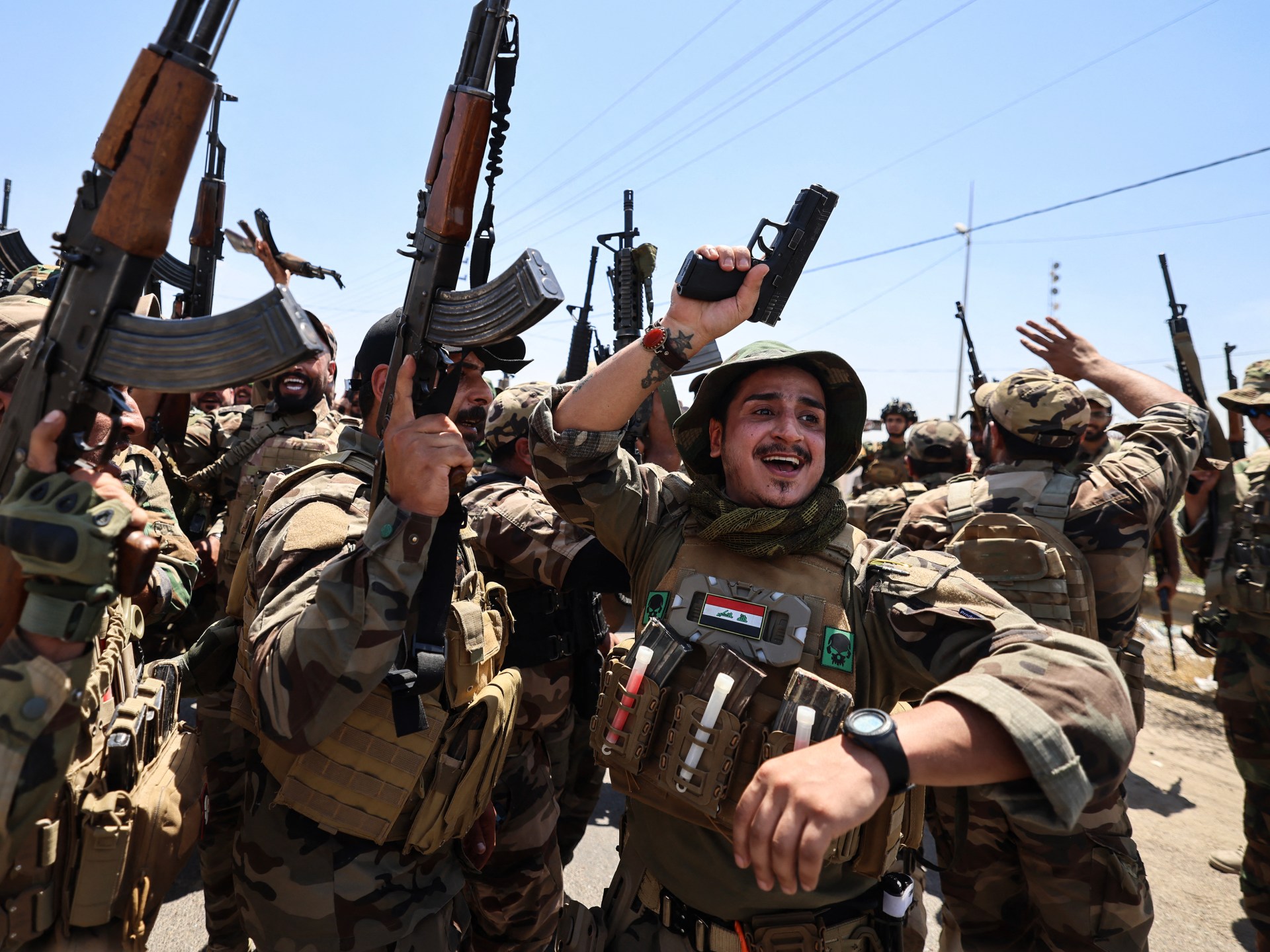
Mass gatherings convened at Baghdad's Tahrir Square on 22 May 2026, footage from which circulated widely via Iraqi media channels, marking the memorial of a figure whose disappearance has left a structural hole in Iraq's Shia political architecture. The footage, carried by Farsna, showed crowds described as an "unparalleled welcome" and "unparalleled reception" from what the channel termed the memorial of the martyred leader of the revolution. That description, broad as it is, points to a specific political gravity. The figure in question is Muqtada al-Sadr — cleric, militia leader, electoral kingmaker, and the most consequential voice in Iraqi Shia politics for two decades. Whatever the exact circumstances of his final withdrawal from public life, the memorial it has now prompted forces a reckoning with what his absence means for a country still navigating occupation, Iranian influence, and the frustrations of a population that never saw the promised political dividend of 2003.
The Sadr name carries inherited weight. Al-Sadr's father, Grand Ayatollah Mohammad Mohammad Sadr, and his elder brother, both prominent clerics, were assassinated in 1999 — killings widely attributed to the Saddam regime but never fully accounted for. That lineage gave the younger al-Sadr a standing that required no formal seminary rank to activate. When the 2003 invasion removed Saddam's apparatus, al-Sadr moved quickly, establishing the Mahdi Army as a fighting force and carving out Sadr City as a territorial and political base in northeastern Baghdad. He was 30 years old. The combination of clerical family, militia capability, and proximity to the dispossessed was, in the Iraqi context, without precedent. He was not the first to organise politically among Shia Iraq — the Islamic Supreme Council of Iraq and the Dawa Party preceded him — but he was the first to do so without the institutional scaffolding of the Najaf religious establishment or the patronage networks of Tehran. That independence, real or performed, defined his political identity and made him simultaneously useful and threatening to every other player in the system.
What distinguished al-Sadr's political posture was the willingness to be in opposition to all of them simultaneously. His forces fought US troops during the two Najaf uprisings of 2004. He opposed the Iraqi governing council's constitutional framework. He broke with the Iranian-aligned political bloc in 2016 and later dissolved his parliamentary faction in protest at the corruption and factionalism he accused other Shia parties of running. At various points he demanded the withdrawal of all US forces from Iraq — and at others, used his position to block the most aggressive Iranian-aligned factions from total dominance of the security apparatus. None of these positions was ideologically coherent in the conventional sense. What held them together was a consistent orientation toward a constituency: the urban poor of Sadr City, the informal labourers of Basra, the young men in provinces where state employment never arrived. That base was never offered an alternative by any other Shia political formation. Al-Sadr, for all his volatility, was the only one who spoke to them directly.
His withdrawal from formal politics in 2022 — announced in a tweet, without ceremony — was itself a political act. The Sadrist movement, stripped of its parliamentary presence, became a movement in a different register: street agitation, tribal mobilisation, and the implicit threat of return. The gatherings that now mark his memorial in Tahrir Square represent, in a certain light, the completion of that arc — from mobilisation as a means of electoral pressure to mobilisation as an end in itself, commemorating a figure who had already made himself unavailable to the institutions he helped populate. Whether the movement he built survives as a coherent political force without him is the operative question. The evidence from the square suggests mass loyalty. The evidence from the past three years of internal Sadrist contestation suggests no clear line of succession.
The structural position al-Sadr occupied — Shia, anti-establishment, anti-Iranian-penetration, plebeian in character — was never replicated by any other actor. That gap is now visible. The pro-Iranian Coordination Framework factions, the Sistani-affiliated quietist networks, and the nascent protest movements in the southern provinces each offer something of what al-Sadr offered, but none offers all of it. The Coordination Framework controls the government apparatus. It does not control the street. Sistani's institution has the religious authority but not the mobilisation infrastructure. The protest movements have the grievances but not the organisational backbone. What al-Sadr provided, and what his memorial in Tahrir Square is evidence of, was the rare combination of all four — and the political system he leaves behind has no mechanism for generating another like him.
The ambiguity surrounding the precise circumstances of al-Sadr's final withdrawal from public life is itself notable. The Telegram-sourced footage circulating on 22 May describes a memorial for a martyred revolutionary leader without specifying the date or mechanism of death — an omission that reflects either a deliberate circumspection on the part of the sourcing account or a simple absence of confirmed information. What is not ambiguous is the scale of what has been lost. Al-Sadr was, for twenty years, the only major Iraqi political figure who could credibly claim to stand outside the post-2003 patronage settlement. His capacity to do so was always personal — rooted in family authority, militia history, and the particular demographics of his base. Personal authority does not transfer institutionally. The memorial at Tahrir Square is an accounting of that fact, staged by a movement that must now find a way to be something other than what it was.
This publication covered the Tahrir Square gathering using the footage and descriptions carried by Farsna's Telegram channel. The source material does not confirm the precise date or circumstances of the political figure's withdrawal from public life; the structural analysis of the political vacuum it creates is Monexus's own.
Wire provenance
This editorial synthesis draws on the following public wire/social posts:
- https://t.me/farsna/4821
- https://t.me/farsna/4820