NATO's Middle East Fault Line Is No Longer Theoretical
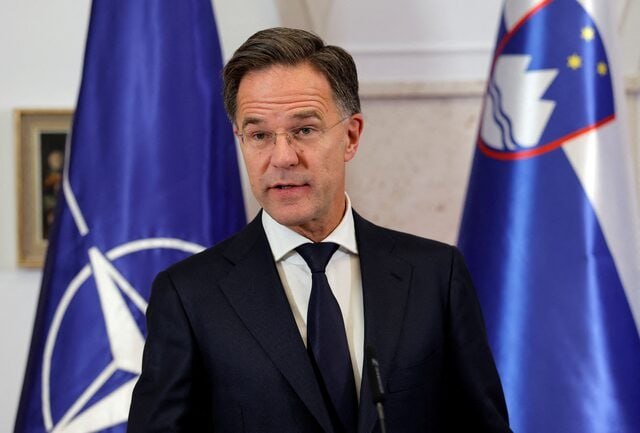
On 22 May 2026, Secretary of State Marco Rubio delivered a statement that would have been unthinkable inside the alliance fifteen years ago. Speaking in Washington, Rubio said the President was "disappointed in some of our NATO allies' response to our operations in the Middle East," adding that those responses are "well documented and will have to be addressed." The phrasing — clinical, public, unretractable — was reported and reposted across Telegram channels and social media within hours, a sequence this publication reviewed.
The statement is notable not for what it discloses but for how it frames it. Washington has long managed alliance disagreements through back-channels and communiqué language designed to preserve the fiction of unity. To hear a sitting Secretary of State say an ally's position is "well documented" and will "have to be addressed" is to hear a different register entirely — one in which the diplomatic euphemism has been deliberately stripped away.
What the Statement Actually Covers
The sources reviewed by this publication do not specify which NATO allies Rubio was referring to, nor do they detail the particular operations in the Middle East prompting the complaint. What is clear is the structure of the remark: a general charge of insufficient solidarity, paired with a forward commitment to formal consequences. The word "addressed" carries weight here. In diplomatic usage it typically signals something beyond a phone call or demarche — it implies a reckoning over policy alignment, which in the context of a defence alliance can encompass basing arrangements, intelligence-sharing protocols, or arms export decisions.
European NATO members have, in various combinations, maintained distinct positions on Middle Eastern conflicts over the past decade — positions that have placed them at variance with Washington's preferred policy trajectory. Several European governments have declined to endorse specific military operations, limited arms exports to the region, or declined to label certain groups as terrorist organisations in line with American designations. These are not new frictions. What is new is the decision to name them publicly and attach a date for reckoning.
The Structural Tension Beneath the Statement
Transatlantic relations have absorbed disagreements over the Middle East before — Suez, Iraq 2003, Iran policy under successive administrations — and the alliance has survived them. But the present moment differs in one critical respect: the disagreement is no longer primarily about a single policy decision. It is about whether the alliance's collective framing apparatus still functions as intended.
For decades, the dominant model of alliance coverage treated divergences as manageable deviations from a shared premise. The reporting and commentary on both sides of the Atlantic would frame the dispute as temporary, contextual, and ultimately subordinate to the overarching logic of partnership. What Rubio's statement implicitly challenges is that framing itself — suggesting that some allies have moved from tactical disagreement to a structural position that Washington now regards as incompatible with alliance solidarity.
This matters because the operative question in any alliance is not whether members agree on every foreign policy decision — no serious analyst has ever expected that — but whether the framework for adjudicating those disagreements still holds. If one party to the alliance begins to treat the other's policy divergence as evidence of disloyalty rather than normal democratic variation within a coalition, the mechanism for absorbing friction breaks down. The language of disappointment is the first sign that this may be happening.
Why This Moment Is Different
Previous administrations have issued private warnings to allies. This one has chosen a public stage and pointed language. The decision to make the statement on the record, to let it circulate without qualification or follow-up softening, signals that the calculation has shifted. Either Washington believes European public opinion has moved enough that allied governments cannot afford to be seen as compliant with American Middle East policy, or the administration has decided that the costs of polite silence outweigh the benefits of alliance cohesion.
Neither interpretation is flattering to the partnership. The first suggests that the transatlantic relationship has become a political liability in European capitals. The second suggests that Washington is now willing to spend some portion of that relationship's capital on policy compliance. Both readings point in the same direction: the alliance is under new stress, and the old mechanisms for managing it are no longer adequate.
The Stakes Going Forward
If this is the opening move in a formal review of NATO members' Middle East posture, the consequences will be concrete. An intelligence-sharing review could affect operations across multiple theaters. A formal diplomatic demarche would force allied governments to take public positions they have so far avoided. A public listing of specific disagreements — which Rubio's statement stops just short of providing — would make it politically harder for the named allies to reverse course without appearing to have capitulated.
The immediate risk is not a rupture. It is a slow calcification of a disagreement that both sides treats as resolvable but neither side moves to resolve. Alliance friction of this kind tends to compound: each instance of documented non-compliance becomes a precedent, each precedent becomes a rationale for the next move, and the relationship gradually migrates from the category of "allies with differences" to "differences that require allies to take positions."
That trajectory, if it continues, will be consequential for everyone who has relied on the assumption that NATO's internal mechanisms can absorb policy divergence without external damage. Rubio's statement on 22 May is a data point in that story. It deserves to be read as one.
This publication noted the contrast between the bluntness of Rubio's remarks and the considerably more hedged language in earlier diplomatic exchanges over Middle East policy — a shift the wire coverage has only begun to account for.
Wire provenance
This editorial synthesis draws on the following public wire/social posts:
- https://t.me/operativnoZSU
- https://t.me/ClashReport