Pakistan's Army Chief Lands in Tehran as Iran–US Mediation Gambit Takes Shape
Field Marshal Asim Munir arrived in Tehran on 22 May 2026 tasked with carrying messages between Iran and the United States, a move that places Pakistan at the centre of one of the most consequential diplomatic threads in the region — if it holds.
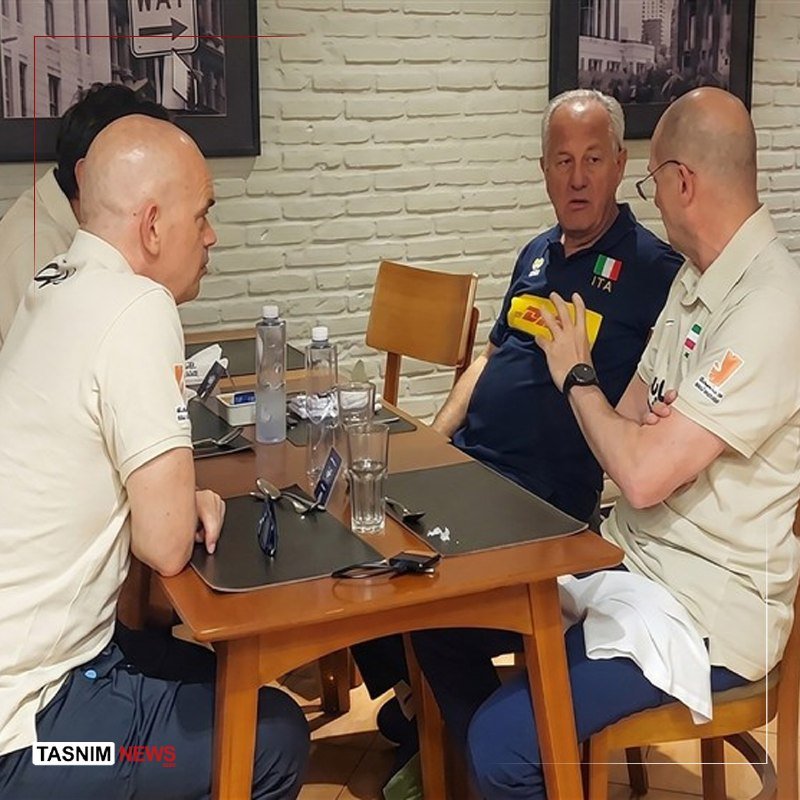
Pakistan's Army Chief Field Marshal Asim Munir touched down in Tehran on the evening of 22 May 2026, received by Iran's Interior Minister Eskandar Momeni at what multiple Iranian state-adjacent channels described as a formal welcoming ceremony. The visit, confirmed across Tasnim News, PressTV, Mehr News, and independent regional monitors, carries a specific mandate: to carry messages between Tehran and Washington as indirect negotiations over Iran's nuclear programme and the sanctions architecture surrounding it appear to have reached a pivotal juncture.
The framing from Iranian state media is unambiguous. Asim Munir arrived, according to Tasnim's English-language service, "in the framework of ongoing efforts for mediation" — language that has appeared consistently across the Iranian press apparatus since the visit was first reported by Al-Arabiya as the Pakistani chief was still en route. That early disclosure, sourced through the monitoring outlet GeoPWatch, suggests the visit was never meant to be a surprise. The question is what Asim Munir is actually carrying, and whether it amounts to a substantive diplomatic opening or a confidence-building gesture with limited shelf life.
The structural logic of Pakistan's gambit
Islamabad has long positioned itself as a corridor between competing poles in the region. Its relationship with Washington is transactional — defined by counterterrorism cooperation, IMF programme dependencies, and a security architecture that makes Pakistan receptive to US strategic signals. Its relationship with Tehran is neighbourly, complicated, and occasionally volatile: border incidents, water disputes, and a sectarian dimension that has periodically strained ties. Neither relationship is deep enough to make Pakistan a natural honest broker — yet that structural ambiguity is precisely what gives the role value. Neither side needs to trust Islamabad; they only need to trust that a back-channel, if it exists, is worth preserving.
The visit follows months of elevated US-Iran tension. The Trump administration's maximum-pressure posture has been a constant since the 2018 withdrawal from the Joint Comprehensive Plan of Action, but enforcement intensity has fluctuated. What has changed in recent months is the shape of the pressure itself: secondary sanctions targeting Iran's oil exports and banking infrastructure have intensified, while simultaneous overtures — conveyed through Omani and Emirati intermediaries — suggest the US is simultaneously exploring a negotiated outcome while maintaining coercive leverage. Pakistan's Army, which has historically exercised significant foreign-policy latitude independent of civilian cabinet oversight, fits naturally into this picture as a channel that can operate below the threshold of public visibility.
What Tehran gets from the arrangement
For Iran, Asim Munir's visit represents something useful: an entry point that does not require direct acknowledgment of US contact. Tehran has consistently refused to meet the US at the table under conditions it characterises as dictatorial — the demand that uranium enrichment cease before any sanctions relief is discussed. A Pakistani intermediary allows Iran to receive signals, make counter-signals, and probe the shape of a possible deal without conceding the principle that direct talks require preconditions Iran cannot meet. Iran's interior minister, Eskandar Momeni — who received Asim Munir personally — is not the foreign minister, which suggests the mediation is being handled at a level that preserves deniability across multiple governmental departments.
From the Iranian perspective, this also fits a broader strategy of diversifying diplomatic interlocutors away from the European trio (France, Germany, Britain) that has historically mediated between Tehran and Washington and which Iran views as insufficiently independent from US positions. Pakistan, with its non-aligned tradition and its own experience of being pressured by Western financial architecture, carries more structural empathy from Tehran's vantage point than any EU capital would.
What Washington gets — and the limits of the channel
For the United States, the utility is different. The Trump administration has shown interest in a deal that it can present domestically as a maximum-pressure success — one that extracts concessions on enrichment and verification without appearing to reward Iran for waiting out sanctions. A Pakistani chief of army staff carrying messages is a low-cost way to explore whether such a deal is available without the diplomatic overhead of formal negotiations. If the channel fails, it can be quietly closed without consequence. If it produces something, it arrives through a format the administration can manage.
The limitations are real, however. Asim Munir is a military officer, not a diplomat. The messages he carries will necessarily be compressed, elliptical, and subject to interpretation in both directions. The gaps between what Washington wants — verifiable caps on enrichment, intrusive inspections, caps on ballistic missile development — and what Tehran has historically been willing to concede are wide. A back-channel can test whether those gaps are bridgeable; it cannot bridge them alone. And if the channel becomes public in a way that creates domestic political pressure in either capital — Washington's hawkish wing demanding visible concessions, Tehran's hardliners demanding that any deal rule out total surrender on enrichment — it may collapse under the weight of the audiences it is trying to serve.
The stakes if this holds — and if it doesn't
Pakistan's position in this is genuinely precarious. If the mediation produces a meaningful de-escalation — a partial sanctions relief package tied to enrichment constraints, perhaps with a horizon for fuller normalisation — Islamabad will have demonstrated a diplomatic utility that strengthens its standing with Washington and deepens ties with Tehran simultaneously. The economic prize is not trivial: a managed reduction in regional tension would ease pressure on Pakistan's western border, improve investor sentiment, and potentially unlock bilateral trade opportunities with Iran that have been held hostage to the broader US-Iran standoff.
If the channel collapses — or worse, is perceived in Washington as having been used by Iran to buy time without genuine concessions — Pakistan will have expended goodwill without gain. The US relationship is already under pressure from the IMF programme's conditionality and the ongoing dispute over Pakistan's engagement with Chinese financing mechanisms. A failed mediation gambit adds a further complication to a relationship that Islamabad cannot afford to destabilise.
The sources across the Iranian press apparatus are consistent on one point: this is framed, in Tehran, as a serious effort. Whether it is one — or whether it represents a temporary bridging exercise while both sides prepare for a different phase of confrontation — will depend on what Asim Munir carries back from Tehran and what Washington does with it in the days ahead.
This article was drafted from Telegram-sourced wire reports across Iranian state-adjacent and regional monitoring channels. Monexus has not independently confirmed the content of any message reportedly passed during the visit. The framing differs from Western wire coverage in that it treats the Pakistani channel as a structural feature of the diplomatic landscape rather than an anomalous development — reflecting the editorial view that middle-state mediation deserves equal analytical weight alongside great-power positioning.
Wire provenance
This editorial synthesis draws on the following public wire/social posts:
- https://t.me/tasnimnews_en/9847
- https://t.me/presstv/15623
- https://t.me/mehrnews/44812
- https://t.me/GeoPWatch/8923
- https://t.me/JahanTasnim/11549
- https://t.me/ClashReport/22041
- https://t.me/Middle_East_Spectator/7834
- https://t.me/Farsna/5567