Pakistan Army Chief Arrives in Tehran as US Reports 'Slight Progress' in Iran Nuclear Talks
Pakistan's army chief arrived in Tehran on 22 May 2026 as part of intensifying mediation efforts, while US Secretary of State Marco Rubio described the latest round of nuclear talks as showing 'slight progress' — even as the European Union moved toward fresh sanctions over Iran's Hormuz Strait blockade.
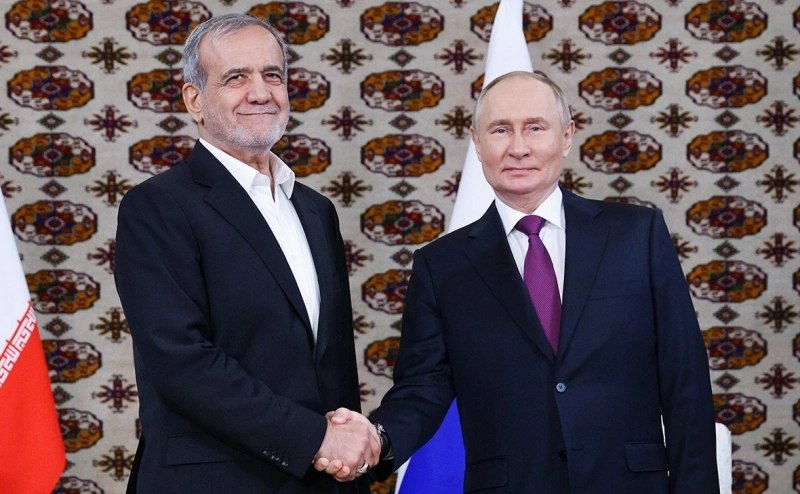
Pakistan's Army Chief General Asim Munir arrived in Tehran on 22 May 2026 as part of multilateral mediation efforts to bridge the gap between Iran and the United States, according to reports confirmed to Monexus. The visit came within hours of US Secretary of State Marco Rubio describing the latest round of indirect nuclear talks as showing "slight progress" — language that stopped well short of a breakthrough but acknowledged movement after months of impasse. The simultaneous diplomacy and pressure campaign encapsulates the contradictions at the heart of Washington's approach: negotiating while threatening, and offering sanctions relief while imposing new ones.
The two-track dynamic was underscored by the European Union's parallel move toward additional sanctions targeting Iran over its interference with shipping through the Strait of Hormuz, the world's most critical chokepoint for oil transit. The EU measure, still being finalized as of 22 May, represents the bloc's first significant secondary sanctions regime directed specifically at Iran's naval activities in the Gulf — a escalation that Tehran's foreign ministry has characterised as "illegal coercion" and a violation of the nuclear accord's residual architecture.
Mediation efforts have drawn in a widening circle of interlocutors. Qatari officials joined the diplomatic track this week, supplementing Omani intermediaries who have facilitated US-Iran communications since the talks resumed in early 2026. The inclusion of Qatar, a Gulf Cooperation Council member with channels to both Washington and Tehran, reflects the urgency that regional capitals attach to resolving a standoff whose spillover costs — disrupted trade, insurance premiums, fuel price volatility — they absorb disproportionately. Sources inside the mediation process indicate that the remaining gap between the two sides centres on the sequencing of sanctions relief and the scope of Iran's uranium enrichment programme, with Washington insisting on permanent caps and Tehran demanding immediate economic dividends.
The Architecture of Indirect Diplomacy
The US and Iran have not held direct talks since 2023; all communications pass through intermediaries. That arrangement, however awkward, has allowed both governments to maintain domestic credibility — Washington by not legitimising a regime it designates a state sponsor of terrorism, Tehran by not appearing to capitulate under pressure. The mediators — Oman, Qatar, and Iraq — carry their own institutional interests. Oman has hosted every prior round of US-Iran back-channel negotiations since 2013. Qatar hosts a US military base while simultaneously maintaining a political dialogue with Tehran. The efficiency of that triangulation is a feature, not a bug, for all parties: it creates enough ambiguity that each side can claim deniability while the talks proceed.
What has changed in 2026 is the external environment. Iran's economy has contracted under cumulative sanctions, and the new Hormuz restrictions — which Iran implemented in late 2025 under the rubric of "reciprocal measures" against US secondary sanctions — have generated enough disruption to alarm not just Western governments but also China, India's largest crude supplier, and South Korea, a major LNG importer. That international anxiety has given Iran leverage it might not otherwise possess: the Hormuz card is inherently destabilising, but it is also one that major consumers of Gulf energy cannot afford to have played without limit. The EU sanctions are designed to price that risk for European companies — but their bite depends on whether the Hormuz disruption is judged temporary or structural.
Sanctions as Both Stick and Crutch
The EU's Hormuz-specific sanctions package is notable not only for its target but for its architecture. Unlike the blunt-force oil embargoes of the 2010s, this regime focuses on port access, insurance restrictions, and individual designations — tools calibrated to signal disapproval without collapsing the negotiating table entirely. The distinction matters because both Washington and Brussels are aware that a fully collapsed Iran deal — or a deal that Iran walks away from — risks the very Hormuz instability the sanctions purport to punish. The EU move should be read as pressure, not as the end of the diplomatic track.
Iran's response, conveyed through state media and confirmed by regional diplomatic sources, has been to characterise the EU measure as a Washington-directed exercise that the bloc is executing without independent judgment. That framing is not entirely without structural foundation: EU foreign policy on Iran has tracked closely with US preferences since 2018, when the bloc declined to override American secondary sanctions despite activating the nuclear accord's dispute mechanism. Whether the current sanctions reflect genuine European strategic assessment or reflexive Atlantic solidarity is a question that European officials have declined to answer on the record.
Pakistan's Unlikely Diplomatic Role
The arrival of General Munir — Pakistan's most powerful political figure, whose institutional authority often exceeds that of the civilian government — signals the degree to which the Hormuz crisis has drawn South Asian actors into Gulf security calculus. Pakistan shares a 900-kilometre border with Iran and has long navigated between its Gulf allies (Saudi Arabia and the UAE) and its historical ties to Tehran. Islamabad also hosts US military assistance programmes and maintains a strategic partnership with China that runs through the China-Pakistan Economic Corridor. General Munir's visit should be read as an attempt to demonstrate that Pakistan retains diplomatic agency in a crisis that threatens to sweep smaller regional players into binary choices between Washington and Tehran.
The visit also carries domestic political weight. Pakistan's civilian government is fragile, its economy under IMF supervision, and its security environment deteriorating along the Afghan border. A successful mediation contribution — or even a visible attempt at one — elevates Islamabad's standing with both Gulf patrons and Western creditors without committing Pakistan to any formal position. It is, in the language of South Asian statecraft, a hedge dressed as a service.
What Remains Unresolved
The sources reviewed for this article do not resolve several critical unknowns. No publicly available account specifies the exact level of Iranian enrichment activity — whether Iran has crossed thresholds that would require months of reversal before any deal could be verified, or whether the gap is narrower and more negotiable than public statements suggest. Rubio's characterisation of "slight progress" offers no insight into whether the two sides have agreed on the framework document that mediators have reportedly been drafting since March, or whether they remain deadlocked on the two foundational issues of sanctions sequencing and enrichment ceilings. The EU sanctions regime has been announced but not yet formally adopted; its final shape will determine whether it complements or undermines the negotiating track.
The fundamental tension at the heart of this process — pressure as a tool of diplomacy versus pressure as an alternative to it — has not been resolved. The US wants permanent nuclear constraints in exchange for temporary sanctions relief. Iran wants the relief first and the constraints negotiated later. Both positions have internal logic. Neither is obviously wrong. The mediators' task is to find a formulation that lets each side claim victory on the timeline that suits its domestic politics. Whether the Qatari delegation, the Pakistani army chief, or the Omani interlocutors can manufacture that formulation before the Hormuz crisis deepens or the EU sanctions take effect is the central question the next two weeks will answer.
This article was filed from the Europe/MENA desk. Wire coverage has emphasised Rubio's "slight progress" language as a headline hook; Monexus foregrounds the parallel EU sanctions move and the structural contradiction between pressure and negotiation that both developments illustrate.