Qatar's Tehran Mission Exposes the Limits of America's Iran Diplomacy
Doha's mediating team in Tehran this Friday, acting at Washington's behest, reveals more about the structural failures of USIran negotiation architecture than it resolves.
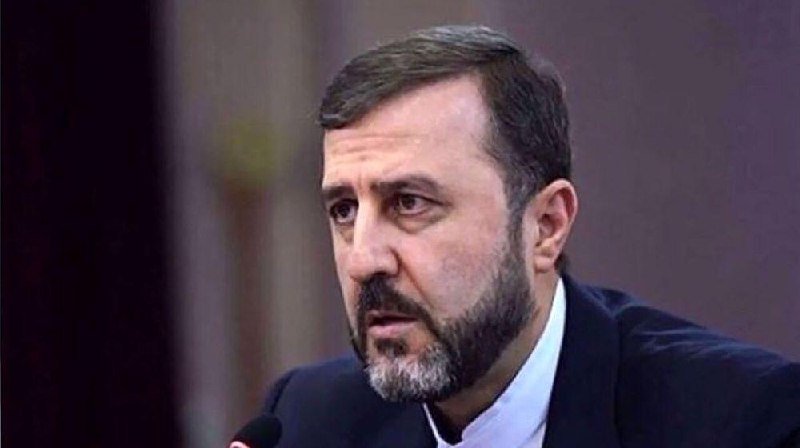
Doha dispatched a negotiating team to Tehran on Friday, 22 May 2026, in what multiple Iranian state-adjacent outlets — citing Reuters reporting — described as a coordinated US-Qatari effort to broker an end to the Iran war. The mission lands as ceasefire talks have stalled for weeks and as regional actors increasingly position themselves around the conflict's unresolved status. The move is framed by its architects as constructive; a closer read suggests something closer to diplomatic theatre for a domestic audience that has grown weary of escalation without resolution.
The structural logic of Qatar's involvement is not new. Doha has played this role before — as the host for the Taliban-US talks that produced the 2020 withdrawal agreement, as a back-channel during the Gulf Cooperation Council standoff with Saudi Arabia and its allies in 2017, and repeatedly as a point of contact between Western governments and Iranian officials who prefer not to speak directly. That track record is precisely what Washington needs right now, and it is precisely what should prompt scrutiny rather than quiet relief.
The Back-Channel as a Policy Substitute
When direct diplomacy fails, the US default is the intermediary. This pattern is so entrenched that it has become a structural feature of American Iran policy rather than a tactical choice. Direct talks between Washington and Tehran collapsed years ago; the nuclear accord was negotiated through European brokers before those channels also frayed. What replaced them was a reliance on Gulf interlocutors — Oman, Switzerland, and now Qatar — who can speak to both sides without the reputational cost of being seen talking to the adversary.
This architecture has a specific advantage: it allows the US to signal flexibility without conceding publicly. Qatar carries the message, gauges the response, and returns with results that can be sanitised for domestic consumption. The downside is that it divorces the negotiating process from direct accountability. Neither Washington nor Tehran owns the outcome; the intermediary absorbs the friction. When talks fail — as they did repeatedly during the nuclear negotiations — the blame is diffuse, and the US retains the ability to claim it was always reasonable, while the real obstacles remained unaddressed.
The sources do not indicate what specific proposals the Qatari team carried to Tehran. What is clear is that the timing is not accidental. The Iran war has entered a phase where both the costs of continuation and the risks of escalation are visible enough that third-party mediation becomes politically attractive to actors who want to be seen as constructive without committing to a harder position.
What the Mission Reveals About Washington's Position
That Washington chose Doha to carry its message rather than going itself tells us something important about the current state of US Iran policy: direct engagement is still politically untenet for the administration, despite the war's escalation and the growing chorus from regional allies calling for a diplomatic off-ramp. The US can fund the resistance, supply the intelligence, and coordinate the sanctions regime that constrains Iran's oil revenues — but it cannot sit across the table without a domestic political cost that the administration is not willing to absorb.
Qatar absorbs that cost. The emirate has built an entire foreign-policy identity around its role as a usable intermediary — a small state with outsized diplomatic reach precisely because it is willing to host conversations that larger actors cannot. That identity has made Qatar indispensable to Western governments, and it has also given Doha leverage that its allies sometimes find uncomfortable. The source material this week does not specify what Qatar receives in return for carrying this particular message, but past precedent suggests the emirate extracts quiet concessions — on its disputed maritime boundary with Bahrain, on its relationship with Hamas, on financial-access issues that periodically surface in US-Qatari negotiations.
The Regional Calculus That Gets Overlooked
The coverage of Qatar's Tehran mission focuses on the US-Iran axis, as the sources do, but the story is not only about Washington and Tehran. The war has forced every regional actor to take a position, and those positions are not static. Saudi Arabia, the UAE, and Bahrain have watched the conflict from a distance that has become increasingly uncomfortable. The economic disruption from Red Sea shipping restrictions alone has cost Gulf states billions; the wider regional instability has constrained the investment environment that those governments need to fund their domestic transformation programmes.
A ceasefire — even a fragile one — is in the interest of every actor outside the direct belligerents. Qatar's mission, however limited its prospects, is also a signal to those Gulf states that the diplomatic track is active. Whether that signal leads anywhere is a separate question. The sources offer no indication that the underlying divergences between Iran and the US — over sanctions relief, over regional militia posture, over the nuclear programme — have narrowed in ways that would make a brokered end credible.
What Remains Unresolved and Why It Matters
The honest assessment from the available reporting is this: Qatar sent a team, the team is in Tehran, and the content of their discussions is not public. The sourcing comes from Reuters, which cited informed sources — a formulation that in practice means officials who agreed to speak without their names attached. That is not nothing, but it is also not transparency. We know the fact of the mission; we do not know the substance.
What the article can assert with confidence is that the mission exists within a specific structural context: a war that neither side has been able to end by force, a US administration that cannot pursue direct diplomacy without political cost, and a Qatari government that has found a durable niche as the intermediary that keeps the conversation alive — whether or not the conversation produces results. That structure is what makes the mission meaningful, and it is also what limits what the mission can achieve. A back-channel that substitutes for direct engagement is a symptom of a policy failure, not a solution to one. The question for the weeks ahead is whether the symptoms are treated as the cure, or whether the structural conditions that produced them — the absence of direct accountability, the political insulation of intermediaries, the preference for theatre over negotiation — are finally acknowledged and confronted.
This desk notes that wire coverage framed the Qatar mission as a positive diplomatic signal. The analysis above argues that the framing deserves more scrutiny than it received.
Wire provenance
This editorial synthesis draws on the following public wire/social posts:
- https://t.me/wfwitness
- https://t.me/JahanTasnim
- https://t.me/tasnimnews_en
- https://t.me/farsna
- https://t.me/FarsNewsInt