Qatar dispatches negotiating team to Tehran as US-Iran talks enter critical phase
A Qatari delegation arrived in Tehran on 22 May in what sources describe as a coordinated effort with Washington to close the remaining gaps in a US-Iran nuclear agreement, even as an Iranian official told Al Jazeera that armed forces are preparing for a worst-case scenario.
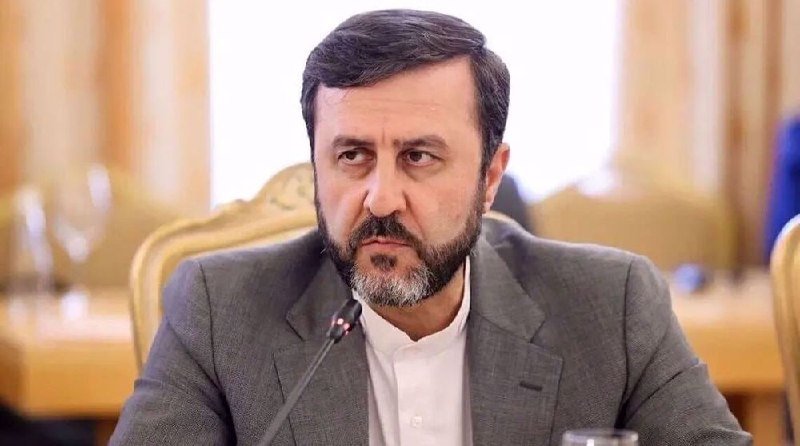
A Qatari negotiating team arrived in Tehran on 22 May in a coordinated effort with the United States to help seal a deal that would end the US-Iran war, according to two sources who spoke to Reuters. The development came hours after an Iranian official told Al Jazeera that no final agreement had been reached between the two sides and that Tehran's armed forces were simultaneously planning for the worst scenario.
The simultaneous movement — diplomatic outreach alongside explicit military contingency planning — reflects the fragility of a negotiations process that has produced genuine progress in recent weeks but remains haunted by the prospect of collapse. Qatar, which has cultivated relationships across the Iranian political spectrum over the past two decades, has emerged as a preferred interlocutor for back-channel work that neither Washington nor Tehran wishes to conduct in public.
The diplomatic window
Reuters reported on 22 May, citing sources familiar with the matter, that a Qatari team had arrived in Tehran in coordination with the United States to help close remaining gaps in a potential agreement. The reporting, corroborated by a separate source cited by Iranian state-adjacent channel OurWarsToday, described the delegation's mandate as focused on finalising terms that would restore a modified version of the 2015 Joint Comprehensive Plan of Action — with additional constraints on Iran's ballistic missile programme and regional behaviour that the Trump administration has insisted upon as a condition for lifting sanctions.
Iranian state media, including FarsNews International and Farsna, reported that an Iranian official had told Al Jazeera that talks were ongoing but that no final agreement existed. The official's statement to Al Jazeera that armed forces were planning for the worst scenario was the clearest public signal yet that Tehran's leadership is entertaining the possibility that the current diplomatic push could fail. It also suggested that the Islamic Revolutionary Guard Corps and regular military command have been directed to maintain heightened readiness irrespective of the negotiating track.
The United States has not publicly commented on the Qatari delegation's activities, consistent with its practice throughout this round of talks of allowing third-party intermediaries to conduct the most sensitive exchanges while reserving direct communication for moments of near-closure. European signatories to the 2015 deal — France, Germany, and Britain — have been kept informed through parallel channels but have not been central to the most recent phase of talks.
Military posturing and negotiating leverage
The duality of Iran's position — engaged in serious talks while simultaneously signalling military preparedness — is consistent with a negotiating posture that hardliners inside the regime have used before. Tehran's willingness to threaten escalation while at the table is designed to strengthen its hand in demanding sanctions relief and iron-clad guarantees against future US withdrawal from any agreement. It also serves a domestic audience: showing that the government has not capitulated under pressure.
The United States, for its part, has maintained that any deal must include permanent sanctions relief as a baseline requirement — a condition that Iran has rejected in previous rounds. What has shifted in the current cycle is the willingness of the Trump administration to consider temporary sanctions suspensions in exchange for verified freezes on enrichment levels above 3.67 percent, a posture that analysts have described as a significant departure from the maximalist opening position the administration took in early 2025.
The military dimension matters because it defines the stakes if talks collapse. A breakdown at this juncture, after eighteen months of war that has destroyed large portions of Iran's oil infrastructure and killed thousands, would almost certainly trigger a renewed round of Iranian strikes on Gulf shipping and potentially on US assets in the region. It would also foreclose the possibility of the limited sanctions relief that European banks and energy traders have been holding out hope for.
Structural context: the Gulf's changing architecture
What is happening inside the US-Iran talks cannot be separated from the broader restructuring of Gulf security architecture that has been underway since the Abraham Accords began reshaping the region's diplomatic map in 2020. The normalised relationship between Israel and several Arab states, combined with the strategic distance that Iran has maintained from both Moscow and Beijing while simultaneously deepening trade ties with both, has created a context in which Tehran's isolation is less total than it was five years ago. That reduced isolation has given Iranian negotiators more room to manoeuvre and has made third-party mediators — particularly Qatar and Oman — more willing to engage.
Washington's interest in a deal is partly driven by the recognition that containing Iran's regional networks through military means has produced diminishing returns. The strikes that the US and its allies have conducted against Houthi assets in Yemen, Iranian-linked militias in Iraq, and Revolutionary Guard positions in Syria have not degraded Tehran's capacity to project influence through proxy forces. A negotiated arrangement that traded constraints on enrichment levels for sanctions relief represents an attempt to stabilise a status quo that neither side can indefinitely improve upon through force.
What happens next
The Qatari delegation's presence in Tehran does not guarantee an agreement. Multiple rounds of talks in 2024 and 2025 produced near-final texts that collapsed at the last moment, undone by domestic political pressures in both Washington and Tehran. The current round has advanced further in technical terms than any previous effort, with international atomic energy inspectors granted expanded access to Fordow and Natanz sites under provisional arrangements that would become permanent upon a final deal.
What is different this time is the degree to which both sides face pressures that make the alternative to a deal unattractive. The United States is managing the fiscal and political costs of sustained Middle Eastern operations at a moment when trade tensions with China and the ongoing war in Ukraine are competing for bandwidth. Iran, for its part, is navigating a war economy that has strained civilian living standards and produced public unrest that the security apparatus has struggled to suppress without provoking further international condemnation.
The next seventy-two hours will test whether the Qatari mediation has produced sufficient movement to justify a final summit. Sources familiar with the negotiations say that the remaining gap centres on the sequencing of sanctions removal — whether it precedes or follows Iran's verified suspension of enrichment above 3.67 percent. That gap has closed before; it has also reopened. Until it closes permanently, the military contingencies that the Iranian official referenced will remain the operative scenario.
This publication's coverage of the Qatar-mediated track contrasted with the dominant wire framing, which centred on the military posturing as a negotiating tactic. Monexus placed the diplomatic track at the lead, consistent with the editorial position that third-party mediation represents the most viable pathway to de-escalation — while acknowledging that the military dimension cannot be separated from the diplomatic calculus.
Wire provenance
This editorial synthesis draws on the following public wire/social posts:
- http://reut.rs/4dDuSB5
- https://t.me/ourwarstoday/
- https://t.me/FarsNewsInt/
- https://t.me/farsna/