The Rhetoric of Resistance: What Hezbollah-aligned State Media Tells Us About Coordinated Escalation
A series of statements broadcast by an Iranian state-affiliated Arabic-language service on 22 May 2026 offers a case study in how state-aligned messaging constructs a besieged identity — and what that construction reveals about the political calculations driving it.
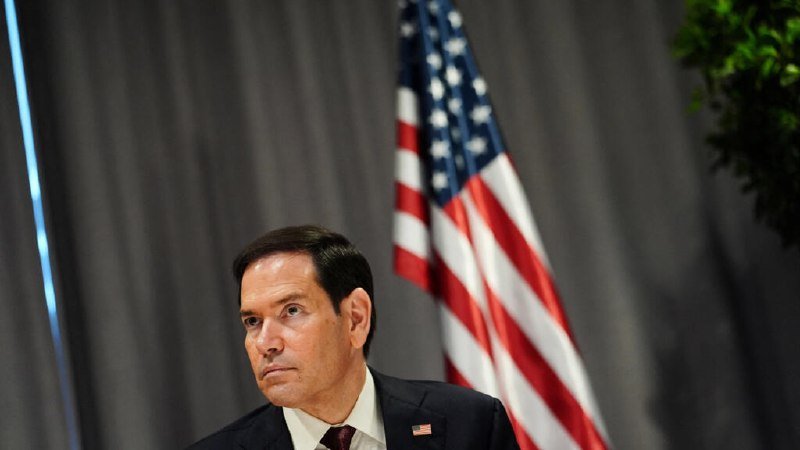
On 22 May 2026, the Arabic-language service of Iran's state broadcaster aired a sequence of seven statements attributed to Representative Raad — a parliamentary figure aligned with Hezbollah — delivered, according to the channel's framing, as a direct address to "the people of the resistance." The messages arrived in rapid succession between 16:10 and 16:40 UTC, a cadence that suggested either a live political moment or a pre-scheduled broadcast designed to saturate the information environment. The content, taken as a composite, offers a textbook illustration of how state-adjacent media constructs a besieged identity and uses that construction to foreclose alternative political horizons.
The statements are not reportage. They are oratory dressed as urgent dispatch: warnings against "international hypocrites," claims of a "distributed" campaign to "bend your arm and impose subjugation," invocations of a "brutal destructive war" aimed at "breaking your will." Every element serves a single function — to position an external enemy as both all-powerful and universally malevolent, and to cast any internal dissent as complicity with that enemy's design. It is a rhetorical architecture with a long history in state-adjacent media, and its logic is predictable enough to be read almost like a script.
The Besieged Identity and Its Grammar
The first move in any besieged-identity framework is the declaration of existential threat. Raad's statements do this plainly: the audience faces "the most brutal destructive war" targeting "your will," conducted by "evil forces" with "the Zionist entity." The enemy is cast as both overwhelming in capacity — capable of bulldozing homes and villages — and coherent in intent. The language of conspiracy is not incidental here; it is structural. A distributed conspiracy theory, one that names "international, regional, and local" actors operating in concert, serves a specific political function: it renders any independent diplomatic manoeuvre suspect by definition. If the enemy is everywhere, negotiation becomes collaboration.
The second move is the delegitimisation of the negotiating table. Raad warned his audience explicitly on 22 May 2026: "We advise our partners in the country who are taken by these international hypocrites not to bet on their lies and promises." The addressee is internal — those within the political community who might be considering diplomatic engagement — and the message is disciplinary. To engage with external actors is to be "taken." The epistemic result is a closed loop: the only trustworthy information comes from the resistance, and any evidence to the contrary is either enemy fabrication or the result of enemy manipulation.
What the Cadence Reveals
The decision to broadcast seven statements in thirty minutes is itself a communicative act. Massed messaging at this cadence signals urgency — or performs it. When Al Alam Arabic, an outlet affiliated with Iran's Islamic Republic of Iran Broadcasting organisation, carries this sequence, it is not merely relaying Raad's words; it is amplifying them through institutional repetition. The cumulative effect is a form of ambient endorsement: the viewer, hearing the same claim seven times across a half-hour, receives it as established fact rather than contested assertion.
This is a documented dynamic in media studies: repetition and source multiplicity create perceived credibility even when the underlying claim remains unverified by independent means. Al Alam's audience — primarily Arabic speakers in Lebanon, Iraq, Iran, and the wider Shia political ecosystem — is encountering a political argument framed as news emergency. The format of "urgent" dispatches, with timestamp tags and "🆔" identifiers, creates an impression of real-time intelligence rather than pre-produced political messaging.
The Structural Logic: Why This Framing Persists
The besieged-identity frame is not unique to Raad or to Hezbollah-aligned media. It is the standard rhetorical output of political movements that derive their cohesion from opposition rather than governance. When a movement's primary claim on its constituency is resistance — rather than service delivery, institutional reform, or economic management — any缓和 of the external threat undermines the movement's organising principle. Diplomatic normalisation is therefore not merely a policy disagreement; it is an existential challenge.
The statements broadcast on 22 May 2026 follow this logic with mechanical precision. Raad's audience is told not only that the enemy is dangerous, but that the enemy's campaign is coordinated across international, regional, and local levels — a formulation designed to make the threat appear inescapable by any individual actor's efforts. The implication is clear: only collective resistance, organised under the movement's direction, offers protection. This is both a political argument and a recruitment tool.
The sources do not independently verify the specific claims embedded in Raad's statements — the capacity and intent attributed to external actors, the scale of destruction, the precise configuration of "distributed" roles. What the Al Alam broadcast does confirm is the existence of the statements, their attribution to Raad, and the institutional infrastructure deployed to amplify them. Readers encountering this material from other sources — Western wire services, Israeli statements, or Lebanese domestic reporting — would be well served by cross-referencing those accounts before treating any single framing as complete.
The Stakes: What Closed-Loop Rhetoric Costs
The consequence of besieged-identity framing is not merely psychological; it is political. A constituency that cannot receive credible information about the intentions of its own negotiating partners — because any such information is a priori suspect — is structurally disadvantaged in any diplomatic process. When leadership frames every overture as deception, it forecloses the possibility of managed détente even when that détente might serve the constituency's material interests.
For external actors engaged with whatever political formations echo Raad's framing, the broadcast from 22 May 2026 serves as a data point: the resistance-identity frame remains the operative political logic, and any engagement strategy that does not account for that reality will misread the incentive structure driving it. For audiences consuming this material uncritically, the same broadcast serves as a reminder that rhetorical urgency and factual rigour are not the same thing — and that the cadence of repetition is a editorial choice, not evidence of accuracy.
\nDesk note: The thread surfaced seven Telegram messages from Al Alam Arabic, an Iranian state-affiliated outlet. Wire coverage of the same statements from Reuters, BBC Arabic, or AP would offer independent confirmation of claims and context this piece lacks. Readers are encouraged to seek corroboration from secondary sources.
Wire provenance
This editorial synthesis draws on the following public wire/social posts:
- https://t.me/alalamarabic/847281
- https://t.me/alalamarabic/847285
- https://t.me/alalamarabic/847289
- https://t.me/alalamarabic/847293
- https://t.me/alalamarabic/847296
- https://t.me/alalamarabic/847300
- https://en.wikipedia.org/wiki/Hezbollah