Rubio's NATO Reckoning: When Alliance Membership Becomes a Bill Due
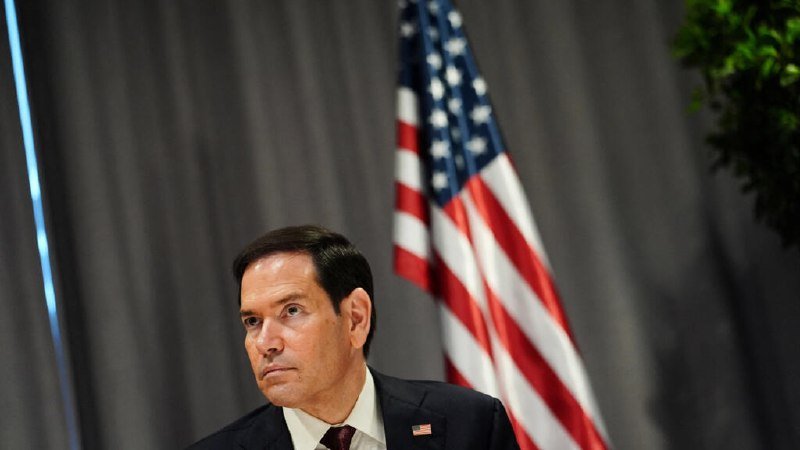
It is not often that a sitting Secretary of State lays out the transactional logic of the Atlantic alliance with the frankness of a property developer assessing a lease renewal. Marco Rubio did exactly that on May 22, telling an audience that NATO additions are, at root, a function of weakness — countries join because they need collective security, and in turn the alliance accumulates basing options and logistical infrastructure it would not otherwise possess. The observation was not a slip. It was a doctrine.
Within the same sequence of remarks, Rubio flagged that denied access to bases during a conflict is not an abstraction — it is a question that reshapes operational planning, strategic assumption, and ultimately the willingness of Washington to treat alliance commitments as sacred rather than negotiable. And according to reporting from Polymarket, Rubio planned to carry precisely that message to NATO ministers: that the Trump administration is "very disappointed" with European allies over their posture toward the Iran operation. The thread connecting these remarks is not complicated. Washington has been investing in European basing infrastructure for decades. It now wants those investments returned in political compliance.
The timing is deliberate. The Iran operation — whatever its precise scope and diplomatic cover — has become the test case for whether the post-2022 European rallying to NATO translates into actual alignment with a US executive that has shown consistent impatience with multilateral constraint. Sweden and Finland, which joined the alliance after Russia's full-scale invasion of Ukraine, occupy a specific position in this calculus. They brought geography: long coastlines on the Baltic and Arctic approaches, access to the GIUK gap, proximity to Russia's northwestern military infrastructure. Rubio's remarks suggest Washington sees those assets as part of a ledger — and the political posture of those nations on secondary US priorities as the means by which the ledger gets settled.
The Weakness Premium
What Rubio described is not a novel theory of alliance. It is the version of realist foreign policy that operates when the ideological gloss of collective defence is stripped away. Countries join NATO because they face a threat they cannot manage alone — that is the structural condition of the Scandinavian states, which spent decades in formal neutrality before Russia's 2022 invasion prompted a rapid strategic reassessment. Finland shares a 1,340-kilometre border with Russia. Sweden's strategic position controls access to the Baltic Sea. Both states had strong historical reasons to avoid entanglement with great-power rivalry. They changed their posture not out of sentiment but out of a sober calculation that the regional security environment had become incompatible with neutrality.
The problem with framing this as a weakness premium — countries join because they are weak, the alliance absorbs them because it benefits from their geography — is that it works in both directions. The United States benefits from the basing access, the signals intelligence, the troop contribution. Sweden already contributes to NATO's Baltic air policing mission and hosts the exercises that train allied forces in the conditions of a maritime contested environment. Finland brings one of the most capable land forces in Europe and a conscription system that maintains a large reserve. The ledger Rubio sketched is not one-sided. But the pressure being applied — over Iran, over diplomatic alignment on secondary crises — suggests the current administration is less interested in the bilateral ledger and more interested in unconditional political alignment.
The Iran Test
The Polymarket report that Rubio intended to express "very strong disappointment" to NATO ministers over the Iran operation posture is significant not because of what it says about European views on Iran, but because of what it reveals about the administration's threshold for alliance satisfaction. European states have broadly supported the negotiated approach to Iran's nuclear programme and have been cautious about escalation that risks destabilising the wider Gulf region. Those positions are not anti-American — they reflect decades of European diplomatic investment in the JCPOA architecture and a strategic interest in Gulf stability that is not identical to Washington's current calculation.
The Trump administration's frustration, as conveyed through Rubio, appears to be that NATO members should align their diplomatic posture with US executive preferences not because the strategic case is self-evident to them, but because the alliance demands a kind of political subsidiarity that was never formally codified. The basing access Rubio cited is real and valuable. But using it as implicit leverage for compliance on a Middle Eastern operation that European capitals have legitimate reasons to approach differently is a different proposition — and one that European publics, facing their own energy security and migration pressures from the same region, are unlikely to endorse without explanation.
What This Means for the Alliance
The structural consequence of treating NATO as a transactional security exchange — rather than a values-based collective defence arrangement — is that the terms of the exchange become subject to continuous renegotiation. A US administration that believes European alignment on Iran is part of the implicit bargain of NATO membership will find that belief tested every time a European capital declines to follow the diplomatic line from Washington. The question is whether the alliance can absorb this kind of periodic pressure without it becoming structural — without the episodic disappointment becoming the operating assumption of the relationship.
There is a plausible counter-argument: that what Rubio is describing is simply the mature realist position that should have been articulated years ago, that European allies have for decades free-ridden on American security guarantees without matching the political costs that the United States absorbed in the process. That argument has merit in certain dimensions. But it underestimates the degree to which the 2022 moment represented a genuine shift in European security politics — not just in defence spending, but in the willingness of populations to accept the risks that alliance membership entails. The question is whether Washington treats that shift as sufficient, or whether it will continue to expand the definition of what alliance loyalty requires until the goodwill generated by the Ukraine response is consumed.
The remarks Rubio made on May 22 were not inflammatory. They were, in their way, honest. An alliance that exists because members are weak and the guarantor extracts strategic benefit is a coherent arrangement — it is also a brittle one, because it has no ideological foundation to sustain it through periods when the costs and benefits diverge. European NATO members now know the terms as Washington articulates them. What they do with that knowledge will define the alliance's next chapter.
This publication covered Rubio's NATO remarks through the ClashReport Telegram thread and Polymarket reporting on the planned Iran operation message to allies. The wire carried the statements in a straightforward diplomatic frame; the structural implications — that alliance membership now carries explicit political conditions beyond collective defence — warranted a more direct assessment.
Wire provenance
This editorial synthesis draws on the following public wire/social posts:
- https://t.me/ClashReport/3842
- https://t.me/ClashReport/3843
- https://x.com/polymarket/status/1923874269813108896